Water damage
Washing machine, dishwasher and heater leaks
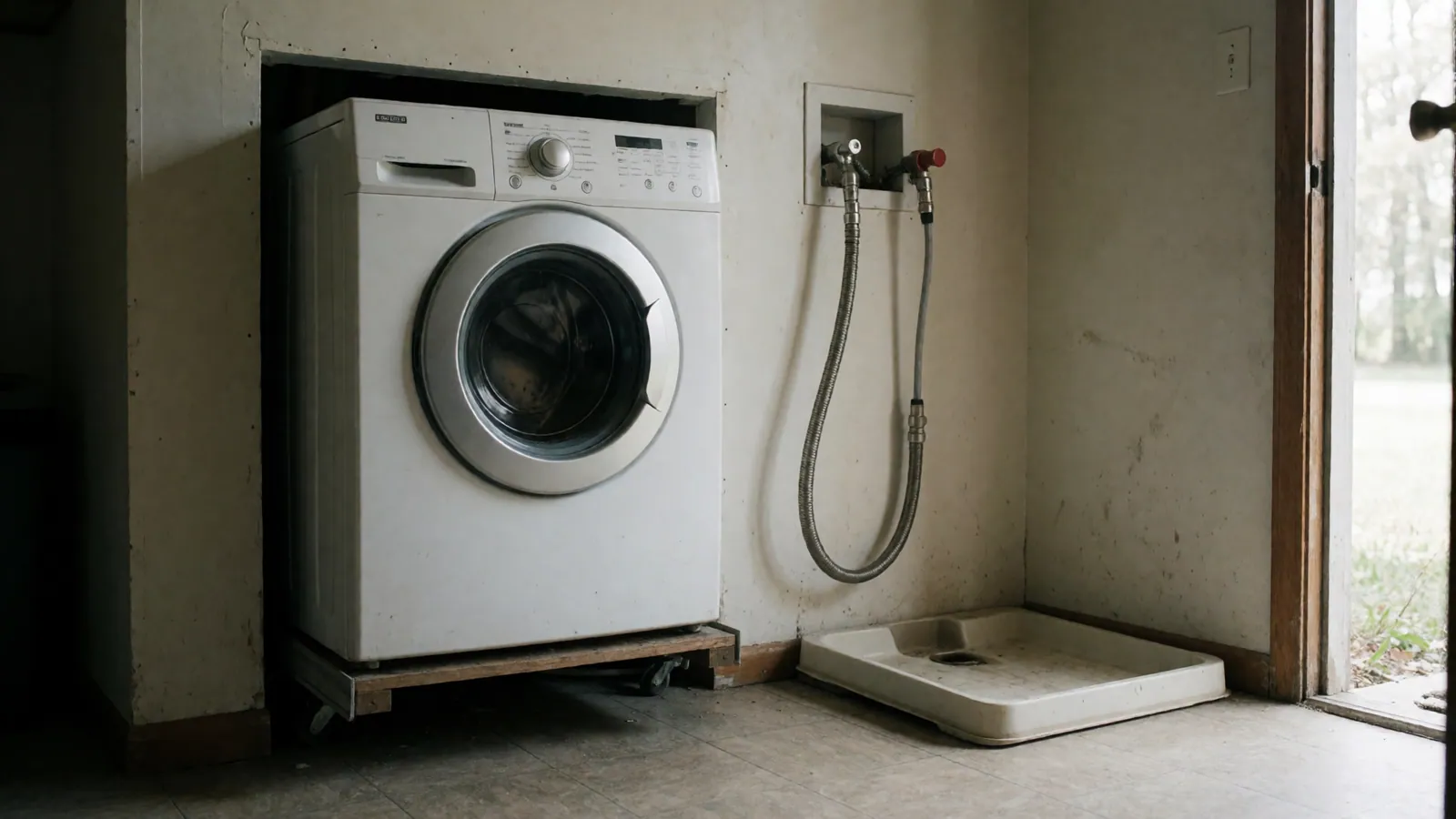
Appliance failures do more damage than burst pipes, per gallon, because nobody sees them. A supply hose that weeps behind a machine for six weeks does things to a floor that an hour of dramatic flooding does not.
There are two kinds of appliance loss and they need opposite responses. The sudden one — a supply hose that lets go, a pump seal that fails mid-cycle, a heater that splits — behaves like any other clean-water loss, arrives fast and is usually obvious. The slow one is the expensive one.
A slow leak from a dishwasher or a washing machine typically runs into the cabinet plinth and under the floor, where nothing is visible and nothing dries. By the time it reaches the point of being noticed — a lifting board, a soft patch, a smell — the subfloor has often been wet for weeks and the chipboard under the units has swollen and lost its strength.
Why the kitchen is the worst room for this
A fitted kitchen is a sealed box sitting on a floor, with the appliances at the back of it and the plumbing behind them. Water that escapes there is immediately underneath something that will not move, on a floor that has been laid up to the units rather than under them, and against materials — chipboard carcasses, MDF plinths, laminate — that are among the worst in the building at tolerating moisture.
So it hides, and then it does not dry. Air moving across a kitchen floor does nothing at all to the water under the units, and drying a kitchen without lifting a plinth or drilling the void is close to theatre. We take the plinths off. It is a twenty-minute job and it is the difference between drying the room and drying the part of the room you can see.
Category matters more here than people expect
A supply hose is clean water. A washing machine discharge or a dishwasher drain is not — that is category two, carrying detergent, food residue and whatever biological material came off the load, and it degrades faster than clean water does.
That changes the handling. Category two soaking into a chipboard carcass or under a laminate floor is generally not dried and kept; it is removed. It is worth being precise about which hose failed, because it is the difference between drying a floor and replacing one, and because it is a distinction an adjuster will ask about.
Finding it before it announces itself
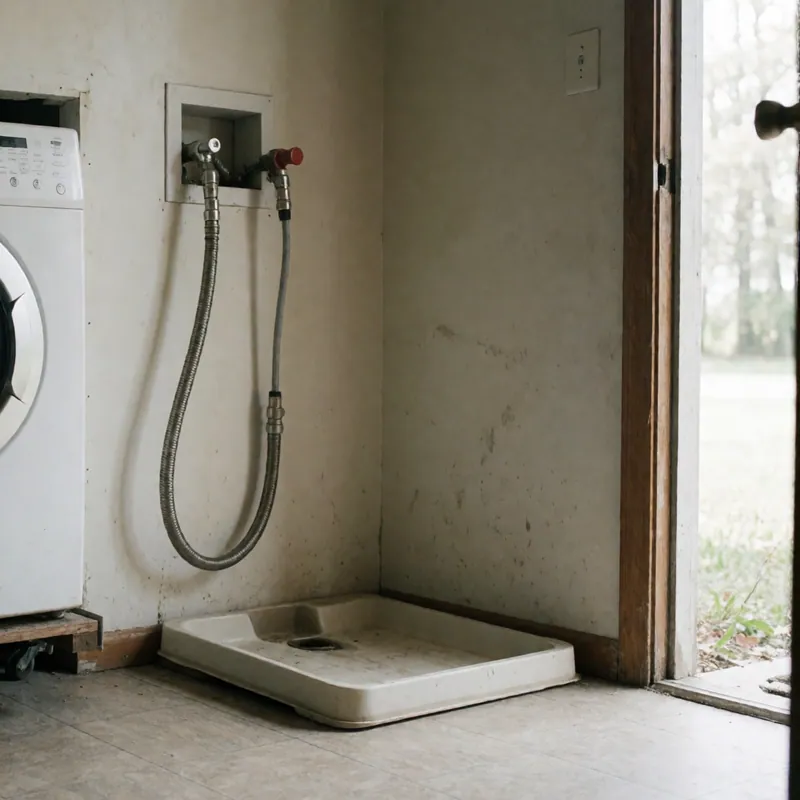
Braided steel supply hoses are the commonest failure in a New York kitchen or laundry and they have a service life — the braid corrodes from inside where you cannot see it. They are inexpensive, and replacing the ones behind your machines every several years is the single highest-return maintenance job in this entire trade. We would rather tell you that than dry your kitchen.
Beyond that: pull the machine out twice a year and look behind it, keep an eye on the plinth for any dark line at floor level, and treat a smell in a kitchen with no obvious source as a reason to look rather than a reason to buy a candle.
Some of it will not be saved. Some of it will not be saved, and you deserve to hear that on day one rather than after the cleaning bill. Water and smoke both sort belongings into three piles: things that clean up completely, things that can be restored for less than replacing them, and things where the cleaning costs more than the object is worth or where nothing will make them safe again — porous items soaked in category-three water, most soaked mattresses and upholstered foam, some heat-warped electronics. Anyone who tells you everything is recoverable is describing their invoice, not your possessions. We will tell you which pile a thing is in before we spend your money on it, and we will tell you when the honest answer is to replace it.
Included as standard
What the job actually includes
The source confirmed, not assumed
Which hose or seal actually failed, because supply and drain are different categories and are handled differently.
Plinths off and units checked
The void under the run opened and read, rather than the floor dried around a sealed box.
Subfloor drying
Direct drying to the deck below the covering, with readings taken through it rather than off the surface.
Cabinet assessment
An honest view on which carcasses have swollen past saving and which will dry, before anything is replaced.
Category-appropriate handling
Clean-water losses dried where possible; drain-water losses removed where the material took it.
A written salvage assessment
Item by item for anything significant, before we spend your money on cleaning rather than replacing.
When to call us
Signs this is the job you need
- A dark line along the bottom of a kitchen plinth, or a plinth that has begun to swell
- Flooring lifting, cupping or feeling soft in front of or beside an appliance
- A musty smell in the kitchen or laundry that returns after cleaning
- Staining on a ceiling directly below a kitchen, bathroom or laundry
- A braided supply hose behind a machine that is more than several years old
- The machine sitting slightly out of level when it did not used to
Washing machine, dishwasher and heater leaks — what it costs
- Includes cabinet and subfloor drying where the leak reached them.$900 – $5,400
This is the range this job actually lands in, not a headline figure. The low end is a straightforward version of the work; the high end is one with a hard access problem, an old service, or something that has to be opened up before anybody can be certain. We tell you which one you have after we have looked, and the written quote says where the price could still move and why.
Questions we are actually asked
Appliance leaks — frequently asked
The leak was tiny. Is this really worth calling anybody about?
If it was on a hard floor, wiped up quickly and there is nothing under the units, genuinely no. If it ran under a fitted kitchen or into a subfloor, the size of the leak matters much less than how long it ran, and a small persistent leak is worse than a large brief one. A twenty-minute meter check will tell you which you have.
Will my floor have to come up?
Sometimes, and it depends on what it is. Solid timber is often worth drying with mats. Laminate and most engineered board that has swollen at the joints is not — it has already failed structurally and drying it produces a dry failed floor. We will tell you which category yours is in before anything is lifted.
Is an appliance leak covered by insurance?
Your insurer decides, and the distinction they usually care about is sudden versus gradual. A hose that burst is generally treated differently from a seal that has been weeping for months, and that is precisely why we establish and document which one happened rather than describing it loosely.
Related work
Often needed alongside this
Water damage restoration
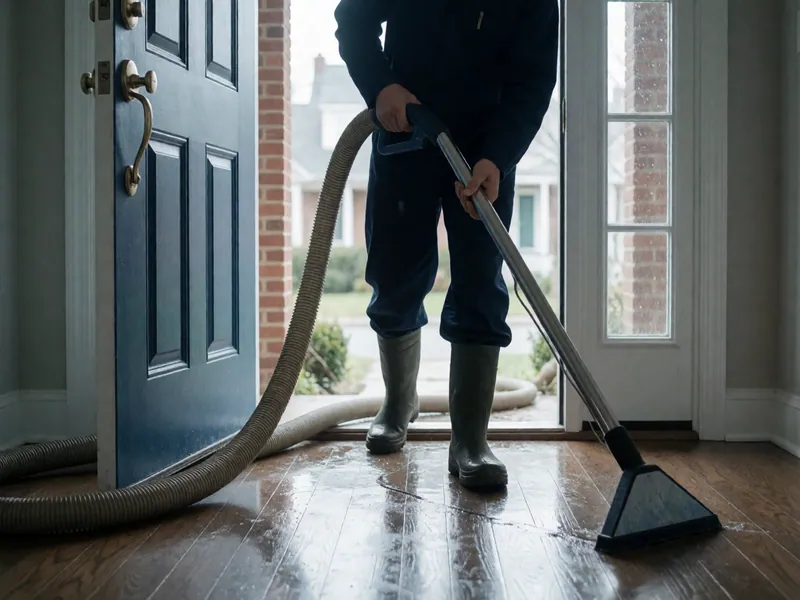
The whole job from the first hour to the last moisture reading — extraction, drying, and the repairs that put the room back.
$1,800 – $9,400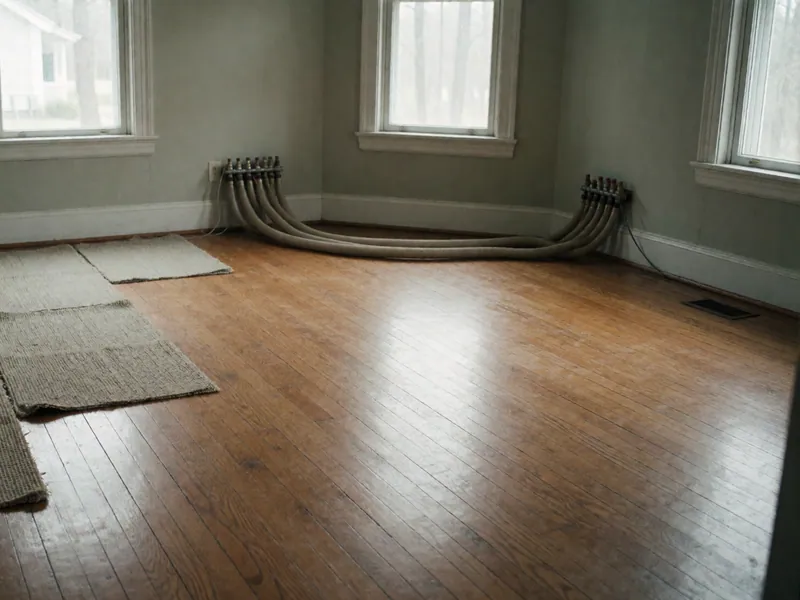
Floor drying
Specialist mat drying that saves cupped boards often enough to be worth trying before anybody rips them up.
$1,900 – $6,800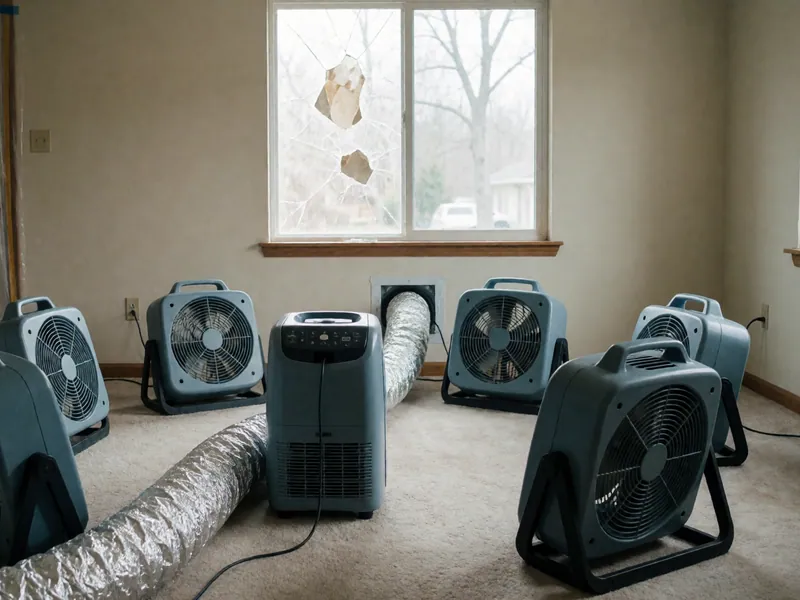
Structural drying
Air movers, dehumidifiers and daily readings until the materials reach dry standard — not until a promised day arrives.
$1,400 – $4,600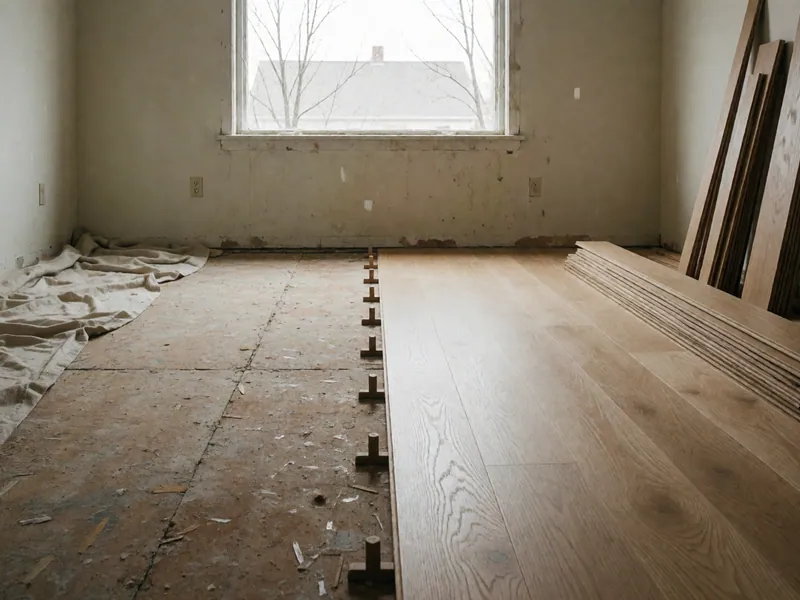
Flooring replacement
Replacing what could not be dried, matched to what is still there wherever that is possible.
$2,400 – $18,000Somebody who does the work will come and look
Book a visit
Telephone and you will get somebody on this crew rather than a call centre, at any hour. The emergency assessment is free inside our service area and you keep the written findings whether or not you use us. If what you describe will keep until the morning, we will tell you that instead of sending a van.