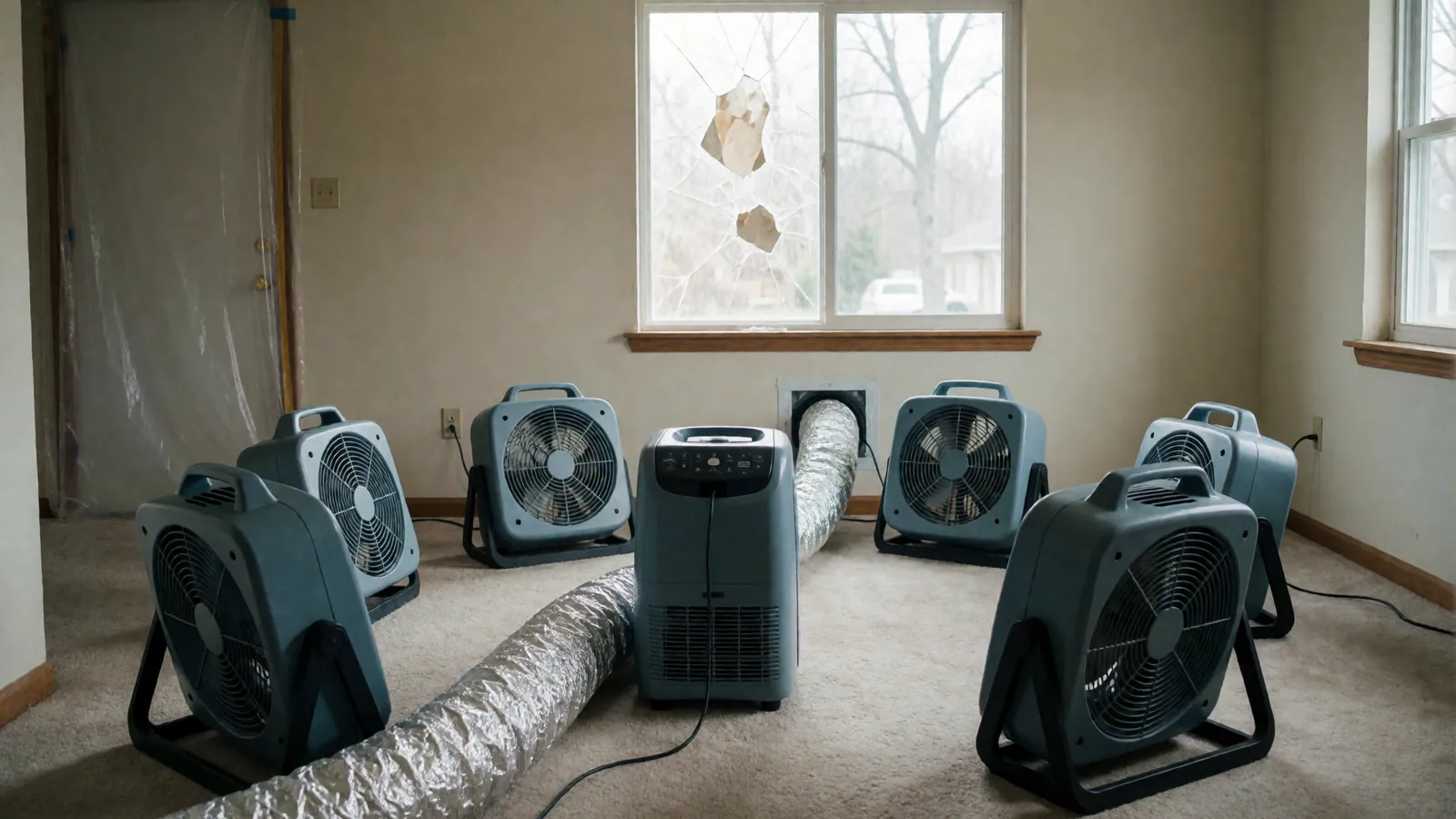
Water damage
Structural drying and dehumidification
Extraction removes the water you can move. Drying removes the water that has gone into the materials, and it is finished when the readings say so rather than when a promised day arrives.
Once the standing water is gone, what is left is water inside things — in plaster, in timber, in the underside of a subfloor, in the bottom two feet of the drywall. That water does not drain. It has to be evaporated into the air and then taken out of the air, continuously, until the materials come back down to the moisture content of comparable dry materials elsewhere in the same building.
That last phrase is the whole discipline. Dry is not a feeling and it is not a date. It is a comparison against an unaffected reference in the same house, taken with the same meter, written down every day.
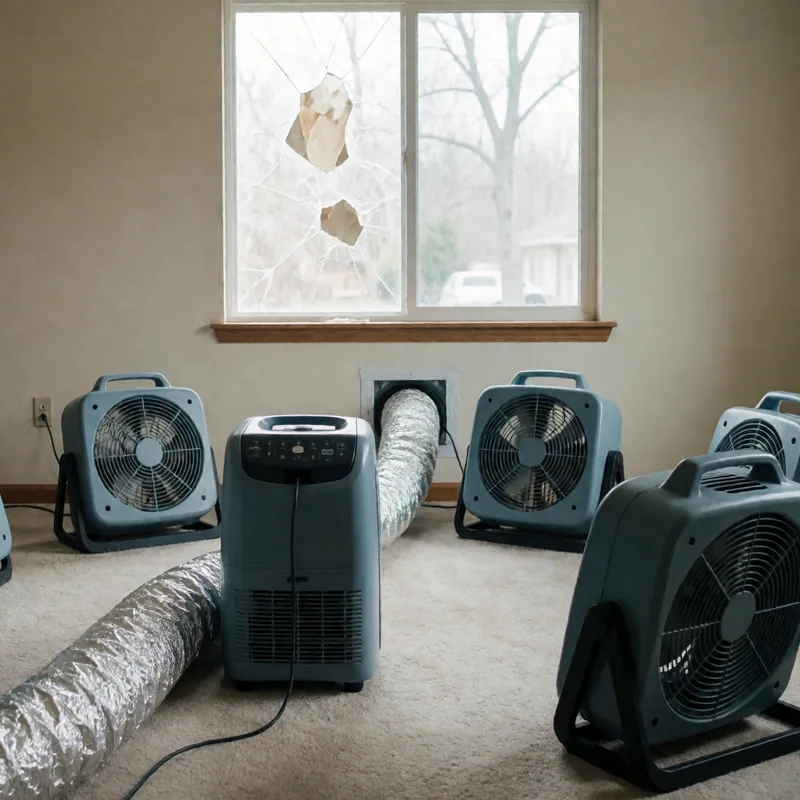
The four things being balanced
Airflow, humidity, temperature and time, and you cannot fix a shortfall in one by adding more of another indefinitely. Air movers put moving air across wet surfaces, which is what makes water leave the material. Dehumidifiers take that water out of the room air, which is what stops it landing somewhere else in the building — usually a cold surface two rooms away, which is how a badly run dry-out creates a second problem.
Warmth helps, up to a point, because warm air holds more water. And time is what the other three buy you. Adding twice the equipment does not halve the time: past a certain point the material itself is the limit, and the extra machines are just noise on your electricity bill.
Why we will not promise you three days
Most residential water losses dry in three to five days. We will tell you which end we expect yours to land on, and we are right most of the time. But it is a forecast from readings rather than a promise, and the honest reason is that four variables decide it and only two of them are ours.
What the materials are: solid timber holds and releases water slowly, plasterboard quickly, plaster on lath somewhere maddeningly in between. How much they took. How warm the building is and stays. And — the one that ruins schedules — how much of the wet is trapped behind something that has to be opened before it can be dried at all.
So the equipment stays until the readings meet the dry standard. If that is day three, we collect on day three and stop charging for it. If it is day seven, we tell you on day four rather than on day seven, and we tell you why.
What the daily visit actually is
Somebody comes every day the equipment is in. They take readings at the same marked points with the same instrument, record them dated against the reference reading from the unaffected area, check the dehumidifier is actually pulling water and not merely running, reposition air movers as the wet area shrinks, and remove machines that are no longer doing anything.
That log is not paperwork for its own sake. It is the document that decides when we stop, and it is the document an adjuster asks for when they want to know why the equipment was in for six days. A drying job with no daily readings is a drying job with no evidence, and you should be suspicious of one.
Drying in place versus taking it out
Modern drying saves a great deal that used to be demolished on day one, and we would always rather try. Solid hardwood, plaster, structural timber and most masonry are worth drying. Engineered board, MDF, chipboard, most insulation and anything laminated is usually not — it has already swollen and delaminated, and drying it produces a dry version of a ruined material.
The cases where we open up rather than dry through are the ones where air cannot reach the water: a cavity wall, the void under a bath, the space beneath a fitted kitchen, insulation in a floor. Drying around trapped water is how a water job becomes a mould job a fortnight later, and it is the failure this trade commits most often because it looks like restraint at the time.
The readings decide when the equipment leaves. We will not promise you a number of days. A structure is dry when its materials reach the moisture content of comparable dry materials in the same building — which depends on what the materials are, how much water they took, how warm it is and how much of the wet is trapped behind something. Most residential water losses dry in three to five days and we will tell you which end we expect yours to land on, but that is a forecast from readings, not a guarantee, and the readings decide when the equipment leaves. Nor will anybody here certify your home dry, mould-free or safe. A drying log records what was measured, where, and on which day. That is a real document. A certificate of dryness is not.
Included as standard
What the job actually includes
A drying plan sized to the room
Equipment count worked out from the affected area and materials rather than from what is on the van.
Air movers and dehumidification
Placed to move air across the wet surfaces and to take the water out of the building rather than move it.
A marked reference reading
Taken in an unaffected area of the same building, because dry is a comparison and not a number in isolation.
Daily monitored readings
Same points, same instrument, dated and written down. A copy goes to you and to your adjuster.
Equipment removed as it stops earning
Machines come out as the wet area shrinks. You should not be charged for a fan that has nothing left to do.
A written completion when the readings meet standard
Recording what was measured, where, and on which day — which is a real document, unlike a certificate of dryness.
When to call us
Signs this is the job you need
- Equipment that has been running for over a week with nobody taking a reading
- A contractor who told you the day count before taking any measurement
- Skirting or flooring closed back up while the wall behind it was still damp
- Condensation appearing on windows or cold surfaces in rooms away from the loss
- A musty smell that arrives after the drying rather than before it
- No reference reading from an unaffected area anywhere in the paperwork
Structural drying and dehumidification — what it costs
- Per affected area for a three-to-five-day dry, equipment and daily monitoring included.$1,400 – $4,600
This is the range this job actually lands in, not a headline figure. The low end is a straightforward version of the work; the high end is one with a hard access problem, an old service, or something that has to be opened up before anybody can be certain. We tell you which one you have after we have looked, and the written quote says where the price could still move and why.
Questions we are actually asked
Structural drying — frequently asked
How many days will the equipment be here?
Most residential losses are three to five days and we will tell you which end we expect. It is a forecast from readings rather than a promise, and the readings decide when the machines go. Anybody guaranteeing a day count before taking a measurement is guessing out loud.
Can I turn the machines off at night?
Please do not. Drying is a continuous process and switching off for eight hours lets the moisture redistribute through the materials, which costs you more than the night's electricity saves. If the noise is genuinely unbearable, tell us — there are usually placements that help, and it is a better conversation than switching them off.
Does the equipment use much electricity?
Enough to notice. A typical residential dry-out adds somewhere in the region of ten to twenty-five dollars a day to your bill depending on the equipment count, and it stops when the machines leave. Where a claim is being made this is often recoverable, but that is your insurer's call rather than ours.
Related work
Often needed alongside this
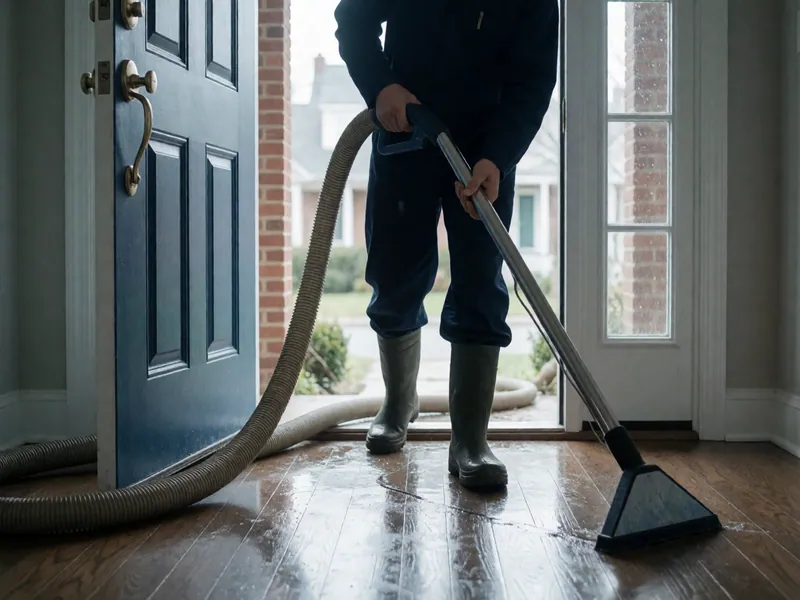
Water damage restoration
The whole job from the first hour to the last moisture reading — extraction, drying, and the repairs that put the room back.
$1,800 – $9,400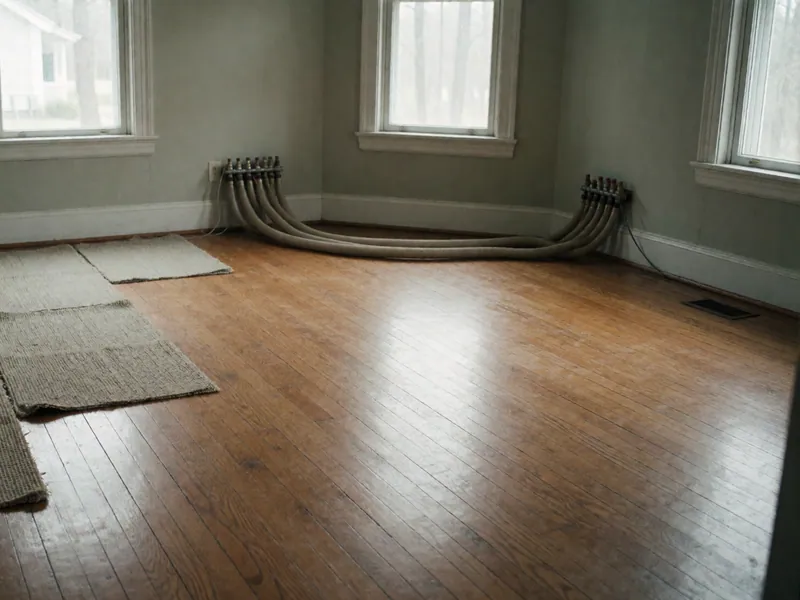
Floor drying
Specialist mat drying that saves cupped boards often enough to be worth trying before anybody rips them up.
$1,900 – $6,800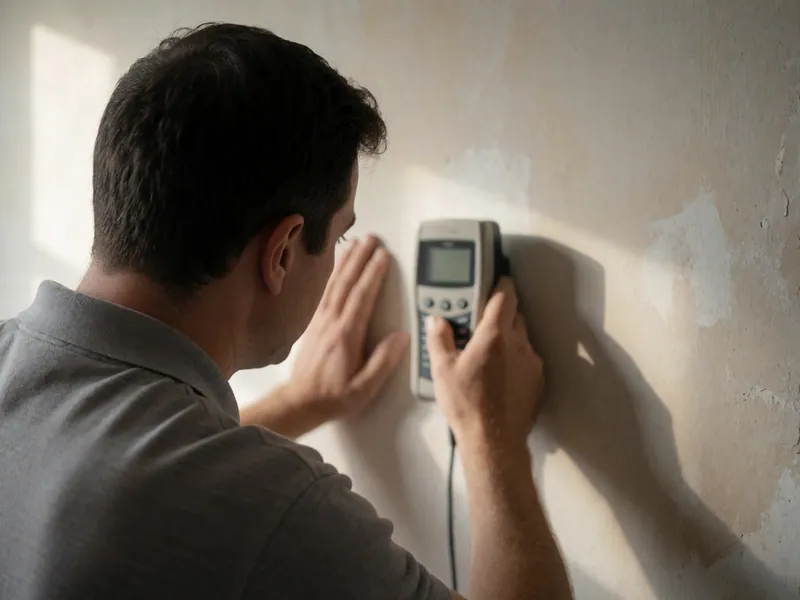
Moisture inspection
Finding where the water actually came from and how far it has travelled, in writing, before anybody quotes a repair.
$385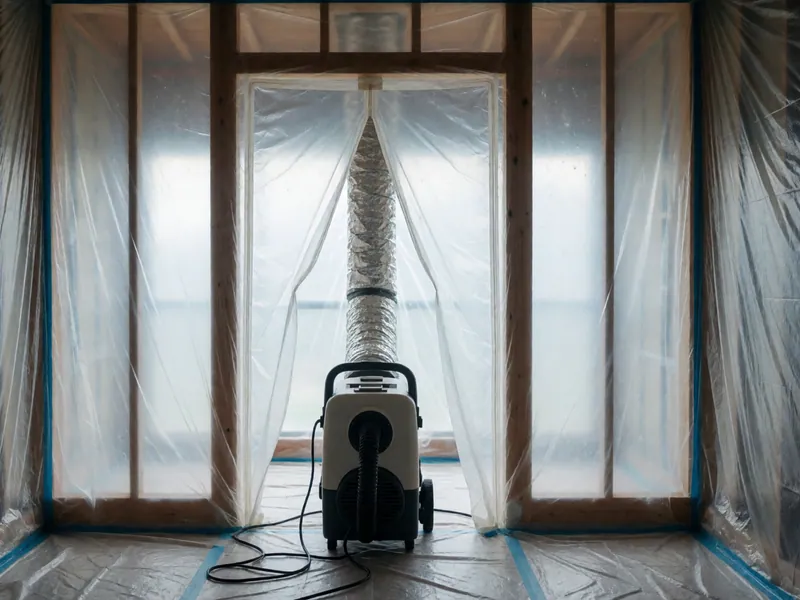
Mould remediation
Containment, removal and cleaning to an independent assessor's plan — never to a plan we wrote ourselves.
$2,400 – $7,800Somebody who does the work will come and look
Book a visit
Telephone and you will get somebody on this crew rather than a call centre, at any hour. The emergency assessment is free inside our service area and you keep the written findings whether or not you use us. If what you describe will keep until the morning, we will tell you that instead of sending a van.