Fire, smoke & odour
Kitchen and grease fire cleanup
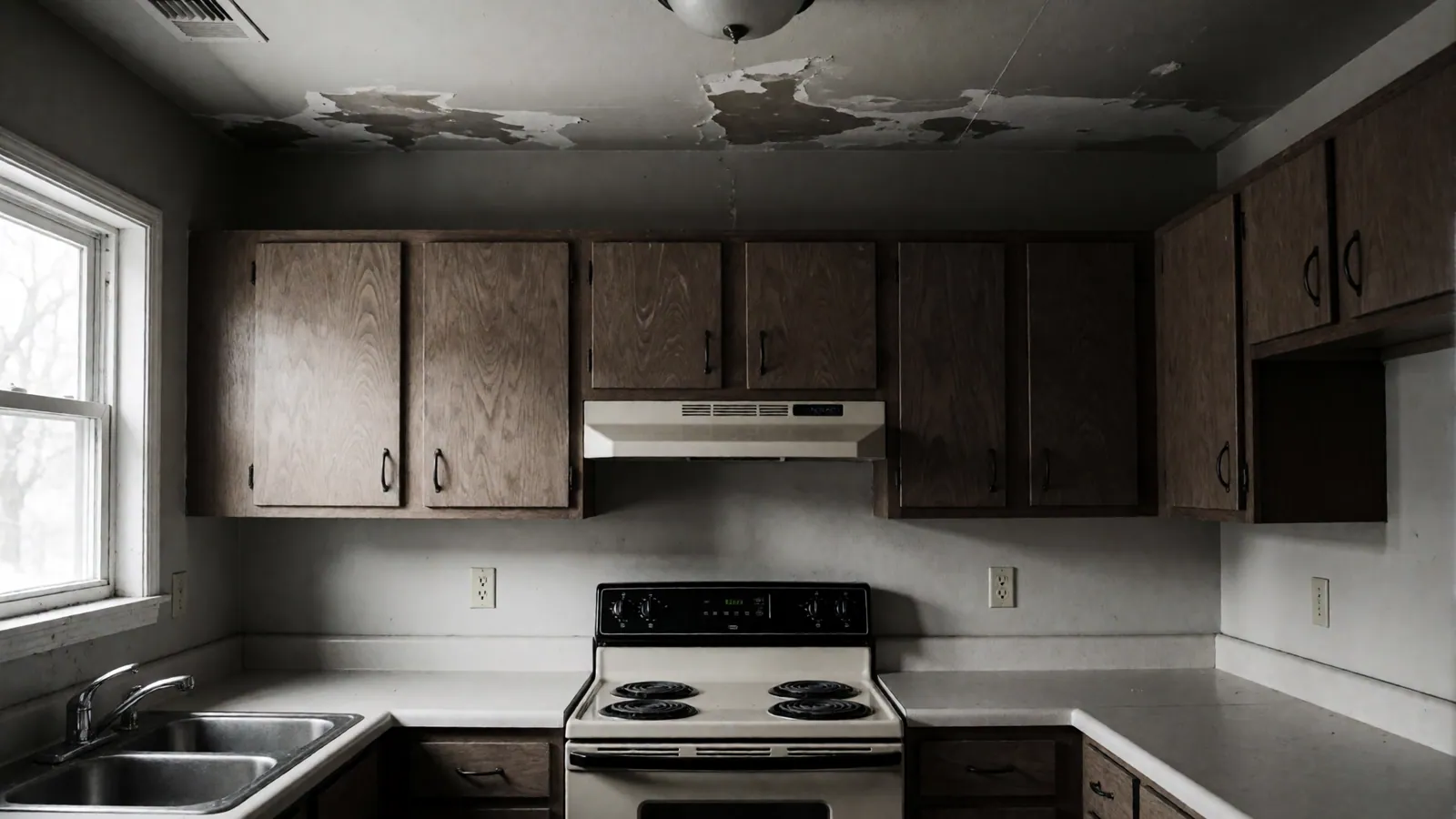
Small fires, disproportionate residue. A fire confined to a single pan can film every room the air in the apartment reaches — which is what people underestimate until they touch a surface two rooms away.
Most kitchen fires are out within minutes — a lid on the pan, an extinguisher, or the fuel burning itself out. The residue tells a different story: burning fat aerosolises into a fine oily film that rides the smoke and settles on every surface the air reached.
It behaves differently from ordinary soot, too. It is greasy rather than dry, so wiping it with a dry cloth smears it, and if the HVAC system was running, it draws that film into the ductwork and redistributes it every time the system runs again.
Why the residue goes further than the fire did
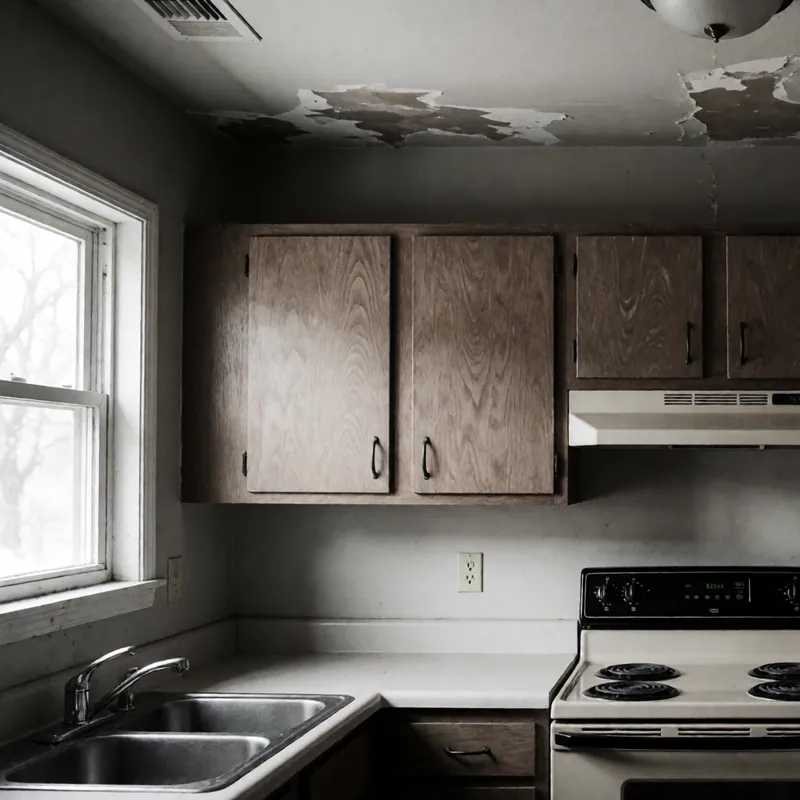
A fire that never left the stovetop can still film a living room, a hallway and a bedroom down the corridor, because the smoke did not stay where the flame did. This is the most underestimated fire in the trade.
The mechanism is ordinary: hot, greasy smoke rides the air already moving through the apartment — toward an open door, up a stairwell. A few minutes of a pan burning with a door open films rooms the flame never reached.
What gets cleaned, room by room
The kitchen first — cabinetry, where grease works into unsealed seams fastest; the range hood and filter; appliance exteriors. Then the assessment moves outward, testing adjoining rooms with a wipe rather than assuming the kitchen was the whole job.
Checking the HVAC system is standard, not an upsell. Grease film sitting in a duct re-releases the smell every time the blower runs, which is why a kitchen that smells clean for a week does not always stay that way.
What is often mistaken for 'this just needs a wipe down'
Left alone, a greasy film hardens over weeks, and a straightforward clean becomes a harder one that can etch some finishes. We would rather clean it properly once than sell a wipe down that becomes a repaint six months later.
Some things — a badly warped hood filter, cabinet interiors already failing — are not worth chasing with cleaning at all, and we will say so rather than bill you for trying.
Included as standard
What the job actually includes
An assessment covering the kitchen and beyond
Adjoining rooms tested rather than assumed clean.
Grease-specific cleaning solvents
Not a general cleaner, which tends to smear grease rather than lift it.
Cabinetry, hood and appliance cleaning
Or an honest note on what is not worth cleaning versus replacing.
An HVAC check included as standard
A duct run holding grease film re-releases the smell every time it runs.
Odour treatment where the film has already set
For residue that needs more than a surface clean.
A written note on anything not worth cleaning
Said plainly rather than billed for and left to fail later.
When to call us
Signs this is the job you need
- A greasy film on countertops or cabinet fronts away from the stove
- A faint fatty or smoky smell near a supply air vent
- A film you can feel with a fingertip that looks clean to the eye
- Discolouration on a range hood filter or its exterior
- Residue on the ceiling directly above the stove
- A smell that returns days after you have wiped everything down yourself
Kitchen and grease fire cleanup — what it costs
- Kitchen plus the rooms the smoke actually reached, which is usually more than expected.$2,400 – $12,500
This is the range this job actually lands in, not a headline figure. The low end is a straightforward version of the work; the high end is one with a hard access problem, an old service, or something that has to be opened up before anybody can be certain. We tell you which one you have after we have looked, and the written quote says where the price could still move and why.
Questions we are actually asked
Kitchen fires — frequently asked
It was a small fire — do I really need professional cleaning?
Maybe not, if it was out within seconds, stayed in the pan, and the heating or cooling was off throughout. Check an adjoining room and a vent with a fingertip before deciding — grease film is often invisible until touched.
Can I just wipe it down myself?
For a genuinely small fire, often yes. For anything with real spread, a household cleaner tends to smear the residue into a film that looks clean but is not. If the smell returns days later, residue is usually sitting somewhere the wipe did not reach.
Will this affect rooms far from the kitchen?
It can, particularly if the HVAC was running during or after the fire — the system draws the film into the ductwork and pushes it out through every register. We check adjoining rooms and the system as standard rather than assuming the kitchen is the whole job.
Related work
Often needed alongside this
Soot removal
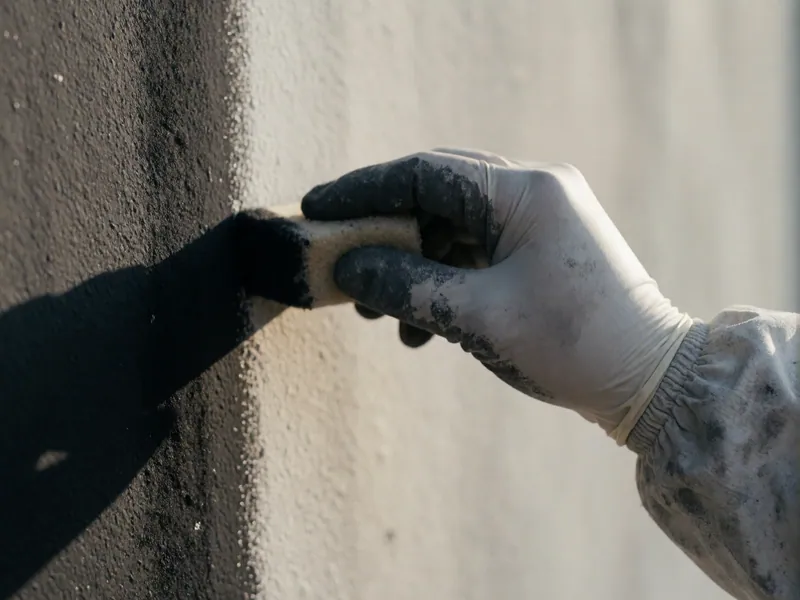
Soot is acidic and it keeps eating surfaces until it is taken off — which is why this is urgent and not cosmetic.
$3,200 – $18,000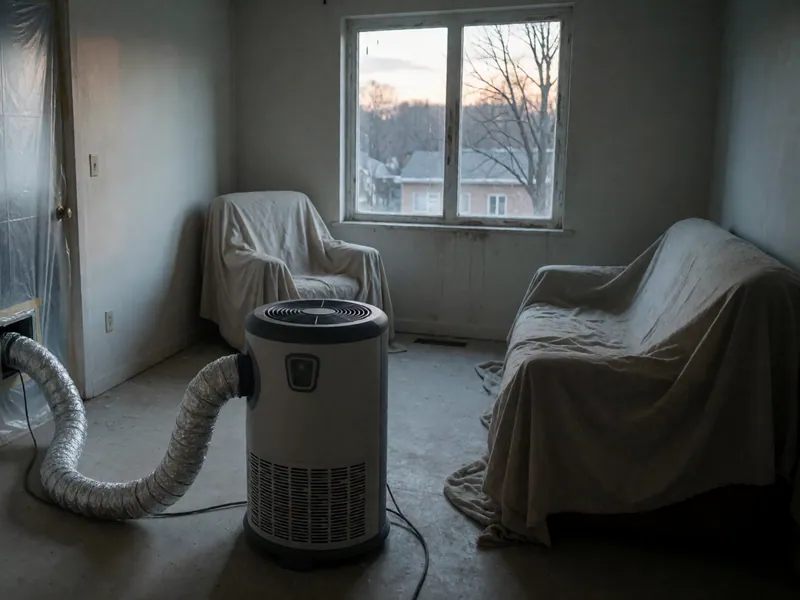
Odour removal
Getting the smell out properly, which means finding what still holds it rather than covering it over.
$1,400 – $7,600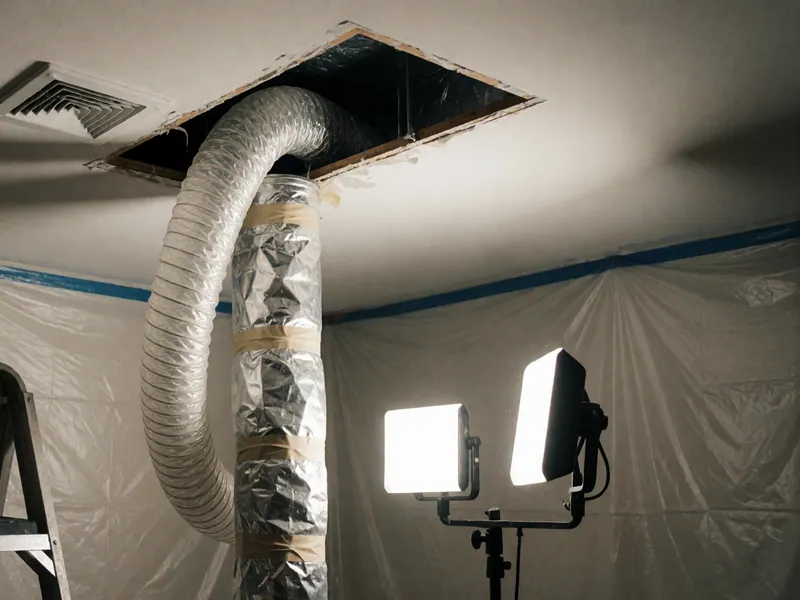
Duct cleaning
The ductwork is how soot and odour reach rooms the fire never touched, and it is the step most often skipped.
$900 – $3,800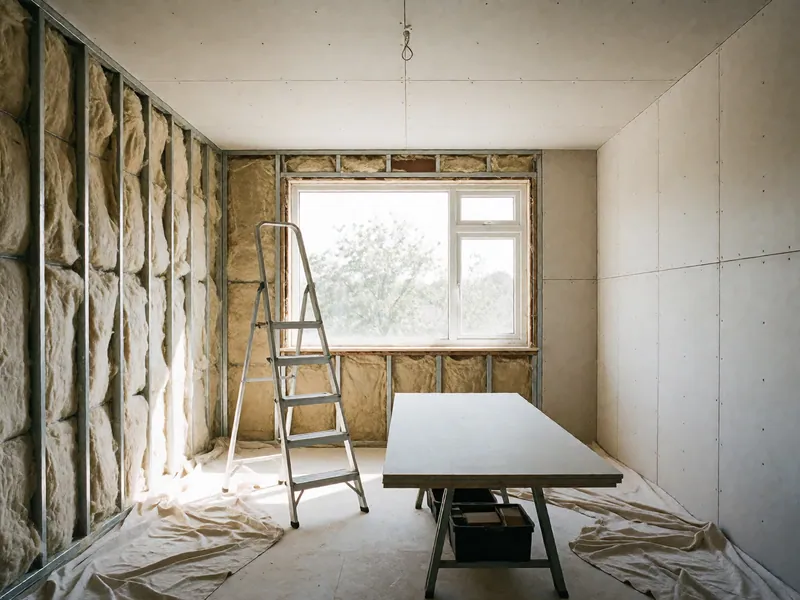
Reconstruction
Putting the building back — drywall, trim, paint, kitchens and baths — under one contract with the drying.
$12,000 – $95,000Somebody who does the work will come and look
Book a visit
Telephone and you will get somebody on this crew rather than a call centre, at any hour. The emergency assessment is free inside our service area and you keep the written findings whether or not you use us. If what you describe will keep until the morning, we will tell you that instead of sending a van.