Mould & indoor air
Mould remediation in Woodside, NY
Containment, removal and cleaning, carried out to a plan we did not write. New York law will not let the company quoting the remediation also decide how much is needed, and that is why this page reads the way it does.
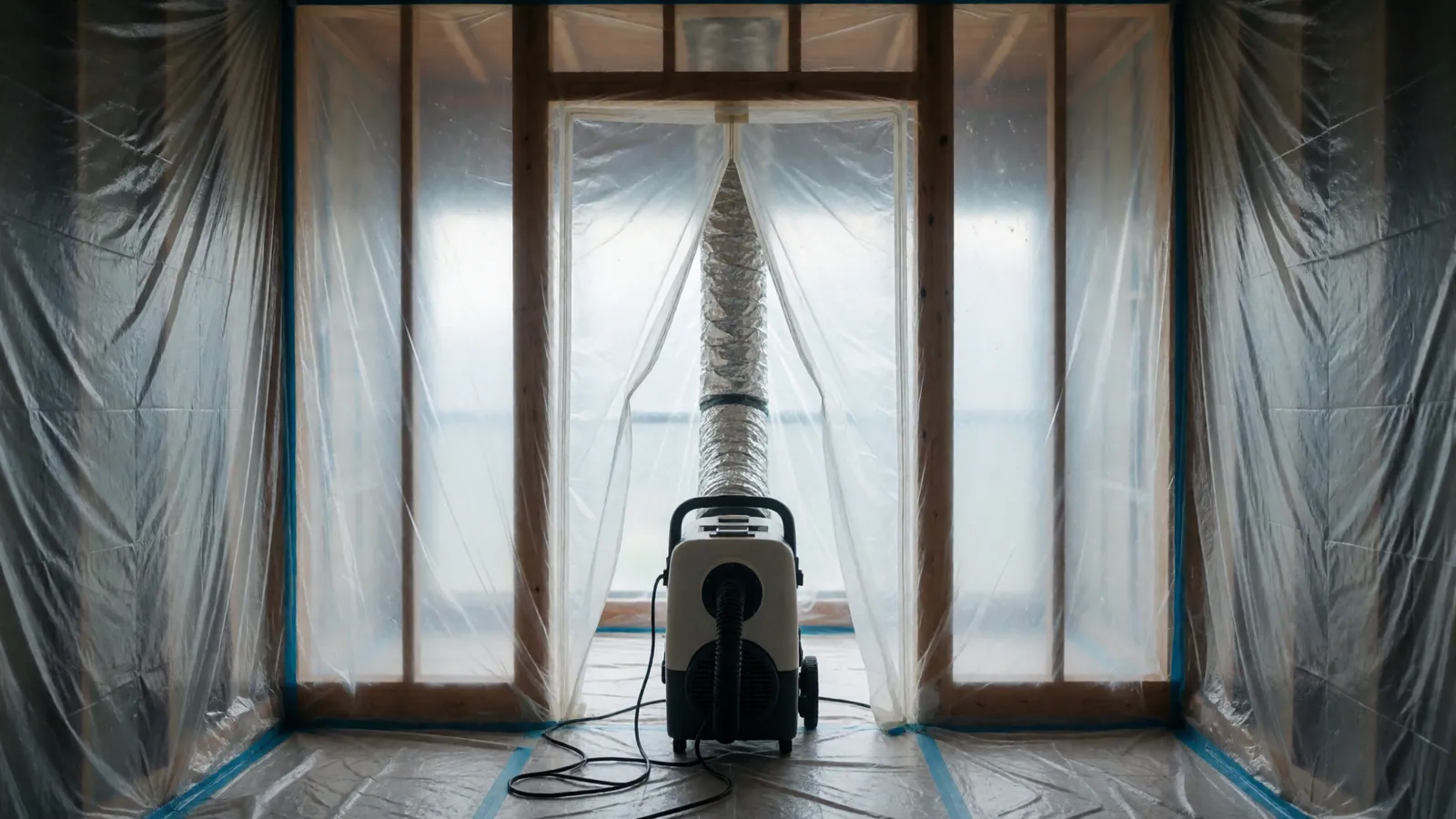
Remediation is the physical half of a mould job: sealing off the area, taking the air negative, removing what has to come out, cleaning what remains, and treating the cleaned surfaces so the work stays finished — a construction trade wearing a lab coat.
We hold a New York State mould remediation licence, not an assessment one — Labor Law Article 32 will not let one company hold both roles on the same project. A company that writes the report and quotes the work it describes has a reason to inflate it.
Why we will not assess our own job
The arrangement is simple: you appoint an independent, separately licensed assessor, they write a remediation plan, we price and carry out the work the plan describes, and they return afterward to verify it. Nobody in that sequence is marking their own homework.
It costs an extra invoice and an extra visit, and it is worth both: an assessor paid the same regardless of scope has no reason to inflate it, and one who returns to check our work has every reason to look properly.
What happens inside the containment
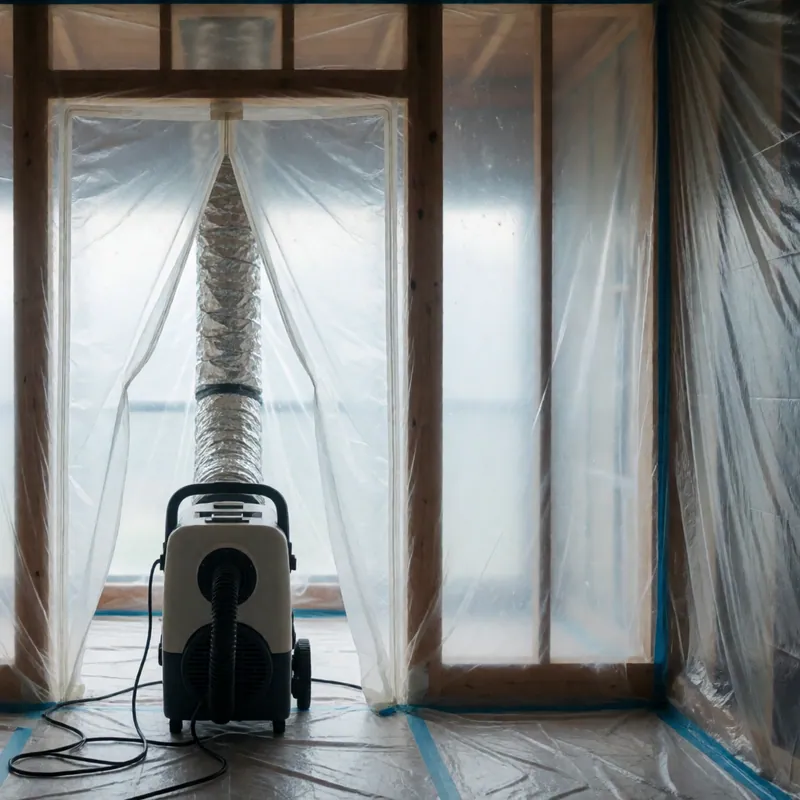
The space is sealed with sheeting on a frame, floor to ceiling, with a zippered entry, sized to what the assessor's plan calls for. Negative air holds the inside pressure lower than outside, exhausted through HEPA filtration to the outdoors.
Porous material carrying meaningful growth does not get cleaned back to new — it comes out, bagged inside the containment, because a vacuum and a wipe do not reach what has grown into drywall or insulation. What remains is HEPA-vacuumed and damp-wiped first.
Only then does an antimicrobial go on, to surfaces already clean, as the last step rather than the first. Spraying a product over an uncleaned surface makes the job look finished and guarantees it returns — common enough that we would rather name it than assume you have not seen it.
Why bleach does not do this job
Bleach is mostly water, and on a porous material that is the wrong ingredient. It can lift the colour out of a stain, which looks like progress, while the material underneath still holds everything a spore needs.
What we use instead is a product labelled for the surface, applied at the label's rate to a surface already physically cleaned. The label decides the rate and the dwell time, not a stronger dose we happen to prefer.
What it costs, and what moves the number
Most jobs land between $2,400 and $7,800 per contained area, and the assessor's fee is separate and paid to them directly. What moves the number is mostly how much comes out rather than gets cleaned, and access — a contained bathroom is not a contained basement.
In a building put up before 1 April 1987, an asbestos investigation has to be filed and cleared before real demolition starts. Where a plan calls for opening plaster or a ceiling in a building that age, that step comes first, whatever it does to the schedule.
We will not assess the mould we want to remediate. We hold a New York State mould remediation licence. We deliberately do not act as your mould assessor, because under Labor Law Article 32 the same company may not assess and remediate the same project — and that law is right. A company that writes the report and then quotes the work described in the report has a straightforward financial interest in the report saying the job is big. So on any mould job we ask you to appoint an independent licensed assessor, we work to their remediation plan, and they come back and verify our work when we are done. We will find the water for you at no charge, because finding water is not assessing mould. We will not sell you a test and then sell you the cure for what the test found.
Included as standard
What the job actually includes
Containment built to the assessor's scope
Sealed floor to ceiling, zippered entry, sized to their plan.
Negative air and HEPA filtration
The zone held negative for the whole job, exhausted outside.
Removal of affected porous material
Taken out and bagged, to the extent the plan specifies.
HEPA vacuuming and damp-wiping of what remains
Every surface cleaned before anything is applied to it.
Antimicrobial applied last, to clean surfaces only
The final step, not a substitute for the ones before it.
Daily photographs and a written job log
Dated as we go, for your assessor's clearance visit.
Clearance handled by your assessor, not by us
We stop and they inspect — the law's order, and ours.
When to call us
Signs this is the job you need
- Visible growth covering a noticeable area, not a spot the size of a coin
- A musty smell that persists in one room after it has been aired out
- Staining on a porous material at the site of a known or past water loss
- Growth that has come back after somebody already wiped it or painted over it
- Growth found on the back of drywall, framing or insulation once something else was opened
- A written report from an independent assessor recommending remediation
Mould remediation — what it costs
- Per contained area. The assessor you appoint bills you separately, and should.$2,400 – $7,800
This is the range this job actually lands in, not a headline figure. The low end is a straightforward version of the work; the high end is one with a hard access problem, an old service, or something that has to be opened up before anybody can be certain. We tell you which one you have after we have looked, and the written quote says where the price could still move and why.
Questions we are actually asked
Mould remediation — frequently asked
Why will you not tell me how bad the mould is before I hire an assessor?
Because that judgement is the work Article 32 reserves for an independent assessor, and making it ourselves would hand us exactly the conflict the law exists to prevent. Once you have their plan, we quote against it precisely.
Do I have to pay for an assessor as well as for you?
Yes, from a company we do not choose for you. That separation is the point: an assessor with no stake in our invoice has no reason to inflate what they find, and every reason to check our work properly afterward.
Will you certify the house mould-free when the job is finished?
No. Nobody can certify a building mould-free, including us, and we will not print the phrase. The assessor who wrote your plan returns and issues their own clearance instead — verification with no stake in our invoice, worth more than one from the contractor who sent it.
Related work
Often needed alongside this
Finding the water
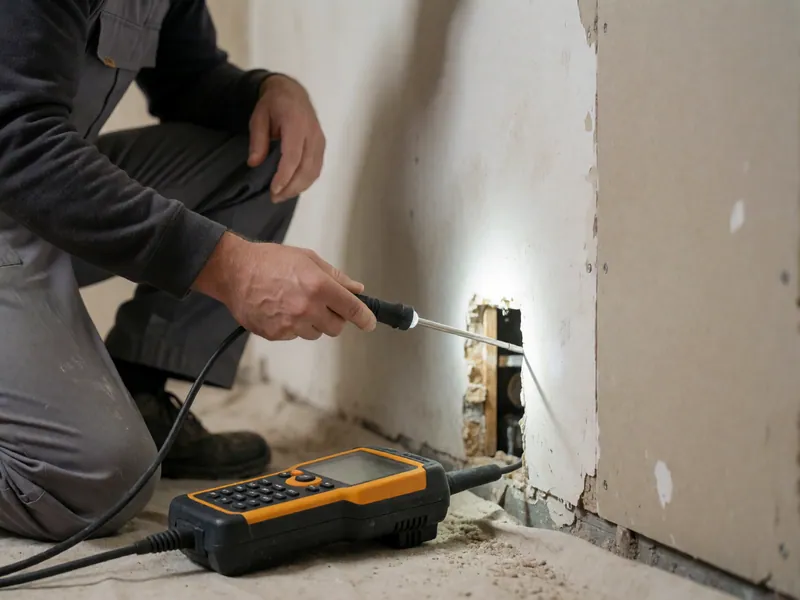
Mould is a symptom. If the water is still arriving, remediation is a very expensive way of waiting.
No charge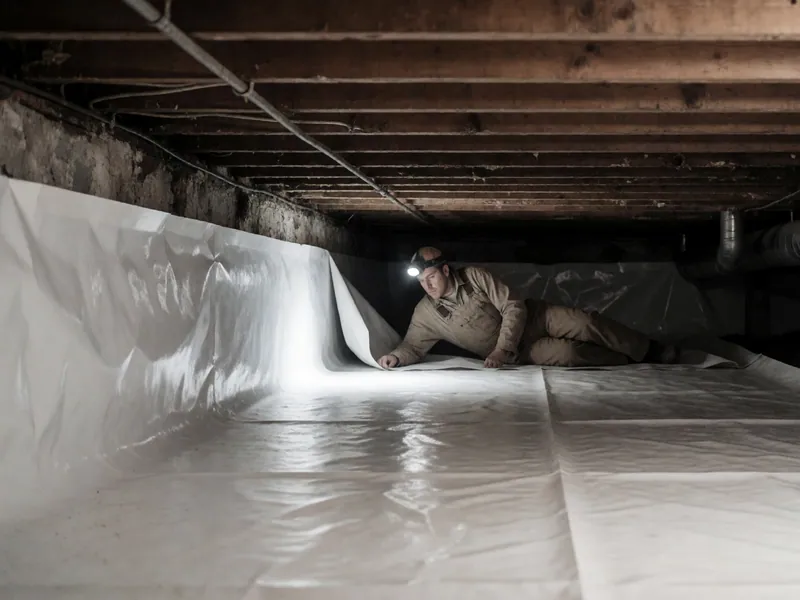
Crawlspace & attic
The two places nobody looks, where a ventilation problem quietly becomes a remediation problem.
$1,800 – $6,400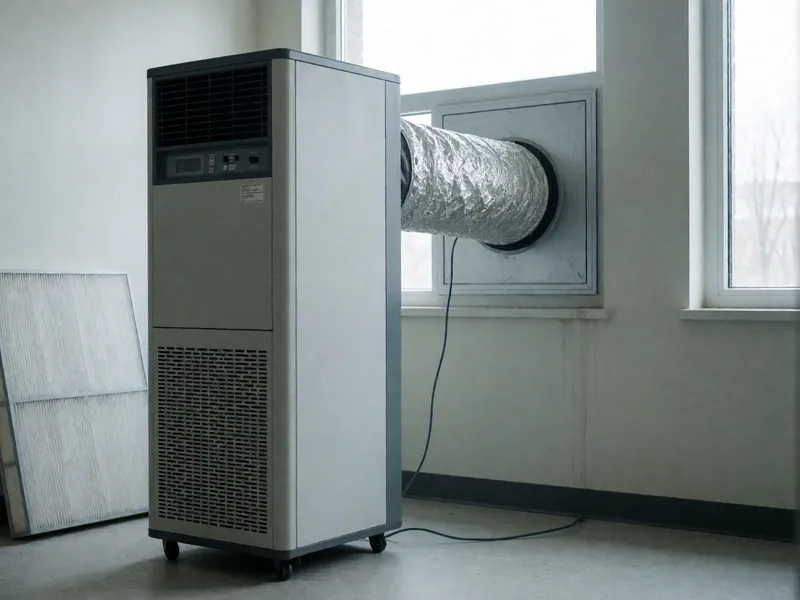
Air scrubbing
Negative air and filtration that keep the work zone's problems inside the work zone.
$180 – $340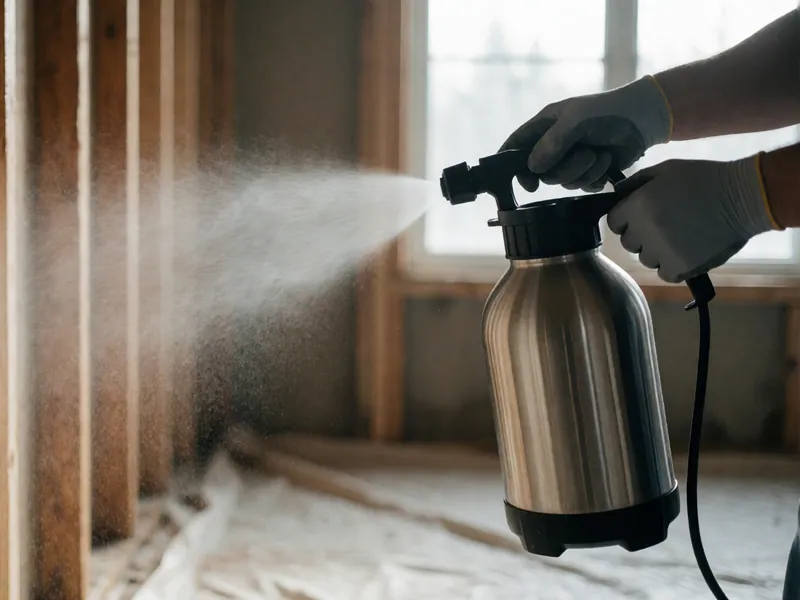
Antimicrobial treatment
Applied to cleaned surfaces as a final step — not sprayed over a dirty one instead of cleaning it.
$450 – $1,800Somebody who does the work will come and look
Book a visit
Telephone and you will get somebody on this crew rather than a call centre, at any hour. The emergency assessment is free inside our service area and you keep the written findings whether or not you use us. If what you describe will keep until the morning, we will tell you that instead of sending a van.