Contents & reconstruction
Carpet and flooring replacement
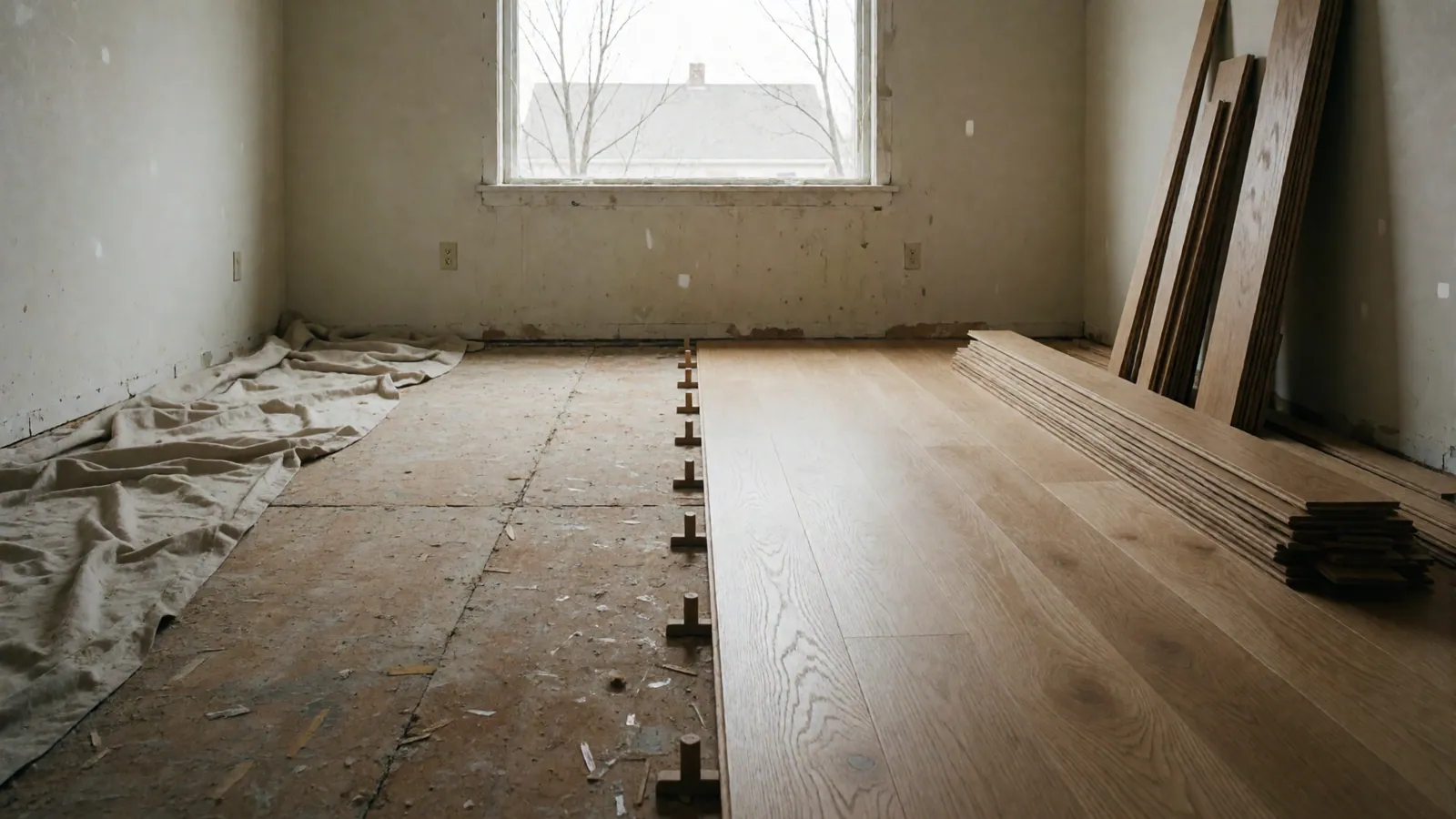
Replacing the floor that drying couldn't save, matched into whatever's staying wherever a match exists, on a subfloor we won't price until we can actually see it.
This is where the drying pages stop and this one starts: carpet and pad that took contaminated water, laminate swollen at every joint, engineered board delaminated at the edges. None of that comes back with a dehumidifier, and past that point the honest move is to replace it rather than keep drying a material that has already failed.
What we won't do is price the subfloor before we can see it. You can't tell what a deck looks like through the flooring sitting on it, and guessing is how a job doubles in price after it's started. The old floor comes up, the deck gets a proper look, and only then do you get a number for what's underneath.
What gets replaced, and why drying stopped short
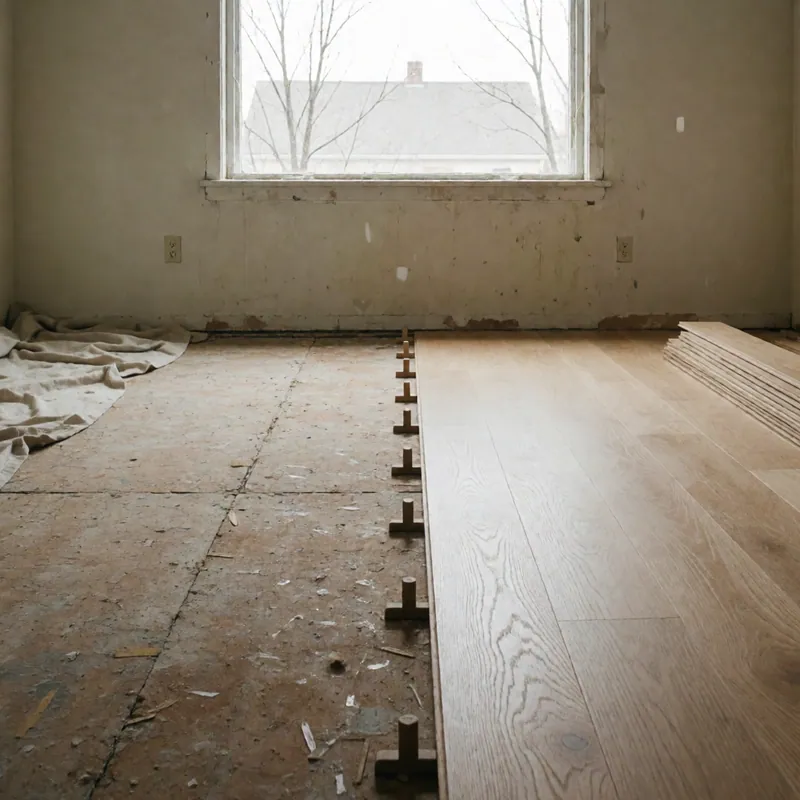
Laminate and most engineered board have a core that, once genuinely soaked, has swollen past recovering — the joints lip and there's nothing to dry back. Swollen chipboard subfloor has lost its strength regardless of what sits on top. Carpet and pad from a drain or sewer loss are disposed of rather than dried, essentially always.
That decision is written down before anything is torn up — the same salvage assessment that applies to every material on this site, not a verbal call made with a crowbar already in hand.
Matching into what stays
Species, plank width, colour and sheen are checked against what's staying before anything is ordered. A recent, common product usually matches well; an older or discontinued floor often doesn't.
Where it genuinely won't match, the honest options are a deliberate transition at a threshold, or reflooring a wider area so the seam lands somewhere less obvious. You choose once you know both prices.
The subfloor, once it's actually open
Plank subfloor over joists usually dries and holds up well; plywood is close behind; swollen chipboard typically has to come out regardless of what the floor above it did.
From there the scope is whatever the deck needs — new fasteners and underlayment if it's sound, sistering a joist or replacing sheathing if it isn't — priced and agreed before new flooring goes down.
Included as standard
What the job actually includes
A written salvage assessment first
Which flooring is worth continued drying and which has already failed.
Removal and disposal
The failed material taken up, the subfloor protected while it happens.
A subfloor inspection once it's open
A proper look and a moisture reading on the actual deck.
A written subfloor scope
Priced from what's found once the deck is visible, not before.
Matching into what's staying
Species, width, colour and sheen checked before anything is ordered.
An honest answer where it doesn't match
A transition, or a wider area, explained before you choose.
Installation and finish
New material fitted and blended at the seam bordering an existing floor.
When to call us
Signs this is the job you need
- You've already been told a floor didn't dry and has to come up
- Laminate or engineered flooring has lipped or separated at the joints
- Carpet or pad was in water from a drain or a sewer backup
- A floor feels soft or hollow underfoot even though the surface looks dry
- You want to see the subfloor before committing to new flooring on top of it
- Your existing floor is discontinued and you want your options explained before ordering
Carpet and flooring replacement — what it costs
- By area and material. Subfloor repairs are quoted once the old floor is up.$2,400 – $18,000
This is the range this job actually lands in, not a headline figure. The low end is a straightforward version of the work; the high end is one with a hard access problem, an old service, or something that has to be opened up before anybody can be certain. We tell you which one you have after we have looked, and the written quote says where the price could still move and why.
Questions we are actually asked
Flooring replacement — frequently asked
Why can't you just give me one price for the whole job today?
Because the subfloor decides most of the cost, and nobody can see it until the old floor is up. We can price removal and new flooring today, plus an honest range for typical subfloor repair.
Can you match my existing hardwood exactly?
Sometimes, and we'll say plainly when we can't. A common species and width made today is usually matchable; a decades-old or discontinued run often isn't, and then the choice is a transition or reflooring a wider area.
Is it worth trying to dry my carpet instead of replacing it?
Depends what got it wet. Carpet and pad from a clean-water loss, caught early, is sometimes worth drying. Carpet and pad from a drain or sewer backup isn't — the pad holds contamination cleaning doesn't reliably remove.
Related work
Often needed alongside this
Floor drying
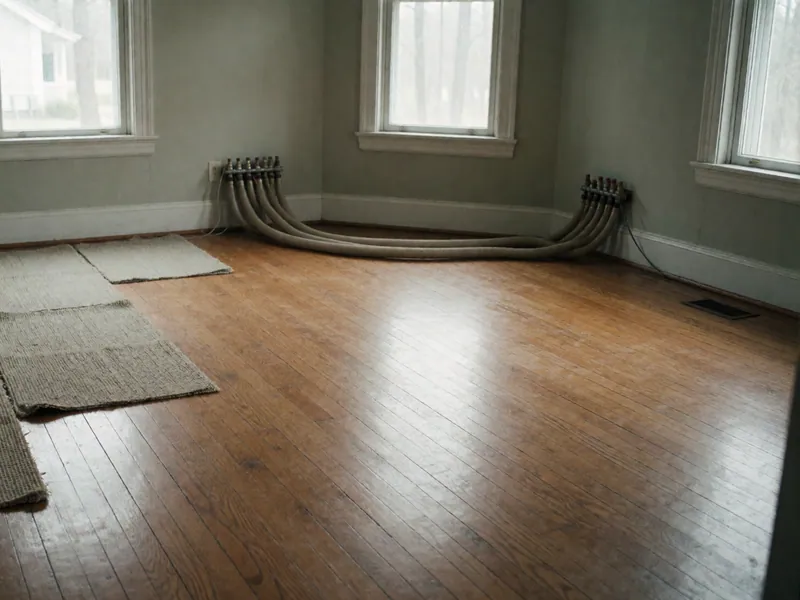
Specialist mat drying that saves cupped boards often enough to be worth trying before anybody rips them up.
$1,900 – $6,800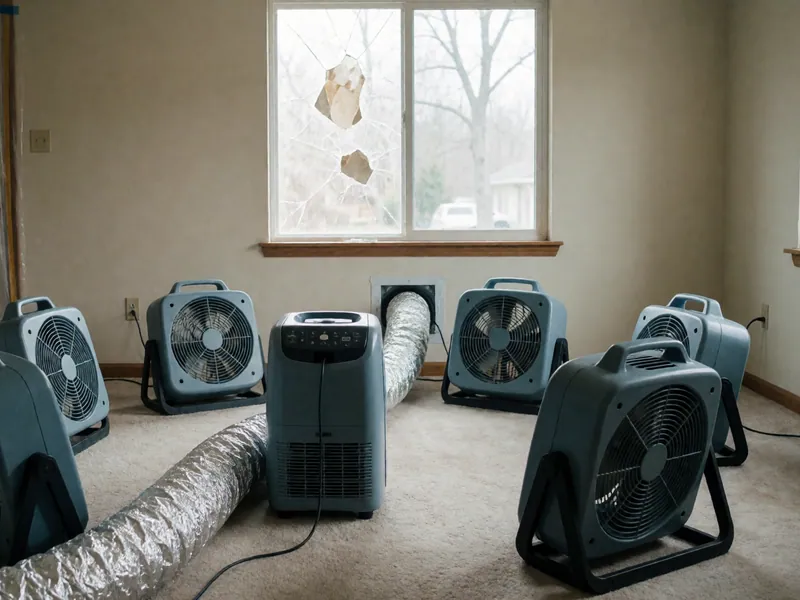
Structural drying
Air movers, dehumidifiers and daily readings until the materials reach dry standard — not until a promised day arrives.
$1,400 – $4,600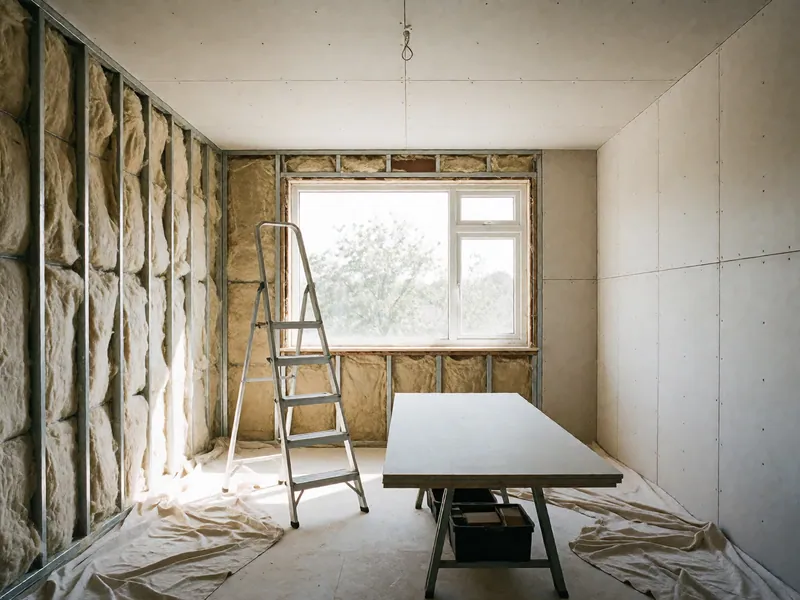
Reconstruction
Putting the building back — drywall, trim, paint, kitchens and baths — under one contract with the drying.
$12,000 – $95,000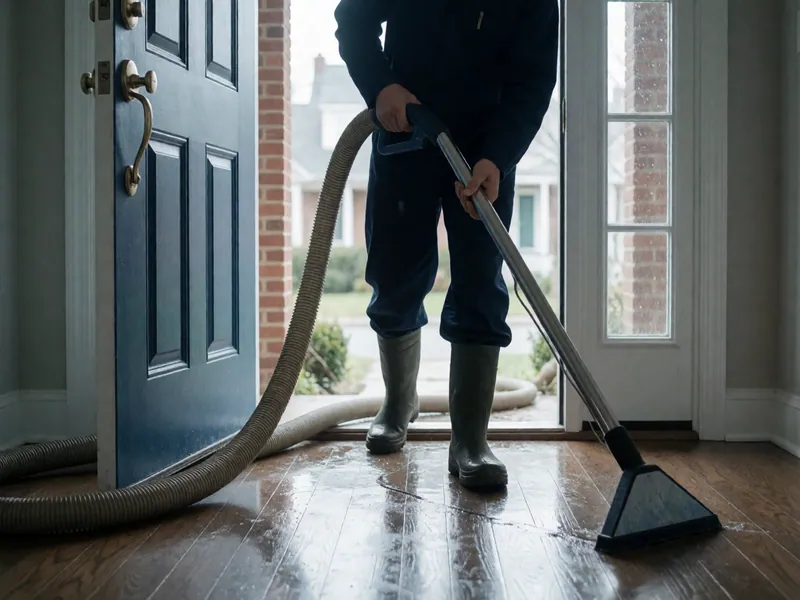
Water damage restoration
The whole job from the first hour to the last moisture reading — extraction, drying, and the repairs that put the room back.
$1,800 – $9,400Somebody who does the work will come and look
Book a visit
Telephone and you will get somebody on this crew rather than a call centre, at any hour. The emergency assessment is free inside our service area and you keep the written findings whether or not you use us. If what you describe will keep until the morning, we will tell you that instead of sending a van.