Water damage
Emergency water extraction in Woodside, NY
Getting the standing water out on the first visit, because every hour it sits makes everything after it more expensive. This is the part of the job that cannot wait until the morning, and it is the part that is genuinely worth ringing about at three.
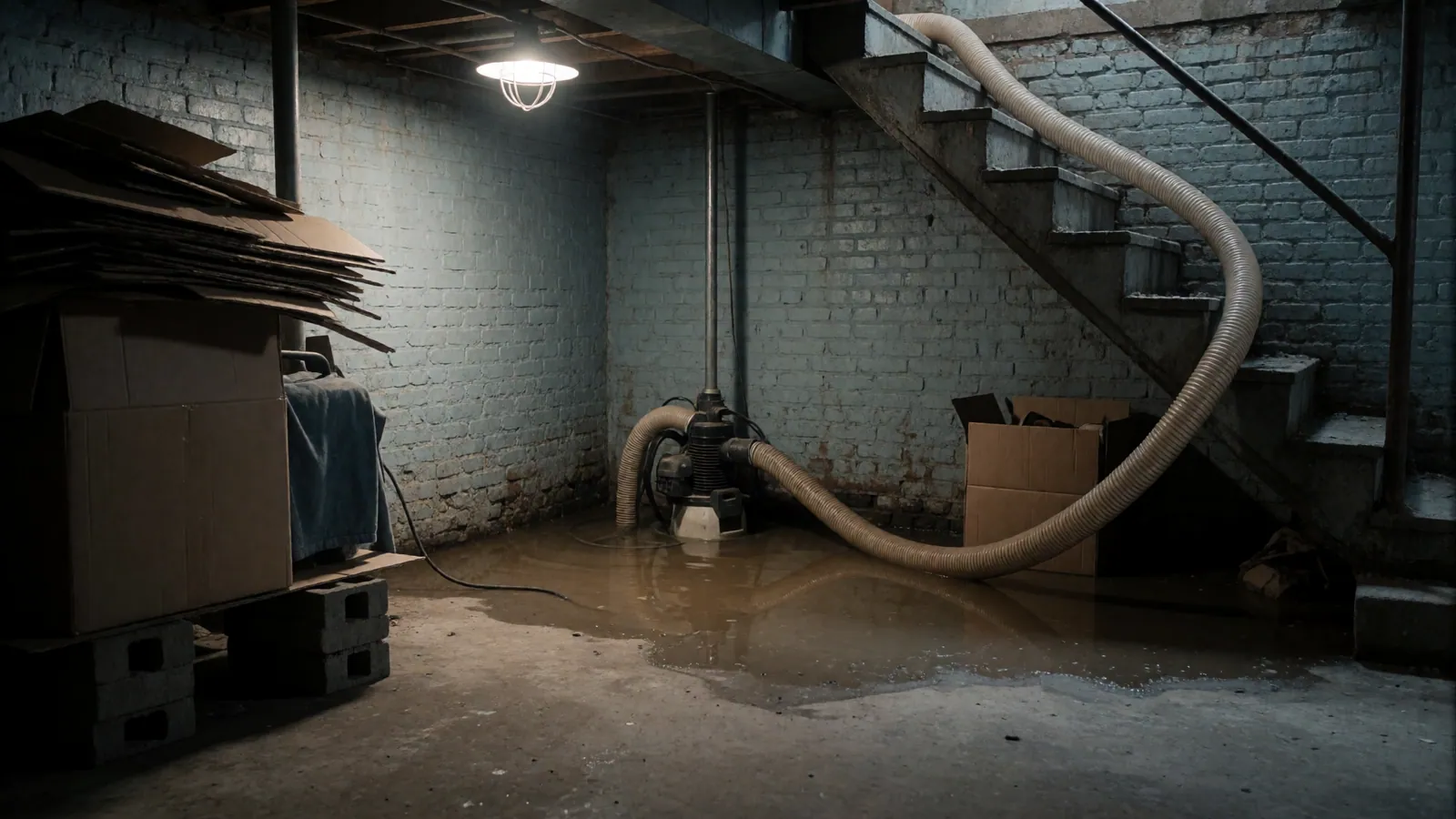
Extraction is mechanical water removal — pumps for anything deep, truck-mounted and portable extractors for what is left, and weighted extraction over carpet and underlay that pulls water out of the pile rather than skating over it. It sounds like the simple half of the job and in a sense it is, but it is the half that determines the size of the other one.
A gallon removed with a machine on the first night is a gallon that does not have to be evaporated by a dehumidifier over three days, carried out of a soaked joist, or paid for twice as replacement flooring. It is the cheapest water you will ever have moved.
What happens before we touch the water
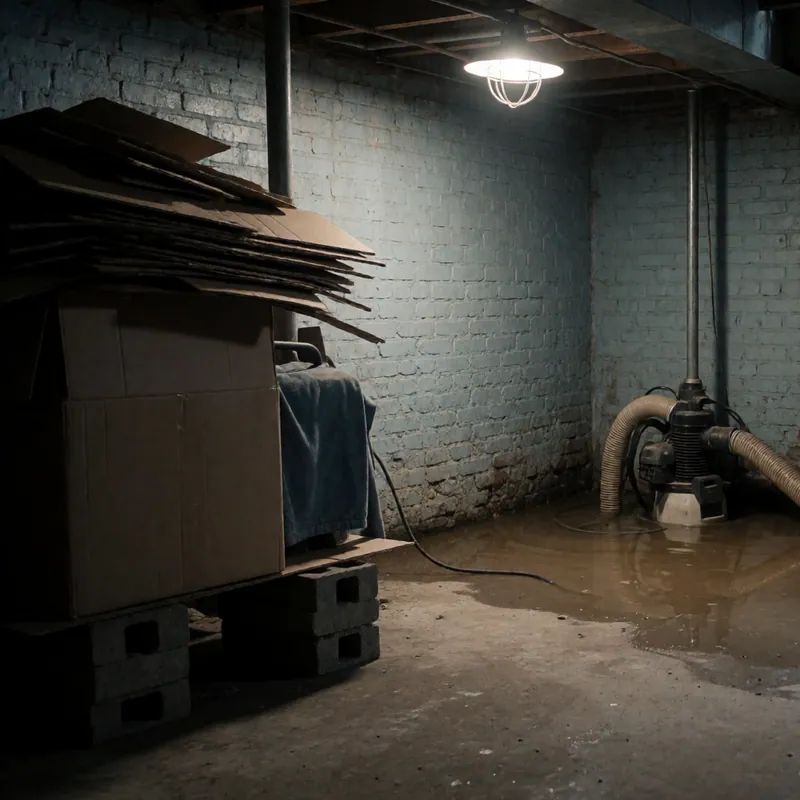
Two things, always, and neither takes long. First, is it safe: is the water anywhere near live electrical equipment, is there any question about the structure, is it category three. If power needs to come off before anybody steps in, it comes off before anybody steps in.
Second, photographs. Everything gets photographed before the first machine is switched on. Once the water is gone it cannot be photographed, and the record of how far it reached is what your insurer's adjuster works from. We have never regretted taking too many.
Deep water, shallow water, and water in things
Depth is handled with submersible pumps discharged to a drain or to the street where that is permitted. It is the fastest part and usually the least of the problem.
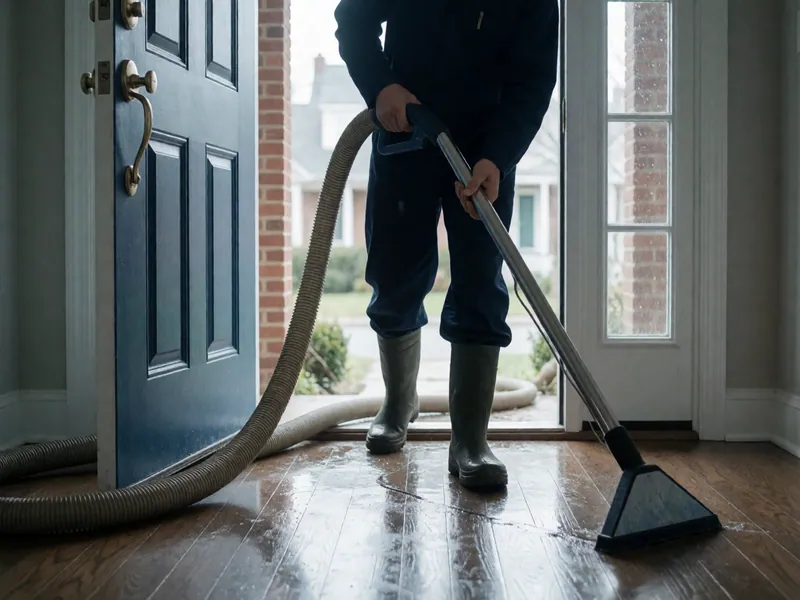
Shallow water on a hard floor comes up with a squeegee and a wand, which is quick. Water in carpet and underlay is different: it has to be drawn out under weight, in overlapping passes, and it takes several passes to stop producing water. Underlay in a category one loss is sometimes worth saving and often is not, and we will tell you which before we spend an hour on it.
Then there is water in things that are not floors — cavity walls, the void under a bath, the space beneath a fitted kitchen, the underside of a ceiling. Those get opened, extracted and dried directly rather than dried through, because air moving over a closed cavity does very little to the water inside it.
Why the emergency number is honest here and dishonest elsewhere
Almost every restoration company in New York advertises a twenty-four-hour emergency line, and a good many of them mean a national call centre that takes your details, opens a file, and passes it to whichever subcontractor picks it up in the morning. The line is genuinely twenty-four hours. The response is not.
Ours is answered by somebody on this crew. That is a smaller promise than most of the ones you will read tonight, and it is the one we can actually keep. We will not print a number of minutes. What you get is a person who knows what is in the van, an honest arrival time, and instructions for what to do in the meantime.
A real person, and a real time. The night telephone is carried by somebody on this crew, and it is answered by a person who does the work rather than by a call centre booking for a franchise network. That is not the same as promising to be at your door in thirty minutes, and we will not print a number of minutes we cannot keep. What you will get is a real person, an honest answer about when we can be there, what to do in the meantime — and, if the safe thing is to call the fire department or the utility instead of us, that answer immediately and at no charge.
Included as standard
What the job actually includes
A safety check before entry
Power, structure and water category, decided before anybody steps into it.
Photographic record before anything moves
Taken before the first machine runs, because it cannot be taken afterwards.
Pumping and mechanical extraction
Submersible pumps for depth, wand and weighted extraction for what is left in the floor.
Cavity and void extraction
Water in a wall, under a bath or beneath a kitchen taken out directly rather than dried through.
An immediate drying assessment
So the equipment that needs to be here tonight is here tonight.
The price on the telephone
The after-hours mobilisation figure before we set off, never after we arrive.
When to call us
Signs this is the job you need
- Standing water anywhere in the building, at any depth
- Water actively arriving that you cannot stop at a stopcock
- Water on a floor above a ceiling, or running down inside a wall
- A basement taking water while anything electrical in it is still live
- Carpet that squelches underfoot rather than merely feeling damp
- Any water at all that came from a drain rather than a supply line
Emergency water extraction — what it costs
- Depends on volume, on access, and on whether the water is clean or contaminated.$650 – $2,800
This is the range this job actually lands in, not a headline figure. The low end is a straightforward version of the work; the high end is one with a hard access problem, an old service, or something that has to be opened up before anybody can be certain. We tell you which one you have after we have looked, and the written quote says where the price could still move and why.
Questions we are actually asked
Water extraction — frequently asked
What should I do before you arrive?
If it is safe: stop the water at the stopcock, turn off power to the affected area, lift what you can off the floor, and photograph everything before it is moved. Do not use a household vacuum on standing water and do not walk into a flooded basement while anything electrical in it is live. If there is any question about gas, fire or the structure, ring 911 and stay out.
Can I not just use a wet vacuum myself?
For a small spill on a hard floor, yes, and you should. For anything that has reached carpet, underlay, a cavity or a subfloor, a domestic wet vacuum removes the water you can see and leaves the water that causes the damage. That is not a criticism of the machine — it is the wrong tool at the wrong pressure.
What does the after-hours callout cost?
The mobilisation is $450 for two technicians and a first equipment set outside office hours, and extraction itself runs $650 to $2,800 depending on volume, access and category. We say both numbers on the telephone before we set off.
Related work
Often needed alongside this
Water damage restoration
The whole job from the first hour to the last moisture reading — extraction, drying, and the repairs that put the room back.
$1,800 – $9,400
Basement flooding
Pumping out, drying down, and the honest conversation about why it filled up in the first place.
$2,200 – $9,500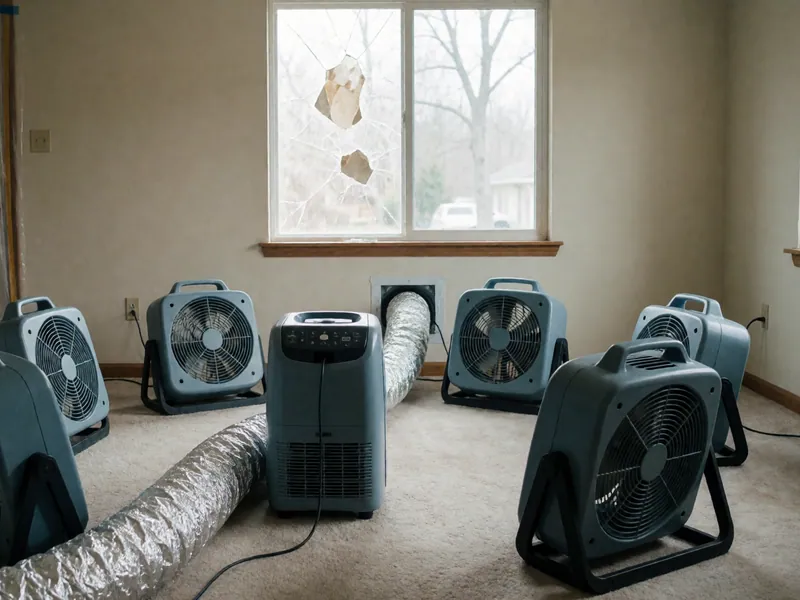
Structural drying
Air movers, dehumidifiers and daily readings until the materials reach dry standard — not until a promised day arrives.
$1,400 – $4,600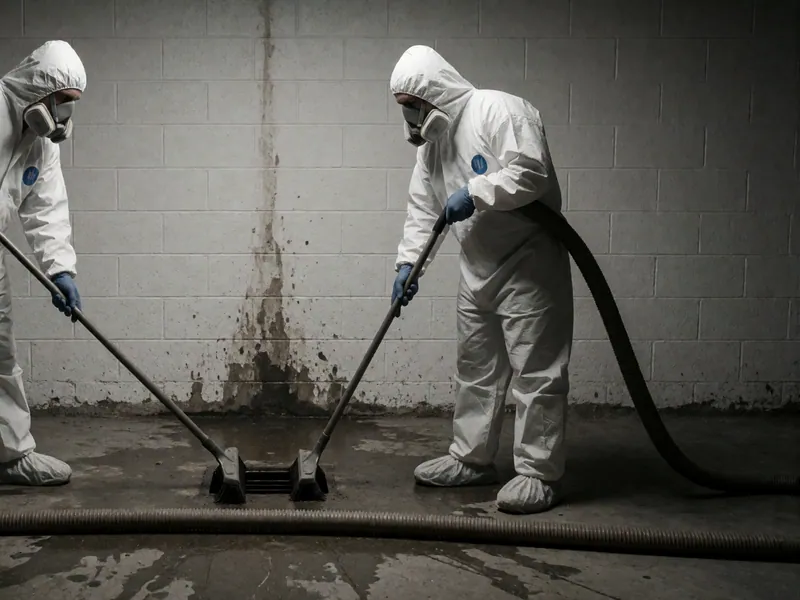
Sewage cleanup
Contaminated water is a different job with different rules, and most of what it touches does not come back.
$2,600 – $11,000Somebody who does the work will come and look
Book a visit
Telephone and you will get somebody on this crew rather than a call centre, at any hour. The emergency assessment is free inside our service area and you keep the written findings whether or not you use us. If what you describe will keep until the morning, we will tell you that instead of sending a van.