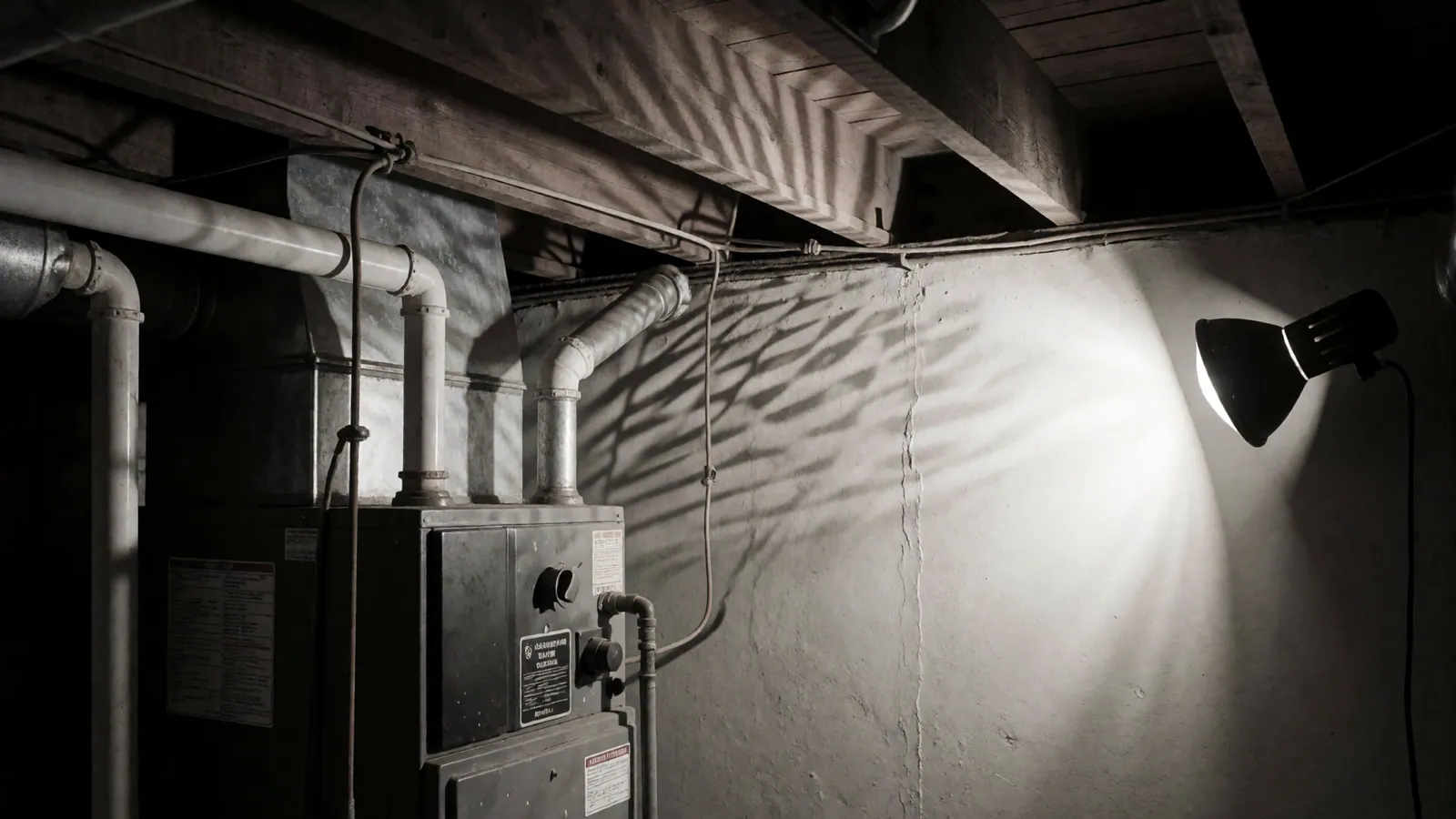
Fire, smoke & odour
Oil furnace puffback cleanup
The oily black soot a misfiring oil burner blows back through every duct it feeds, usually discovered on the coldest night of the year and usually mistaken, for a week or more, for a house that has simply gotten dirty.
A puffback happens when an oil burner misfires — delayed ignition, a bad nozzle, a faulty electrode — and unburned fuel vapour builds up before igniting all at once. That small explosion pushes oily black soot backward through the return path and out through every supply register, instead of up the flue.
It is not a fire, and there is often nothing visibly burnt, which is why people live with it for a week before anybody identifies the cause. What looks like a house that has mysteriously gotten dirty is one mechanical event — and this needs the ducts cleaned, not just the rooms.
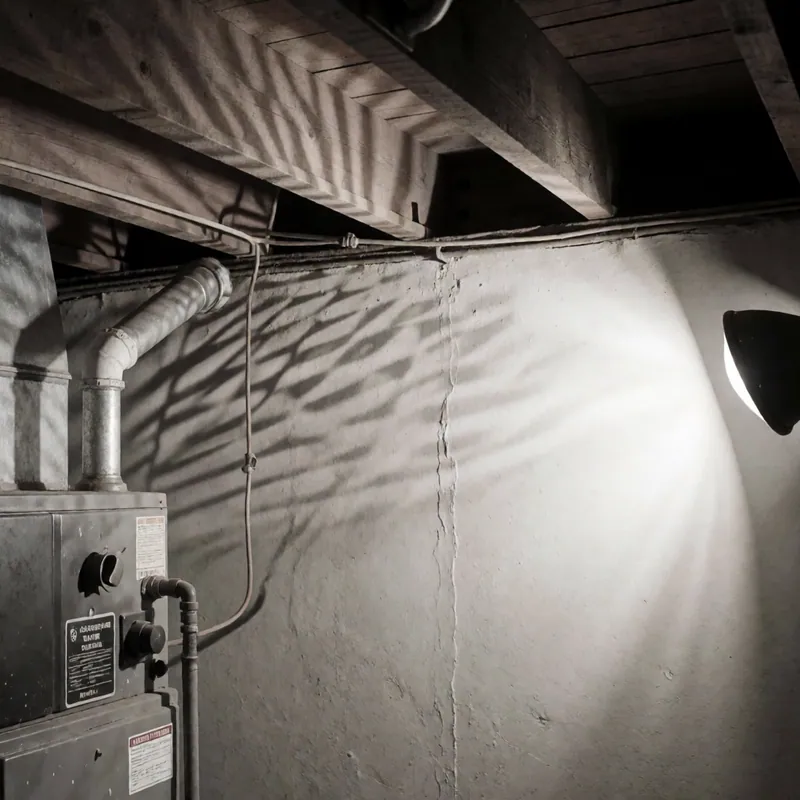
Recognising a puffback rather than 'a dirty house'
The soot is fine, black and concentrated around every supply register, oily to the touch rather than dry dust. It is usually strongest near the furnace and lighter the further a room sits from it, often with a faint fuel-oil smell.
Because nothing burned that anybody saw, this pattern gets misread as a cleaning failure or ordinary dust. The giveaway is that it is at every register, all at once, rather than building up gradually.
Why the ducts have to be cleaned, not just the rooms
Unlike soot from a room fire, which settles where the smoke reached, puffback soot is distributed by the duct system itself. Cleaning the rooms without cleaning the runs leaves a reservoir that reintroduces the smell every time the furnace runs.
That means access into the trunk and branch runs, mechanical brushing, and HEPA vacuum extraction under negative pressure — not a chemical sprayed into a duct and left, which moves residue around without taking it out.
The furnace itself is not our job
We identify the puffback, clean the residue, and document what we found. We are not licensed to service oil burners, and we refer you to a heating technician for the mechanical repair rather than guess at it ourselves.
Whether this reads as a sudden malfunction or a known, recurring problem matters to a claim, and it is one we document rather than decide — that is between you, your policy and your insurer's adjuster.
We document your loss. We do not decide your claim. We cannot tell you what your insurer will pay, and neither can anybody else holding a moisture meter. Coverage is decided by your policy and your insurer's adjuster, not by your contractor, and a restoration company that tells you on the doorstep that you are covered is guessing with your money. What we can do is document the loss properly — photographs, moisture readings, a written scope, daily drying logs — so that whoever decides has something real to decide from. We will attend the adjuster's inspection and answer any question put to us. What we will not do is negotiate your settlement for you: in New York, a contractor who negotiates a claim on your behalf is acting as a public adjuster and must be licensed by the Department of Financial Services. We are not, so we do not, and we charge you nothing for dealing with your insurer.
Included as standard
What the job actually includes
Identifying puffback residue correctly
Distinguished from ordinary soiling by pattern, texture and smell.
Whole-duct-run cleaning
Trunk and branch runs, not only the rooms the soot is visible in.
Surface cleaning of every room the system feeds
Registers, sills and surfaces the oily film reached.
Filter and register cleaning or replacement
Cleaned where that is enough, replaced where it is not.
Odour treatment where the residue has set
For film that needs more than a surface wipe.
Referral to a licensed heating technician
For the burner repair itself, which is not ours to attempt.
A dated written record of what was found
For your file and for anybody who later needs to know.
When to call us
Signs this is the job you need
- Fine black soot around every supply register, not just one room
- A residue that feels oily rather than dry when you touch it
- A faint fuel-oil smell that gets stronger when the heat runs
- Soot concentrated most heavily near the furnace or utility room
- A furnace that had trouble starting, or smelled odd, shortly before this happened
- Soot appearing overnight with no fire, candle or cooking to explain it
Oil furnace puffback cleanup — what it costs
- Whole-house cleaning including the duct runs the soot travelled through.$2,800 – $14,000
This is the range this job actually lands in, not a headline figure. The low end is a straightforward version of the work; the high end is one with a hard access problem, an old service, or something that has to be opened up before anybody can be certain. We tell you which one you have after we have looked, and the written quote says where the price could still move and why.
Questions we are actually asked
Puffback cleanup — frequently asked
How is this different from a house fire?
No flame reached the living space — it is a mechanical malfunction that distributed soot through the ductwork, not combustion in a room. The cleaning overlaps in places but the cause, and the duct work it requires, are specific to a puffback.
Will you fix the furnace too?
No. We clean the residue and identify what happened, but the burner repair needs a licensed heating technician, and we would rather refer you than attempt work we are not set up to do properly.
Is a puffback covered by insurance?
Your policy and your insurer's adjuster decide that, not us. Sudden breakdowns are often treated differently from a problem that had been building for a while, which is why we document what we found rather than describe it loosely.
Related work
Often needed alongside this
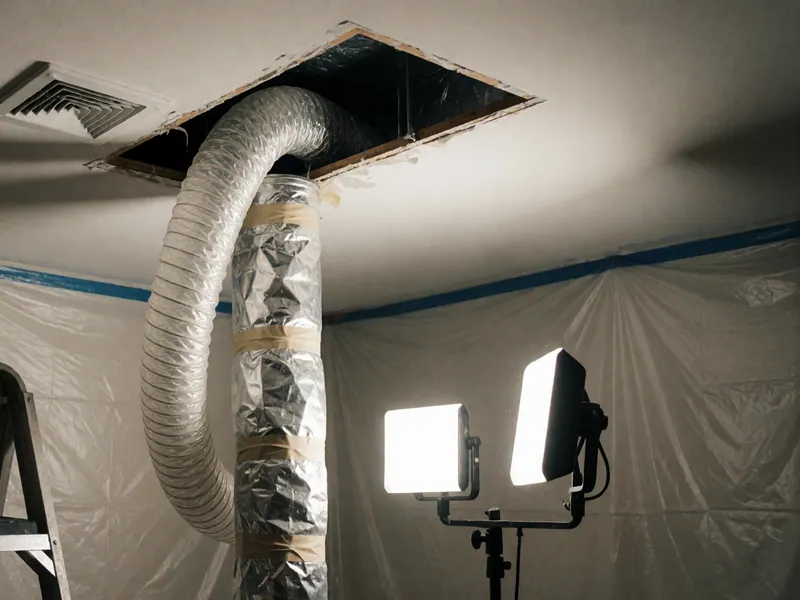
Duct cleaning
The ductwork is how soot and odour reach rooms the fire never touched, and it is the step most often skipped.
$900 – $3,800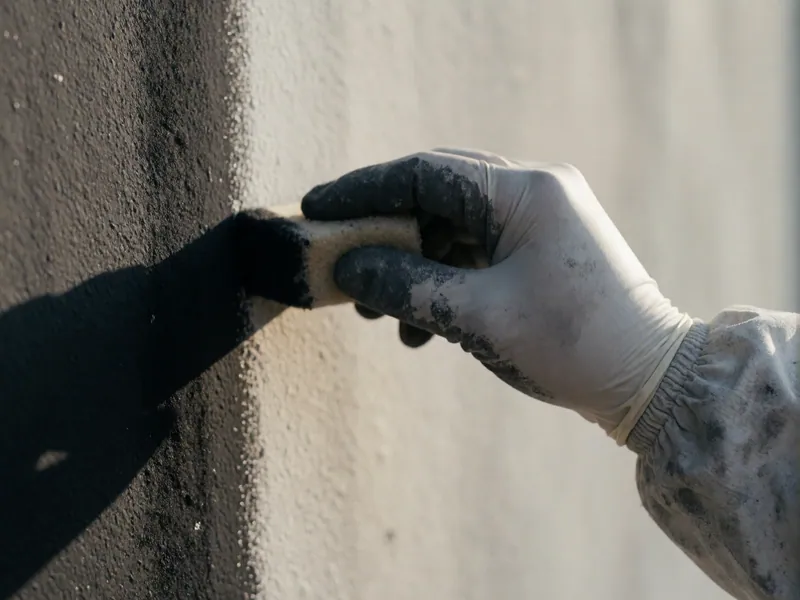
Soot removal
Soot is acidic and it keeps eating surfaces until it is taken off — which is why this is urgent and not cosmetic.
$3,200 – $18,000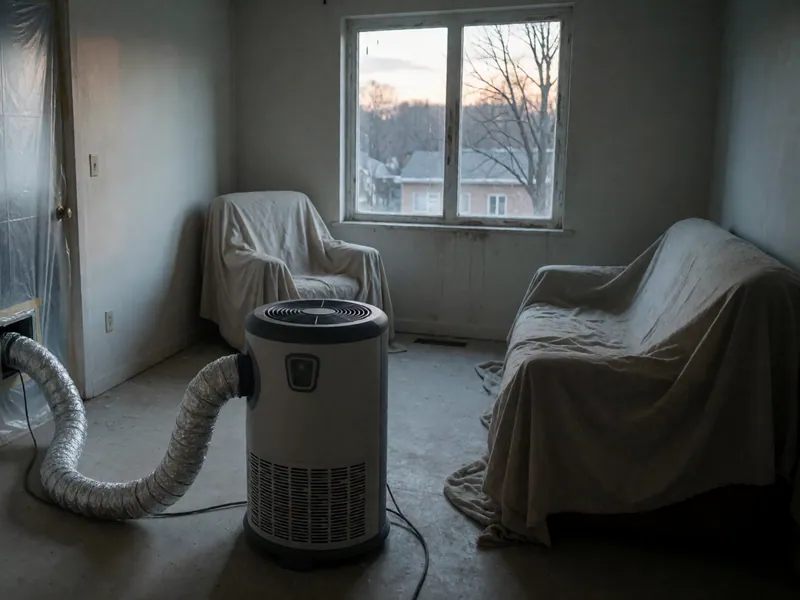
Odour removal
Getting the smell out properly, which means finding what still holds it rather than covering it over.
$1,400 – $7,600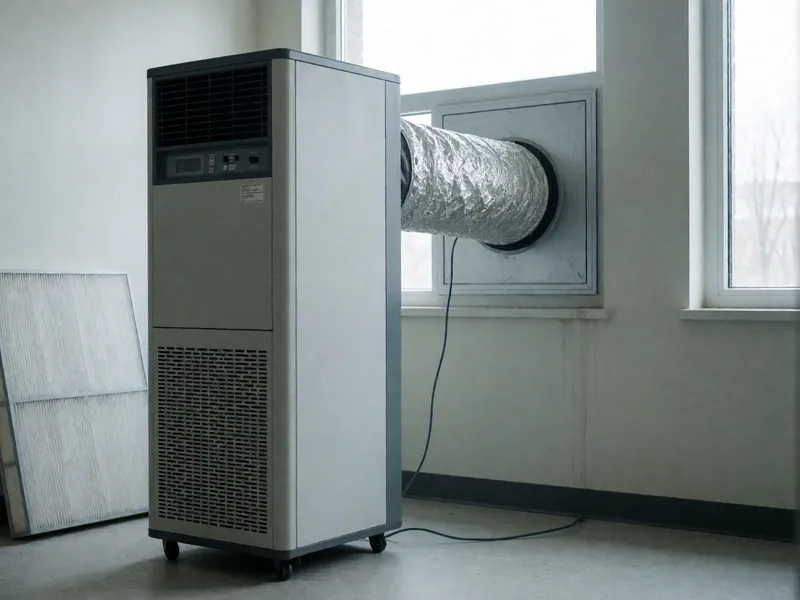
Air scrubbing
Negative air and filtration that keep the work zone's problems inside the work zone.
$180 – $340Somebody who does the work will come and look
Book a visit
Telephone and you will get somebody on this crew rather than a call centre, at any hour. The emergency assessment is free inside our service area and you keep the written findings whether or not you use us. If what you describe will keep until the morning, we will tell you that instead of sending a van.