The delay we will not talk you out of
Asbestos, lead and older buildings
Most of the houses we work in were built before either of the rules that now govern taking them apart. Here is what those rules are, why we stop rather than press on, and what carries on in the meantime.
In a pre-1987 building we stop before we cut. In a building put up before 1 April 1987 we stop before we cut. New York City requires an asbestos investigation, filed with the Department of Environmental Protection, before the Department of Buildings will issue a permit for work in a building of that age, and much of the housing stock we work in is older than that. Paint in housing built before 1978 is governed by the federal Renovation, Repair and Painting rule. Neither is a formality and neither is our decision to skip: a contractor who tears out wet plaster in a 1928 house without an investigation is not saving you a week, they are spreading a hazard through the rest of your home and leaving you holding it.
Two dates that decide what happens next
1 April 1987. New York City requires an asbestos investigation before the Department of Buildings will issue a permit for work in a building put up before that date. The investigation is carried out by a licensed asbestos investigator and filed with the Department of Environmental Protection — the form most people have heard of is the ACP-5, which records either that no asbestos-containing material is present or that none will be disturbed by the proposed work. Without that filing, the permit does not issue.
1978. Housing built before then falls under the federal Renovation, Repair and Painting rule, which governs work that disturbs painted surfaces. It exists because the dust is the hazard rather than the paint, and ordinary demolition produces a great deal of dust.
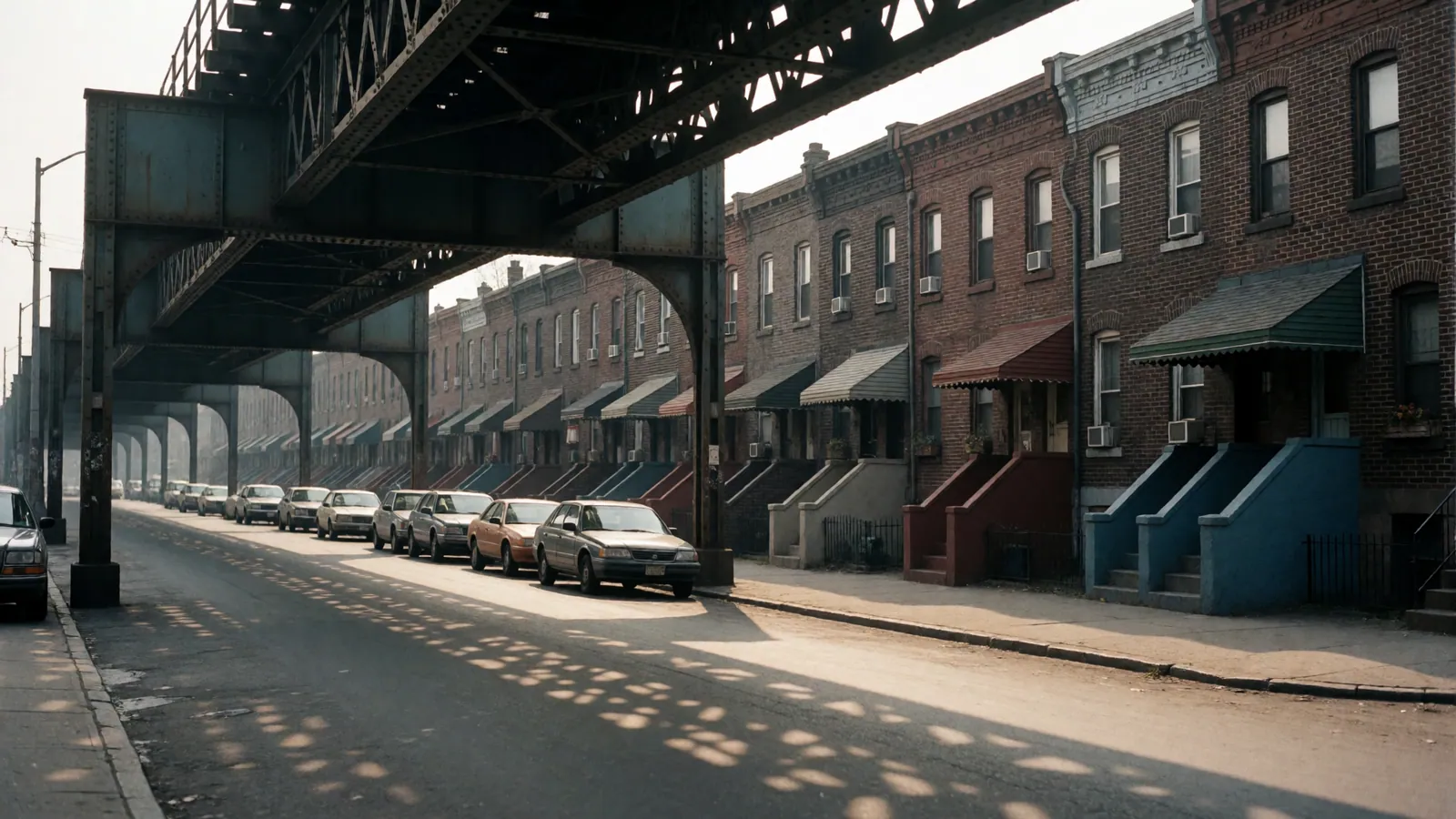
Look at the housing stock on any street in Woodside, Sunnyside, Jackson Heights or Ridgewood and you will understand why this page exists. Rows of pre-war brick two-families and walk-ups: almost all of them are older than 1978, and effectively all of them are older than 1987.
Where it collides with a water loss
Restoration is the trade most likely to run into this by accident, because our work is unplanned. A kitchen refit is designed months in advance and the investigation happens somewhere in that timeline. A pipe that split at two in the morning does not give anybody a timeline, and the person standing in the wet room at three is being asked to open a ceiling right now.
The materials in question are exactly the ones a water loss makes you want to remove: textured ceiling coatings, some floor tiles and their adhesives, pipe and boiler insulation, certain board products, and window and door putties. Those are the parts of the building a burst pipe soaks and a restoration contractor cuts.
Why we stop, in plain terms
Undisturbed material inside a wall is a contained problem. The hazard is created when somebody makes dust out of it. So a contractor who saws through a pre-war ceiling to save you a week has not saved you a week — they have taken something that was sitting still in one room and distributed it through the rest of the house, into the ventilation, and over the contents we are about to pack up and take away. Then it is in the parts of the building that were perfectly fine, and it is your problem rather than theirs, because they have moved on.
We do not abate asbestos and we do not do lead abatement. What we do is recognise the situation, stop, tell you what has to happen and who does it, and pick the job back up when that part is properly closed out. That costs us days on a programme and we do it anyway.
What carries on while you wait
Almost all of the urgent half. Extraction does not disturb building materials. Nor does running drying equipment, boarding an opening, tarping a roof, putting up containment, or packing out contents from rooms that are not being opened. The clock that matters most in a water loss — get the water out, start drying — is not the clock that the investigation pauses.
What waits is demolition: opening walls and ceilings, lifting floors, taking out plaster. In practice an investigation is measured in days rather than weeks, and sequencing the job so that everything else happens first usually absorbs most of it.
How we handle it
What happens when the building is old enough to matter
We establish the age on the first visit
Before any scope is written, because it changes the sequence and the programme rather than being discovered halfway through.
Mitigation starts immediately
Extraction, drying, board-up and containment do not disturb materials and do not wait for anything.
You appoint a licensed investigator
We will tell you what you are looking for. They inspect and file, and the result either clears the work or defines what has to be abated first.
Abatement, if it is needed, by somebody else
A licensed abatement contractor. Not us — it is a separate trade and a separate licence, and pretending otherwise is how people get hurt.
Then we open up and rebuild
With the filing in place and the permit issued, and with the record in your paperwork where it belongs.
Questions people actually ask
Older buildings — frequently asked
Why does the age of my building matter?
Because two sets of rules key off it. New York City requires an asbestos investigation, filed with the Department of Environmental Protection, before the Department of Buildings will issue a permit for work in a building constructed before 1 April 1987. And the federal Renovation, Repair and Painting rule governs disturbing paint in housing built before 1978. A great deal of the Queens housing stock we work in is older than both.
Does that mean my house is full of asbestos?
No. It means nobody knows until somebody qualified looks, and that the law requires looking before cutting rather than after. Most investigations in most buildings find nothing that will be disturbed by the work in question, and that result is itself the document that lets the permit proceed.
Do you do the asbestos work?
No. We are restoration contractors. An asbestos investigation is done by a licensed investigator and abatement by a licensed abatement contractor, and both are separate trades from ours. What we do is stop, tell you what is needed, and continue once that part is properly closed out.
This will delay my job. Can we not just get on with it?
No, and it is worth being blunt about why. Tearing out wet plaster in a 1928 house without an investigation does not save you a week — it takes a hazard that was sitting still inside one wall and distributes it as dust through the rest of your home, into your ventilation, and onto everything we are about to pack out. Then it is in the parts of the house that were fine.
What about emergency work — does that stop too?
Emergency mitigation that does not disturb building materials carries on. Extracting water, running drying equipment, boarding an opening and putting up containment do not involve cutting into anything. What waits is demolition: opening walls and ceilings, lifting floors, removing plaster. That distinction is usually enough to keep the first days moving.
Who pays for the investigation?
The owner, and it is a modest cost against the alternative. Where there is a claim it is often part of the loss, but that is your insurer's decision and we will not pretend to make it. We will document it as we document everything else.
Tell us how old the building is
Pre-war house, and water in the ceiling?
Ring us and say roughly when it was built. It changes the order we do things in, and knowing it on the first telephone call rather than on day three is usually the difference between a sequenced job and a stalled one.