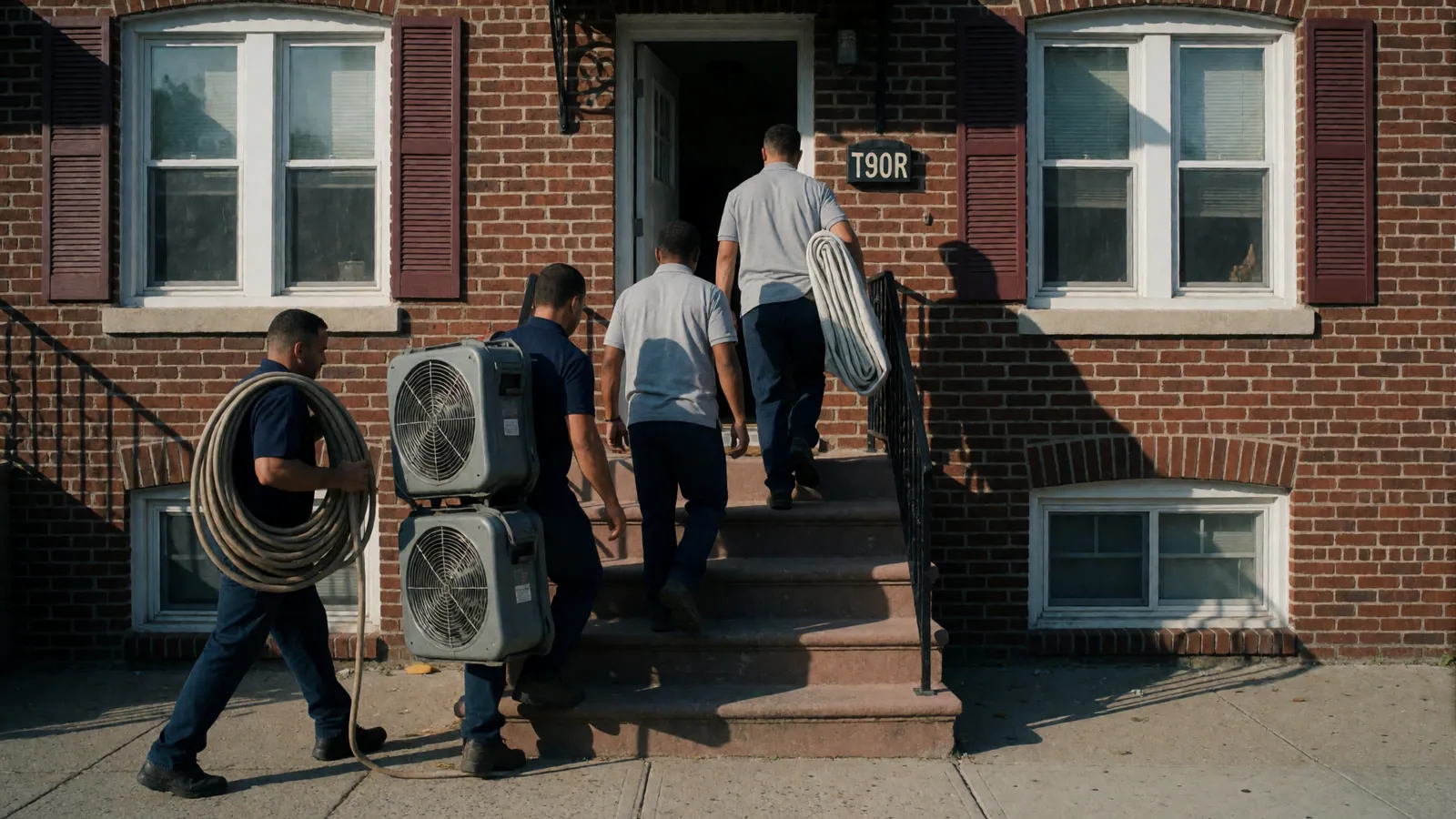
6 steps, in order
How we work
What actually happens, from the telephone call to the readings that close the file — including the step this trade usually skips, which is telling you what cannot be saved before spending your money on it.
Emergency measures fit on one page. The paper we ask you to sign in the first hour authorises emergency work only — extraction, drying equipment, board-up — with the scope and the rate on the same page, and it ends when the emergency does. It is not an open-ended authority to bill whatever the job becomes, and it is not an assignment of your insurance benefits. We do not use assignment-of-benefits agreements at all. If somebody hands you a form at midnight that signs your claim over to them, or that authorises unspecified work at unspecified prices, do not sign it — not ours, and not anybody's. Read it in the morning. Anything that genuinely cannot wait until morning is an emergency measure that fits on one page.
You ring, and a person answers
At any hour. The first thing you get is not a booking — it is two minutes of questions about whether the building is safe to be in, whether the water is still arriving, and whether the power should be off. If the right answer is to ring somebody other than us, we will tell you that first.
We come and look, at no charge
Somebody who does the work, not a salesperson. We find the source, map how far the water or smoke has travelled, and take the readings and photographs that everything after this depends on. A free visit is still a sales visit — ours included — so we write down what we found rather than only what we would like to sell.
You get the scope on one page before we start
What the emergency work is, what it costs, and where it ends. It is not an open authority to bill whatever the job turns into, and it is never an assignment of your insurance benefits.
We mitigate, and we document while we do it
Extraction, drying equipment, board-up, containment — whatever the first days need. Daily moisture readings, dated and logged, because those readings are what decide when the equipment leaves and what your insurer will want to see.
We tell you what cannot be saved
A written salvage assessment, item by item for anything significant, before we spend your money cleaning something that should be replaced. This is the conversation this trade skips.
We put it back, and the readings close the file
Reconstruction under the same contract if you want it, filed and permitted where that is required. The job ends when the materials are dry and the paperwork is with you — not when the equipment is collected.
The document that decides everything
Why the readings matter more than the schedule
A structure is dry when its materials reach the moisture content of comparable dry materials elsewhere in the same building. Not when it feels dry, not when it looks dry, and not on a day somebody named in advance. That definition is why every visit takes readings at the same marked points, against a reference from an area the water never reached, and writes them down dated.
That log is what decides when the equipment leaves, and it is what answers an adjuster who wants to know why it was there for six days. A drying job with no daily readings has no evidence behind it, and you should be suspicious of one — ours included.
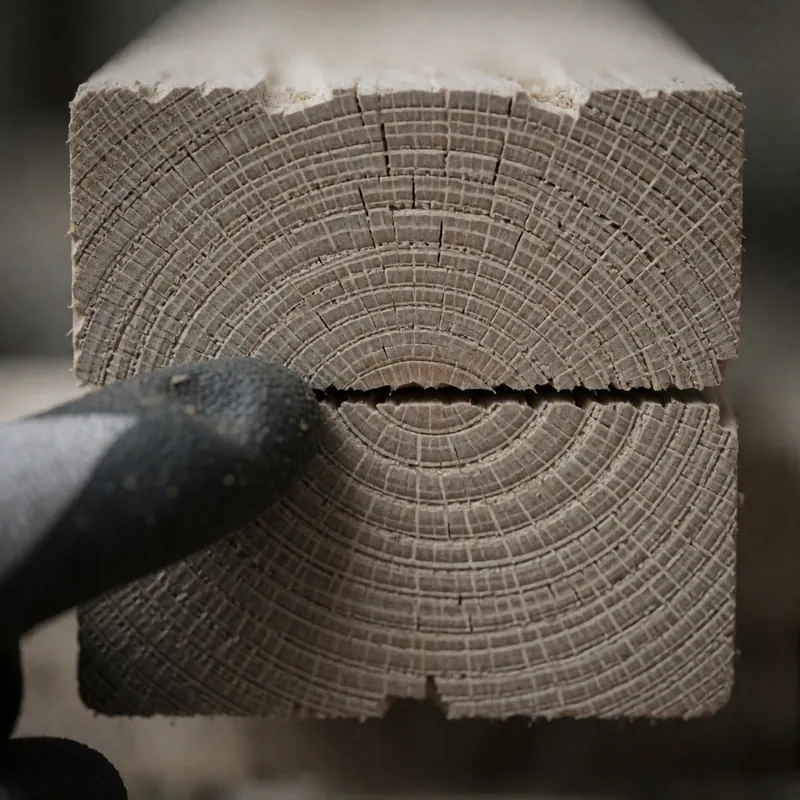
Some of it will not be saved. Some of it will not be saved, and you deserve to hear that on day one rather than after the cleaning bill. Water and smoke both sort belongings into three piles: things that clean up completely, things that can be restored for less than replacing them, and things where the cleaning costs more than the object is worth or where nothing will make them safe again — porous items soaked in category-three water, most soaked mattresses and upholstered foam, some heat-warped electronics. Anyone who tells you everything is recoverable is describing their invoice, not your possessions. We will tell you which pile a thing is in before we spend your money on it, and we will tell you when the honest answer is to replace it.
The step everybody else leaves out
Between mitigation and reconstruction there is a conversation that costs us money and we have it anyway: which of your belongings will clean up completely, which can be restored for less than replacing them, and which should be replaced. In writing, item by item for anything significant, before anybody spends your money cleaning something that should have gone in a skip.
Cleaning is billed whether or not it works, which is the entire explanation for why "we can save everything" is such a popular thing to say. You get the triage on day one instead.
Start with a look
The assessment is free and it comes first
Somebody who does the work comes and looks, finds the source, takes the readings and the photographs, and leaves you with written findings — whether or not you use us for anything after that.