Water damage
Basement and cellar flooding
Pumping out, drying down, and the conversation most contractors skip: where the water came in, whether it will come in again, and whether the thing that would actually fix it is us at all.
Basements flood from four directions and the direction matters more than the depth. A supply pipe or heater that failed is clean water and an ordinary water loss. A drain or sewer backup is grossly contaminated and is a different job with different rules. Groundwater coming through the slab or the wall joint is a building problem wearing a restoration problem's clothes. And surface water coming down an areaway or a stair is usually a drainage failure outside the building.
We establish which one you have before anything else, because it determines how the contents are handled, what has to be disposed of rather than dried, and — bluntly — how your insurer is likely to see it.
Safety, because a basement is the worst room for this
Electrical equipment lives in basements. Consumer units, boilers, pumps, freezers, extension leads along the floor. Water and all of that in the same room is the one genuinely dangerous combination in this trade, and it kills people who were only trying to save a box of photographs.
So the rule is absolute and it applies before we arrive as much as after: if there is standing water in a basement and anything electrical in that basement is still live, nobody goes in. Power comes off at a point outside the water first. If the board is in the basement, or you cannot reach the isolation point without wading, that is a call to the utility or an electrician and not a decision to make in the moment.
The second hazard is air. A basement that has been closed, wet and warm — particularly after a sewage backup — can hold a genuinely poor atmosphere. We ventilate before we work, and if you have a fuel-burning appliance down there that has been under water it does not get switched on again until somebody qualified has looked at it.
Getting it out and getting it dry
Pumps for the depth, extraction for the residue, then a hard decision about the contents. Anything porous that has been sitting in category three water — cardboard, soft furnishings, mattresses, chipboard, most stored fabric — comes out and is disposed of rather than dried, and this is usually the largest single line on a basement job and the one people find hardest.
Then the structure. Masonry and concrete hold an enormous amount of water and release it slowly, so basements take longer than upstairs rooms — often a week rather than three days — and the readings that matter are taken in the wall rather than off it. Where a basement has been finished, the stud walls and insulation against the masonry are usually the part that has to come out, and a finished basement is therefore a considerably bigger job than an unfinished one.
Why it filled up, which is the part that is worth more than the drying
If it came in through a pipe, we dry it and you fix the pipe and that is the end of it. If it came in through the building — a failed area drain, a saturated exterior, a slab-wall joint, a sump that stopped working — then drying it is treating a symptom, and it will happen again in the next heavy rain.
We write down what we found and what we think caused it. Sometimes the answer is genuinely a restoration job. Very often it is a gutter, a grade, a drain or a pump, and the useful thing we can do for you is say so plainly and name the trade that fixes it — because we would rather not be back here in October drying the same room again and billing you for it a second time.
We document your loss. We do not decide your claim. We cannot tell you what your insurer will pay, and neither can anybody else holding a moisture meter. Coverage is decided by your policy and your insurer's adjuster, not by your contractor, and a restoration company that tells you on the doorstep that you are covered is guessing with your money. What we can do is document the loss properly — photographs, moisture readings, a written scope, daily drying logs — so that whoever decides has something real to decide from. We will attend the adjuster's inspection and answer any question put to us. What we will not do is negotiate your settlement for you: in New York, a contractor who negotiates a claim on your behalf is acting as a public adjuster and must be licensed by the Department of Financial Services. We are not, so we do not, and we charge you nothing for dealing with your insurer.
Included as standard
What the job actually includes
A safety assessment before entry
Electrical isolation and ventilation established before anybody steps into the water.
Pump out and extraction
Depth pumped, residue extracted, and the slab cleaned down rather than left to evaporate.
Category assessment
Clean, contaminated or grossly contaminated, decided on arrival, because it governs everything after.
Contents triage
What can be kept, what has to go, and what should be washed rather than binned — decided with you, not for you.
Disinfection where the category requires it
Applied to cleaned surfaces as a final step rather than sprayed over a dirty one.
A written cause finding
What let the water in, and which trade fixes it — including when that trade is not us.
When to call us
Signs this is the job you need
- A tide line on the wall, or efflorescence powdering out of the block or brick
- A sump pump that runs constantly, or one that has stopped running altogether
- Water appearing at the joint between the floor slab and the wall after heavy rain
- A drain in the floor that gurgles or backs up when it rains
- A musty smell in the ground-floor rooms above rather than in the basement itself
- Rust at the base of a boiler, a freezer or anything else standing on the slab
Basement and cellar flooding — what it costs
- A full residential basement, pump-out through to dry standard.$2,200 – $9,500
This is the range this job actually lands in, not a headline figure. The low end is a straightforward version of the work; the high end is one with a hard access problem, an old service, or something that has to be opened up before anybody can be certain. We tell you which one you have after we have looked, and the written quote says where the price could still move and why.
Questions we are actually asked
Basement flooding — frequently asked
Is a flooded basement covered by my insurance?
Your policy decides. As a general matter, water that arrives from inside the building — a burst pipe, a failed heater — is treated very differently from surface water or groundwater arriving from outside, and flood cover is frequently a separate policy entirely. This is exactly why we establish and document the direction the water came from, and why we will not tell you on the doorstep that you are covered.
Can I pump it out myself?
Only after the power question is settled, and never while anything electrical in that basement is live. If the electrical position is safe and the water is clean, a hired pump is a perfectly reasonable thing to do and it will save you money. If the water came from a drain, please do not — the water is the smaller half of that problem and the residue is the part that matters.
Why does a basement take longer to dry?
Masonry and concrete hold a great deal of water and give it up slowly, and a basement is usually the coolest and least ventilated room in the building, which is the opposite of what drying wants. A week is common where upstairs would be three days, and the readings are taken in the wall rather than off its surface.
Related work
Often needed alongside this
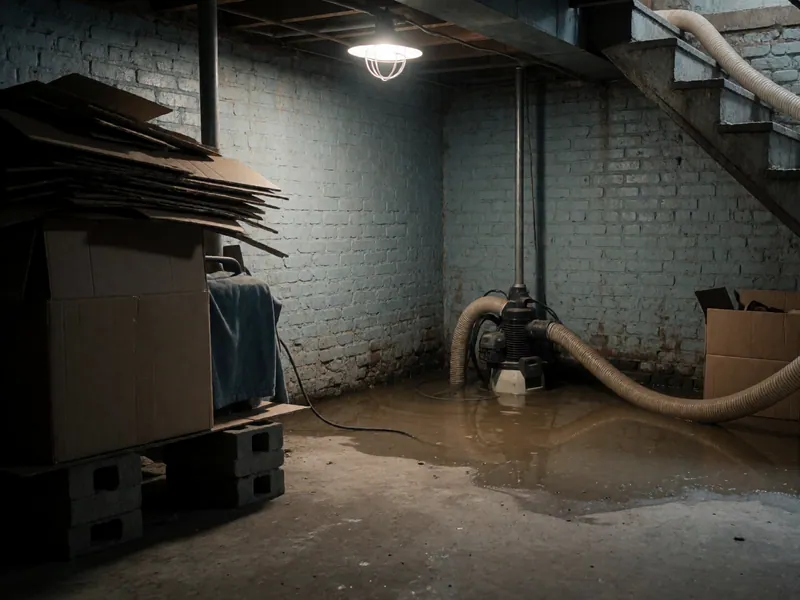
Water extraction
Getting the standing water out on the first visit, because everything that follows gets cheaper the sooner it goes.
$650 – $2,800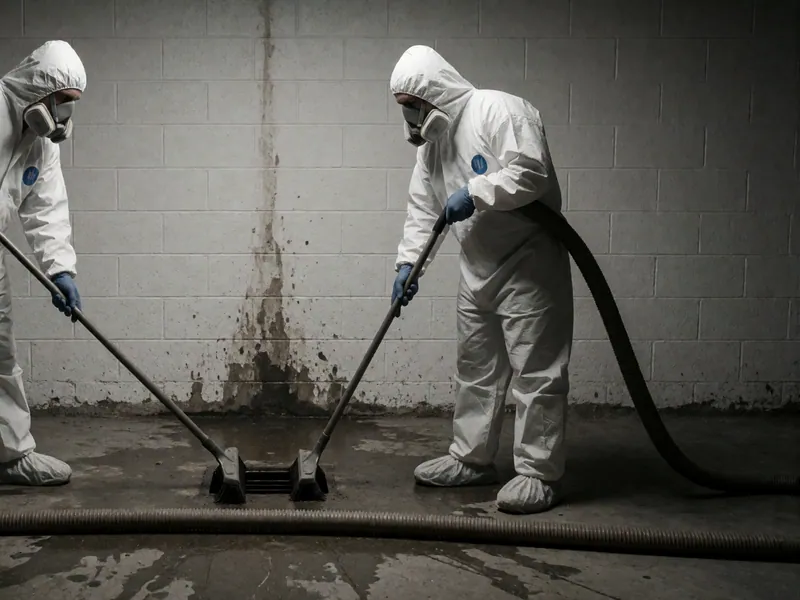
Sewage cleanup
Contaminated water is a different job with different rules, and most of what it touches does not come back.
$2,600 – $11,000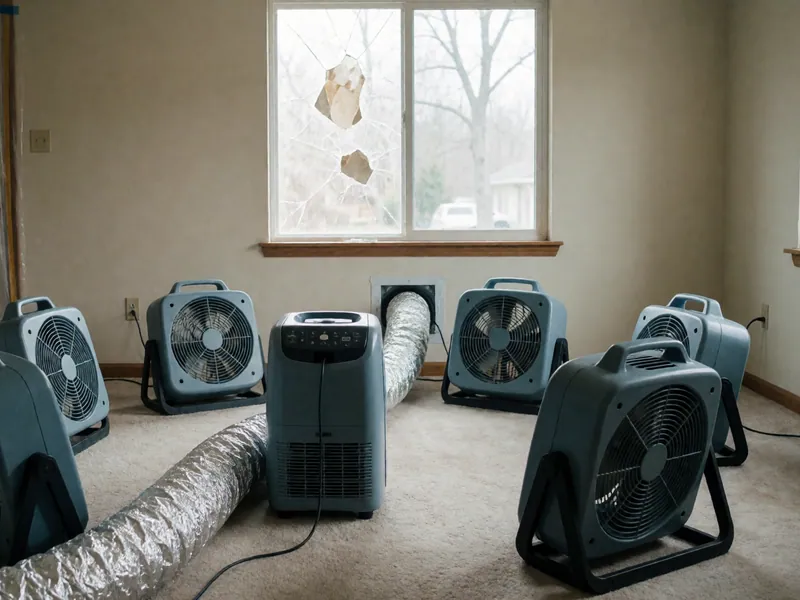
Structural drying
Air movers, dehumidifiers and daily readings until the materials reach dry standard — not until a promised day arrives.
$1,400 – $4,600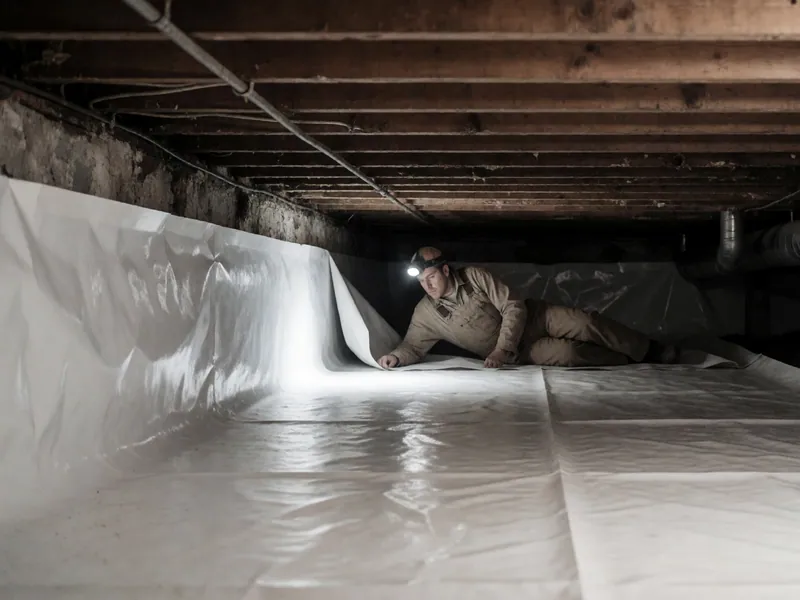
Crawlspace & attic
The two places nobody looks, where a ventilation problem quietly becomes a remediation problem.
$1,800 – $6,400Somebody who does the work will come and look
Book a visit
Telephone and you will get somebody on this crew rather than a call centre, at any hour. The emergency assessment is free inside our service area and you keep the written findings whether or not you use us. If what you describe will keep until the morning, we will tell you that instead of sending a van.