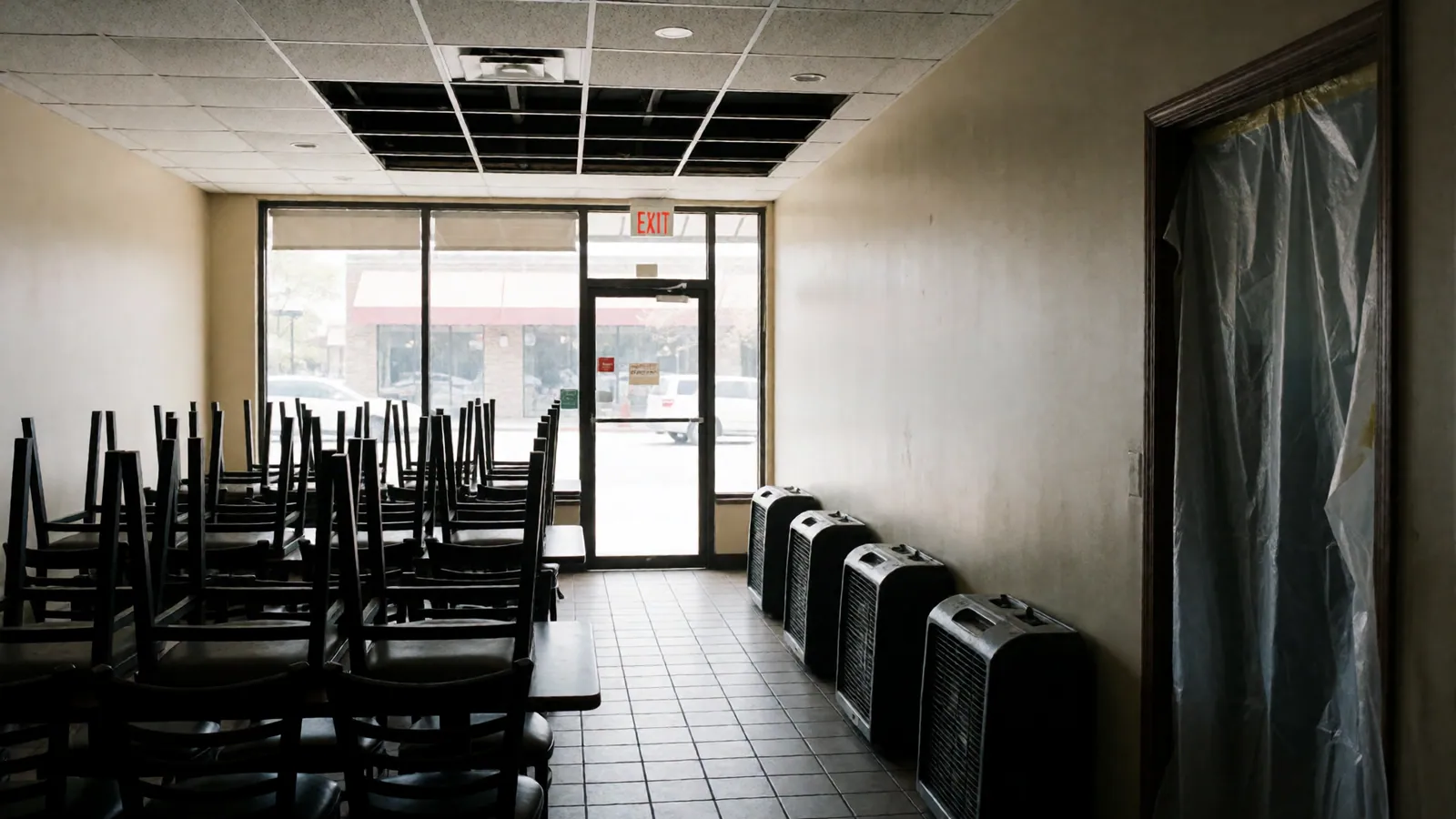
Contents & reconstruction
Commercial and multi-unit restoration
Shops, restaurants and small apartment buildings, sequenced so as little as possible has to close and scheduled around the hours you're actually open — because the closure is usually the real cost.
A shop, a restaurant kitchen or a six-unit building with one flooded riser differs from a house mainly in what drives the decision: not the restoration invoice, but the revenue or rent that stops while the space is closed. Night crews are very often cheaper than closing for a week.
Commercial losses are also where this trade's deductible fraud shows up hardest — deductibles are larger and the bidding is competitive, and some contractors win jobs by quietly offering to cover the client's deductible and inflating the invoice to cover it. We do not do that, on any job: it's insurance fraud under New York Penal Law 176.05, and the business owner who signs off is generally easier to prosecute than the contractor who proposed it.
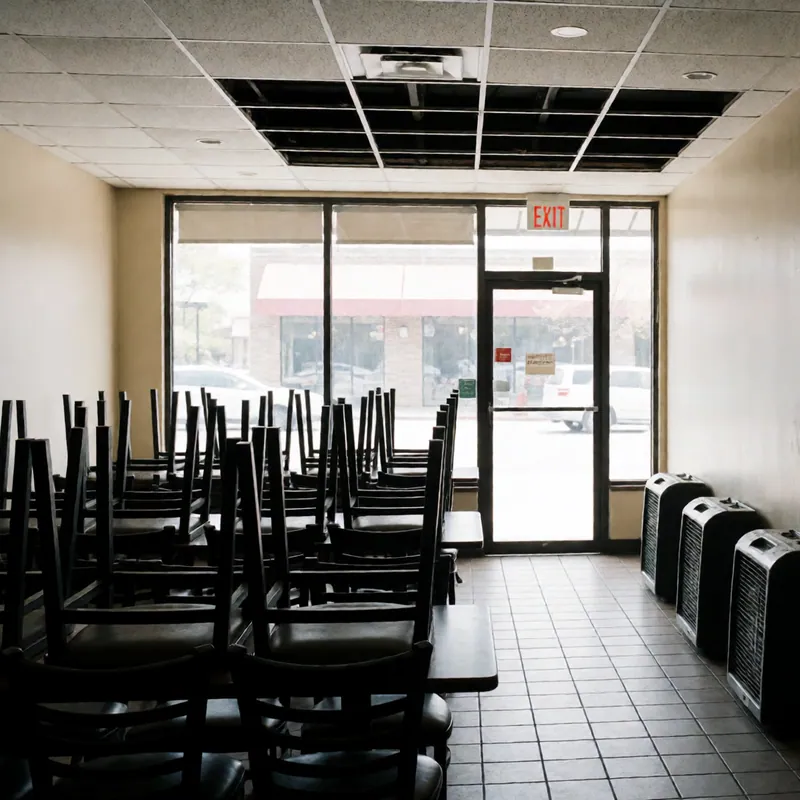
Sequencing around a business that can't simply close
Storefronts along a strip like Roosevelt Avenue and towers in Long Island City are opposite versions of the same problem: a small shop where every square foot trades, or a large building where only one floor needs work while the rest keeps operating. Both get phased, with stock and equipment moved and protected first.
The sequencing plan is written down and shown to you before work starts, room by room, with an honest estimate of what stays open at each stage rather than a vague promise about minimal disruption.
Doing the after-hours math honestly
Night and weekend labour costs more per hour. Closing a business costs more per day, usually by a wide margin, which is why out-of-hours work is so often cheaper once both numbers are actually compared.
Whether business interruption coverage responds is a question for your policy and broker, not us — but we document the closure, area by area and day by day, so whoever answers works from a record rather than a guess.
Multi-unit buildings, and whose call it is
A failed riser or roof leak in a multi-unit building crosses ownership lines the moment it leaves the unit it started in. Common-element work is authorised through the board or managing agent; unit work by that unit's owner or tenant.
Where essential work is separated from anything discretionary, that split is priced and agreed before ordering anything, so the claim scope and the owner's own upgrade budget never get tangled on one invoice.
Nobody here will waive your deductible. We will not waive your deductible, absorb it, discount it, rebate it, or find a creative way to make it disappear. In New York, a contractor who covers a policyholder's deductible and bills the insurer as though it had been paid is committing insurance fraud under Penal Law 176.05, and so is the policyholder who agrees to it. The Department of Financial Services has said so in terms. When somebody offers to make your deductible go away, they are not doing you a favour: they are asking you to commit a crime that is much easier to prove against you than against them, and they are telling you in advance that the invoice they send your insurer will not be true.
Included as standard
What the job actually includes
A walk-through and a written scope
Priced after we've seen the space, not guessed over the phone.
Work sequenced to limit closure
Phased by area so trading or occupied units can continue.
Out-of-hours and weekend crews
Used where the labour premium costs less than the closure avoided.
Documentation by day and by area
A closure record your broker or insurer can use.
Coordination across a multi-unit building
Common-element work authorised by the board; units by owner or tenant.
Essential scope kept separate from upgrades
What has to be rebuilt to reopen, priced apart from upgrades.
We do not waive your deductible, on any invoice
The invoice we send your insurer is the one we sent you, to the cent.
When to call us
Signs this is the job you need
- The affected space generates revenue or rent, so every closed day has its own cost
- More than one unit or business is affected by the same loss — a shared riser, roof or basement
- You're comparing quotes and one is a lot lower with no clear explanation why
- The building has a board or managing agent whose sign-off you need before work starts
- You need the space usable again by a specific date — an opening, a lease, an inspection
- You want essential repairs separated from upgrades you're considering paying for yourself
Commercial and multi-unit restoration — what it costs
- Quoted per project. Out-of-hours working is usually cheaper than closing for a week.By assessment
This is the range this job actually lands in, not a headline figure. The low end is a straightforward version of the work; the high end is one with a hard access problem, an old service, or something that has to be opened up before anybody can be certain. We tell you which one you have after we have looked, and the written quote says where the price could still move and why.
Questions we are actually asked
Commercial restoration — frequently asked
Can you work at night so we don't have to close?
Often, yes — usually the cheaper choice once you compare lost trading days against the labour premium, and we'll run that comparison with real numbers. It isn't always possible: some work is too disruptive to shared systems.
One quote we received offered to cover our deductible. Should we take it?
No. That's an offer to commit insurance fraud, not a discount — the contractor bills your insurer as though you'd paid the deductible when you hadn't. That's a crime for both parties, and the business owner is generally easier to prosecute than the contractor who proposed it.
Who decides if our business interruption coverage applies here?
Your policy and your broker, not us. We document the closure properly — which areas were unusable, on which dates, and why — so whoever decides works from a real record.
Related work
Often needed alongside this
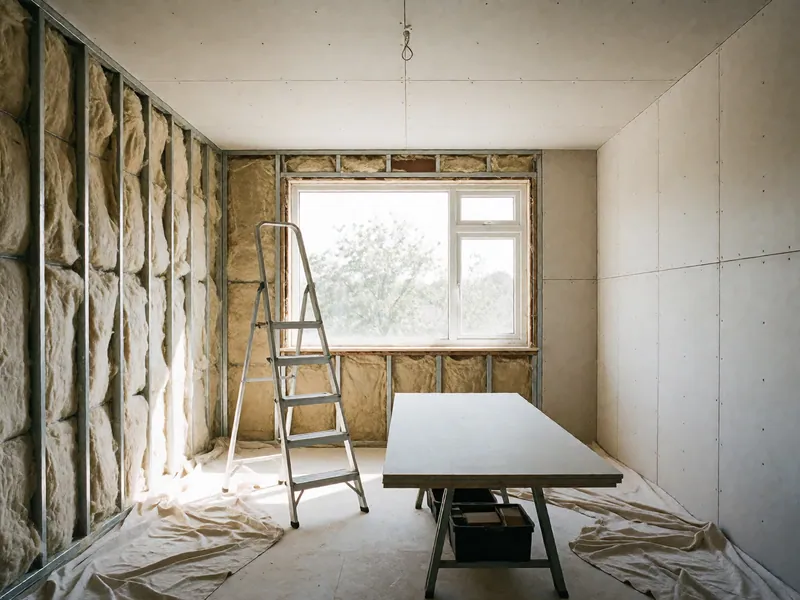
Reconstruction
Putting the building back — drywall, trim, paint, kitchens and baths — under one contract with the drying.
$12,000 – $95,000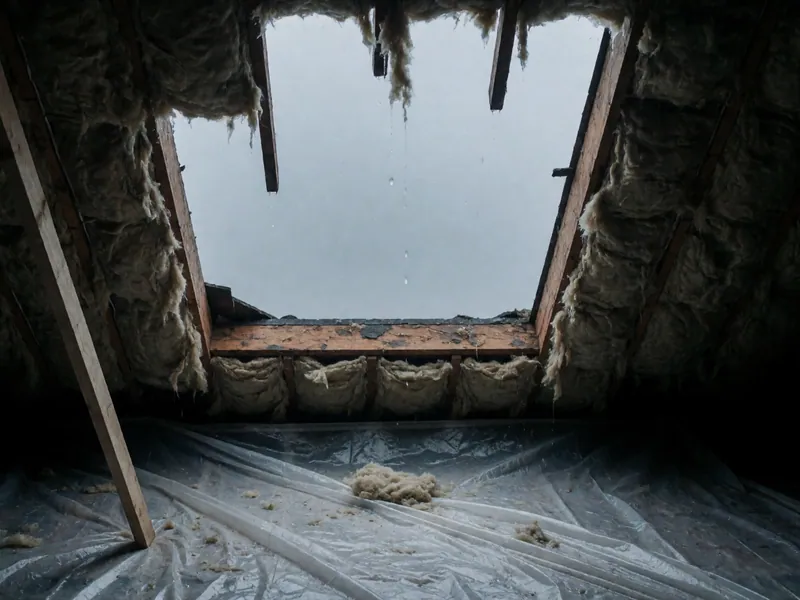
Storm damage
Water that came in through the roof rather than the pipes — secured first, dried second, rebuilt third.
$1,900 – $16,000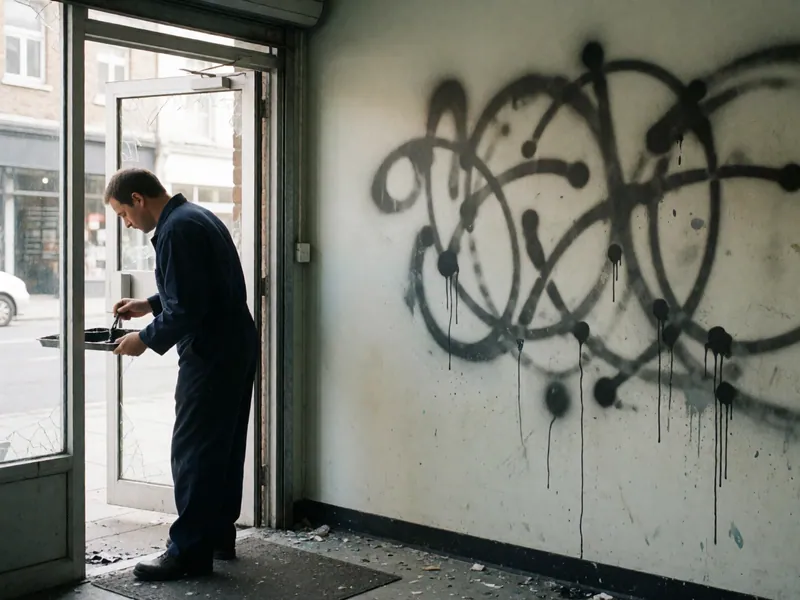
Vandalism cleanup
Securing the opening, removing the marks, and getting a shop or a lobby usable again quickly.
$700 – $5,200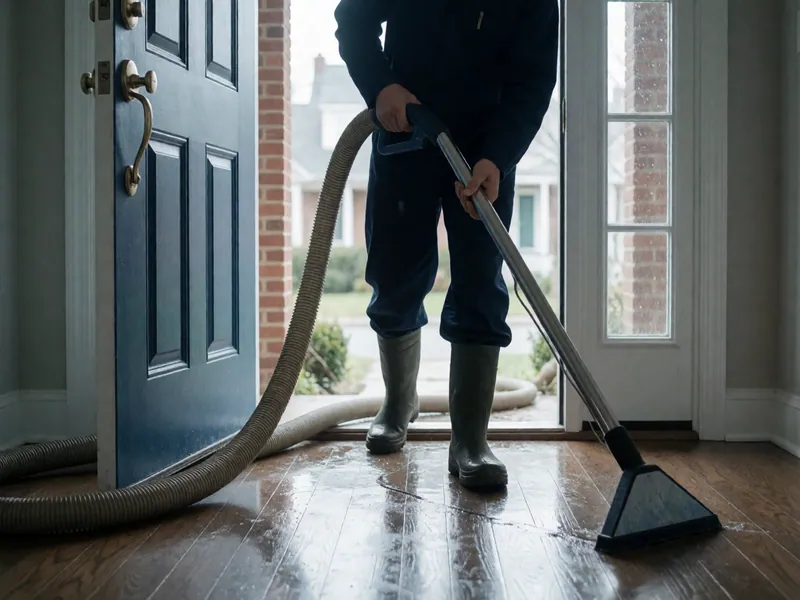
Water damage restoration
The whole job from the first hour to the last moisture reading — extraction, drying, and the repairs that put the room back.
$1,800 – $9,400Somebody who does the work will come and look
Book a visit
Telephone and you will get somebody on this crew rather than a call centre, at any hour. The emergency assessment is free inside our service area and you keep the written findings whether or not you use us. If what you describe will keep until the morning, we will tell you that instead of sending a van.