Water damage
Burst and frozen pipe cleanup
The Queens winter classic: a supply line that split behind a wall or in an unheated void and ran for hours before anybody was home. Here is what that does to a house, and what the first hour should look like.
A supply line under mains pressure does not drip. A half-inch line will move several hundred gallons in an hour, and because it is pressurised it does not stop when the reservoir empties — it stops when somebody closes a valve. The damage from a burst pipe is therefore almost entirely a function of how long it ran, which is why the difference between a loss discovered at midnight and one discovered on Sunday evening is the difference between a room and a house.
Freezing is the usual cause here, and it is not the ice that splits the pipe. Water expands as it freezes and pushes an unfrozen column along the pipe toward a closed tap; the pressure builds in that trapped column until the wall fails, often some distance from the ice. Then nothing happens at all until it thaws, which is why so many of these are discovered on the first mild morning after a cold snap rather than during it.
The first hour, in order
Close the stopcock. Not the tap, the stopcock — the main valve where the supply enters the building. Everything else is secondary to this and it is the one thing that stops the loss getting bigger while you are on the telephone. Find it now, before you need it, and make sure it turns.
Then power. If water is anywhere near a consumer unit, a socket at floor level, or an appliance, the affected circuits come off at the board before anybody walks through it. If the board itself is wet or you are not sure, that is a call to the utility or an electrician rather than a thing to work out in standing water.
Then photographs, then us. Photograph before you move anything, including things you are about to rescue. Then ring, and we will tell you honestly whether this needs somebody tonight or whether the sensible thing is first light.
Why we open the wall the pipe was in
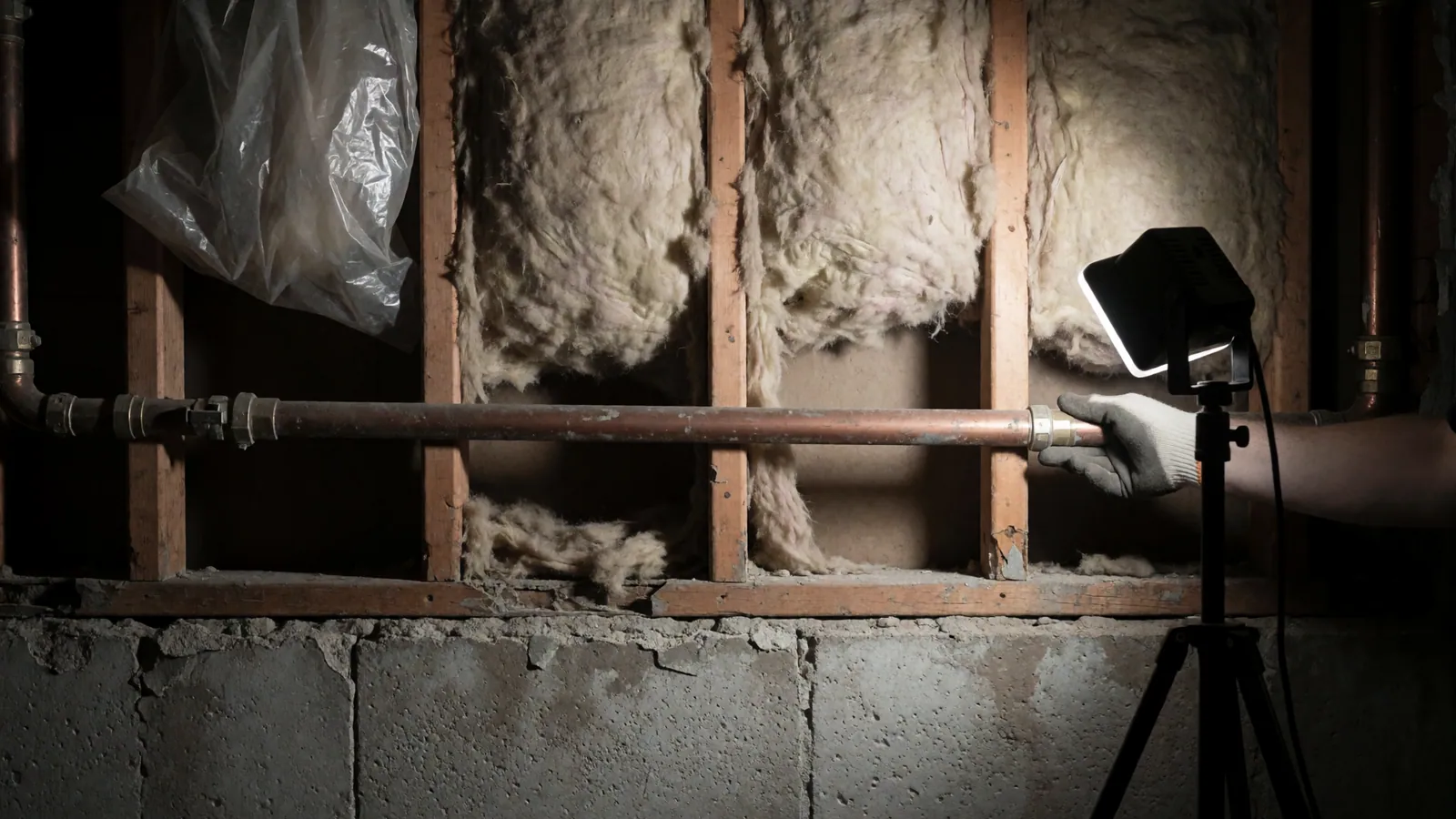
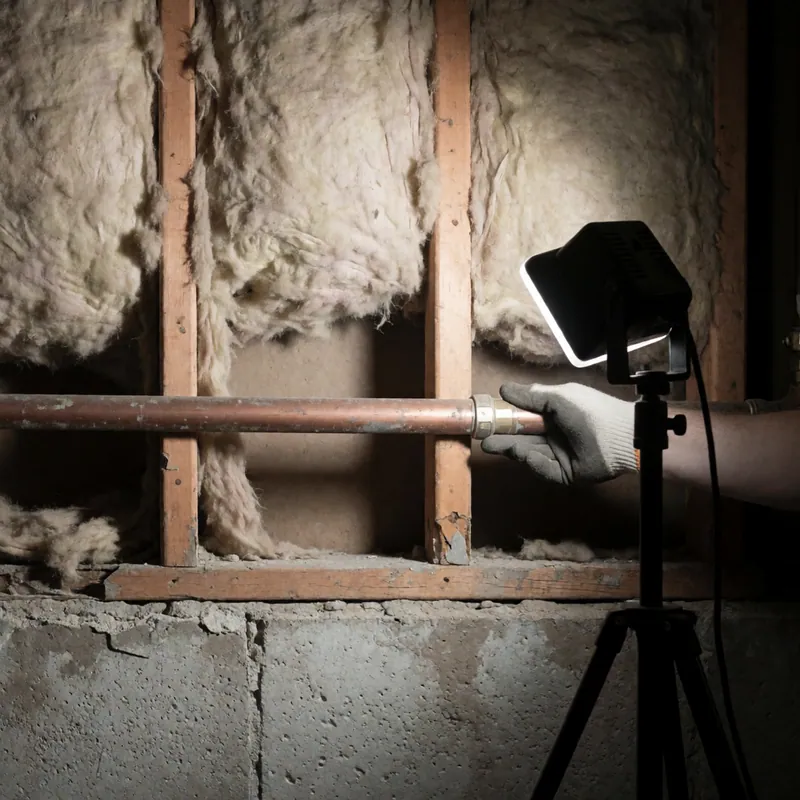
A pipe that has burst inside a stud bay has filled that bay, soaked the insulation in it, run down the inside face of the plasterboard, and travelled along the bottom plate into the bays either side. None of that is reachable by air blown at the outside of the wall.
So the affected section gets opened — a clean horizontal cut, usually low, sized to the wet area rather than to the room — the insulation comes out, and the cavity is extracted and dried directly. Wet insulation in particular does not dry in place in any useful timescale and holds water against the timber while it tries.
This looks like more damage on day one and it is less on day thirty. Closing a wall over a wet stud bay is the reliable way to be back in the same room in six weeks with a bigger problem.
The pipe repair, and who does it
We are restoration contractors rather than plumbers. On a live burst our job is to stop the loss getting worse, which sometimes means closing a valve and sometimes means a temporary cap, and then to deal with the water and the building. The permanent pipe repair is a plumber's, and if you do not have one we will tell you so rather than improvise.
That division matters for the claim as well: the pipe repair and the damage the water did are frequently treated differently by a policy, and keeping them as separate documented pieces of work rather than one bundled invoice tends to make everybody's life easier.
Sometimes the right call is not to us. There are situations where the right thing to do is not to call us. If there is fire or you smell gas, ring 911. If the building has been struck structurally, do not go back inside until the Fire Department releases it, whatever is in there. If water is anywhere near live electrical equipment, the power comes off before anybody steps in it. If it is a burst supply line, the job in front of you is the stopcock, not the telephone. We would rather arrive to a house where somebody shut the water off an hour before we got there than be the first call and the reason nobody made a better one.
Included as standard
What the job actually includes
Making the loss safe
Isolating the water and confirming the electrical position before anybody starts working in it.
Extraction from the cavity, not just the floor
The stud bay opened and dried directly, because a wall cavity does not dry from the outside.
Wet insulation removed
It holds water against the framing and does not dry in place in any timescale that helps you.
Full drying with daily readings
The same monitored process as any other water loss, dated and logged.
Documentation split properly
The water damage documented separately from the plumbing repair, because policies frequently treat them differently.
Reinstatement when the readings allow
The wall closed and made good after the timber is dry, not before.
When to call us
Signs this is the job you need
- No water at a tap on a cold morning, which usually means ice rather than a supply failure
- A bulge, a wet patch or a stain appearing on a wall during a thaw
- The sound of running water with every tap in the house closed
- A water meter turning with nothing running
- Damp appearing at the bottom of a wall in a room with no plumbing in it
- A section of pipe in an unheated void with no lagging on it, before anything has happened at all
Burst and frozen pipe cleanup — what it costs
- Moves with how long it ran and how many floors it reached.$1,600 – $8,200
This is the range this job actually lands in, not a headline figure. The low end is a straightforward version of the work; the high end is one with a hard access problem, an old service, or something that has to be opened up before anybody can be certain. We tell you which one you have after we have looked, and the written quote says where the price could still move and why.
Questions we are actually asked
Burst pipes — frequently asked
Should I try to thaw the pipe myself?
You can, gently, with warm cloths or a hairdryer working back from the tap toward the frozen section, and with the tap open so you can tell when it clears. Never use a naked flame or a blowtorch on a pipe in a building. And be aware that a pipe that froze may already have split, so have the stopcock in hand before you thaw it — the water arrives the moment the ice does not.
The pipe is repaired and it looks dry. Do I still need drying?
Probably, and it is worth twenty minutes of somebody's meter to find out. A surface that looks and feels dry can sit above framing that is nowhere near it, and plaster in particular dries at the face long before it dries through. If the readings say it is dry, we will tell you that and go away.
Do you do the plumbing repair too?
No. We will isolate the loss and stop it getting worse, but the permanent repair is a plumber's work and we would rather say so than improvise on your pipework. Keeping the two as separate documented jobs also tends to be simpler with a claim.
Related work
Often needed alongside this
Water damage restoration
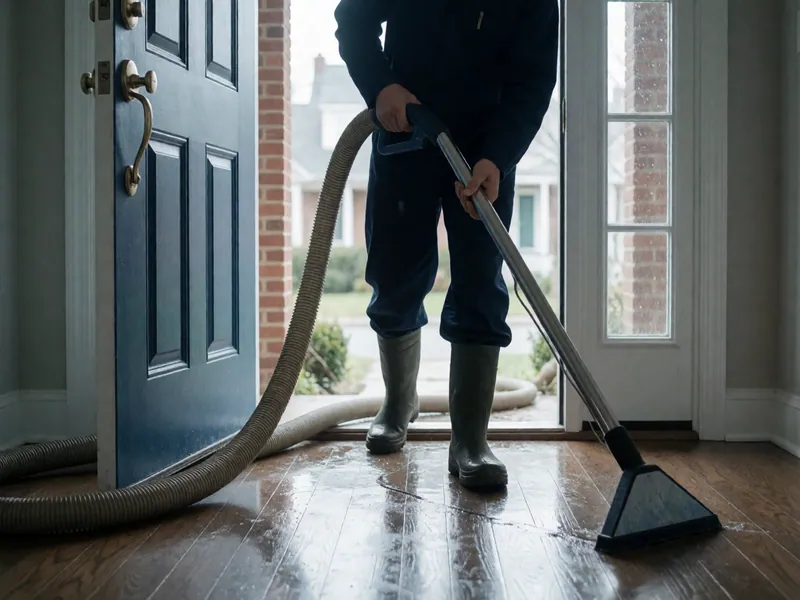
The whole job from the first hour to the last moisture reading — extraction, drying, and the repairs that put the room back.
$1,800 – $9,400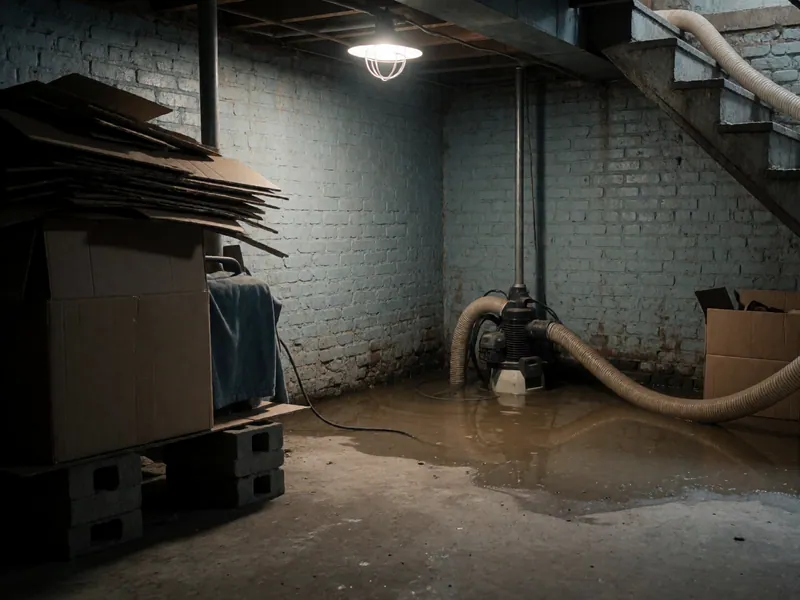
Water extraction
Getting the standing water out on the first visit, because everything that follows gets cheaper the sooner it goes.
$650 – $2,800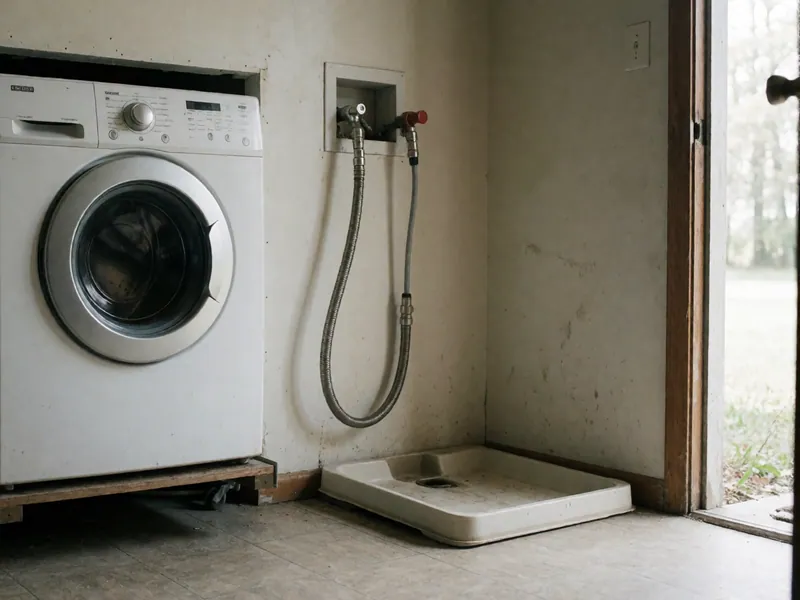
Appliance leaks
Slow supply-line and drain failures, which do more damage than dramatic ones because nobody sees them for weeks.
$900 – $5,400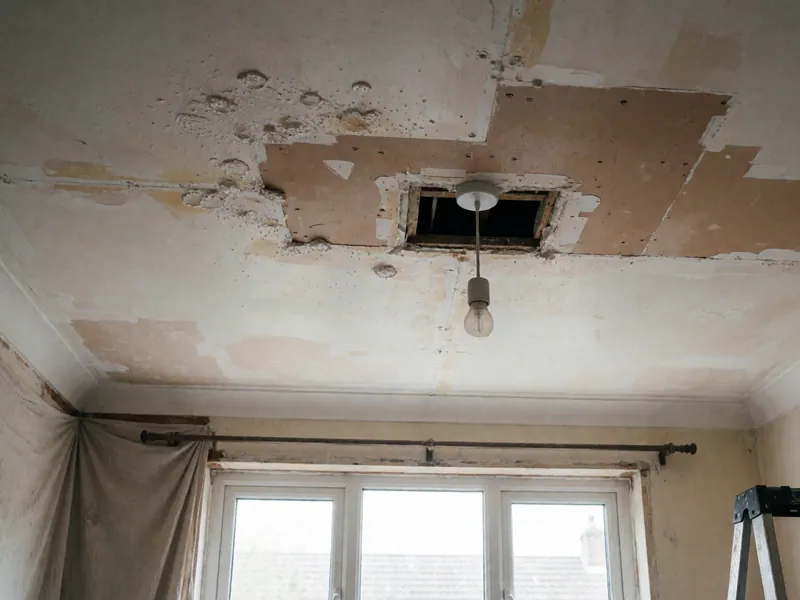
Ceiling damage
The stain spreading from the light fitting, what is above it, and how much of the ceiling actually has to come down.
$850 – $4,800Somebody who does the work will come and look
Book a visit
Telephone and you will get somebody on this crew rather than a call centre, at any hour. The emergency assessment is free inside our service area and you keep the written findings whether or not you use us. If what you describe will keep until the morning, we will tell you that instead of sending a van.