Water damage
Ceiling and drywall water damage
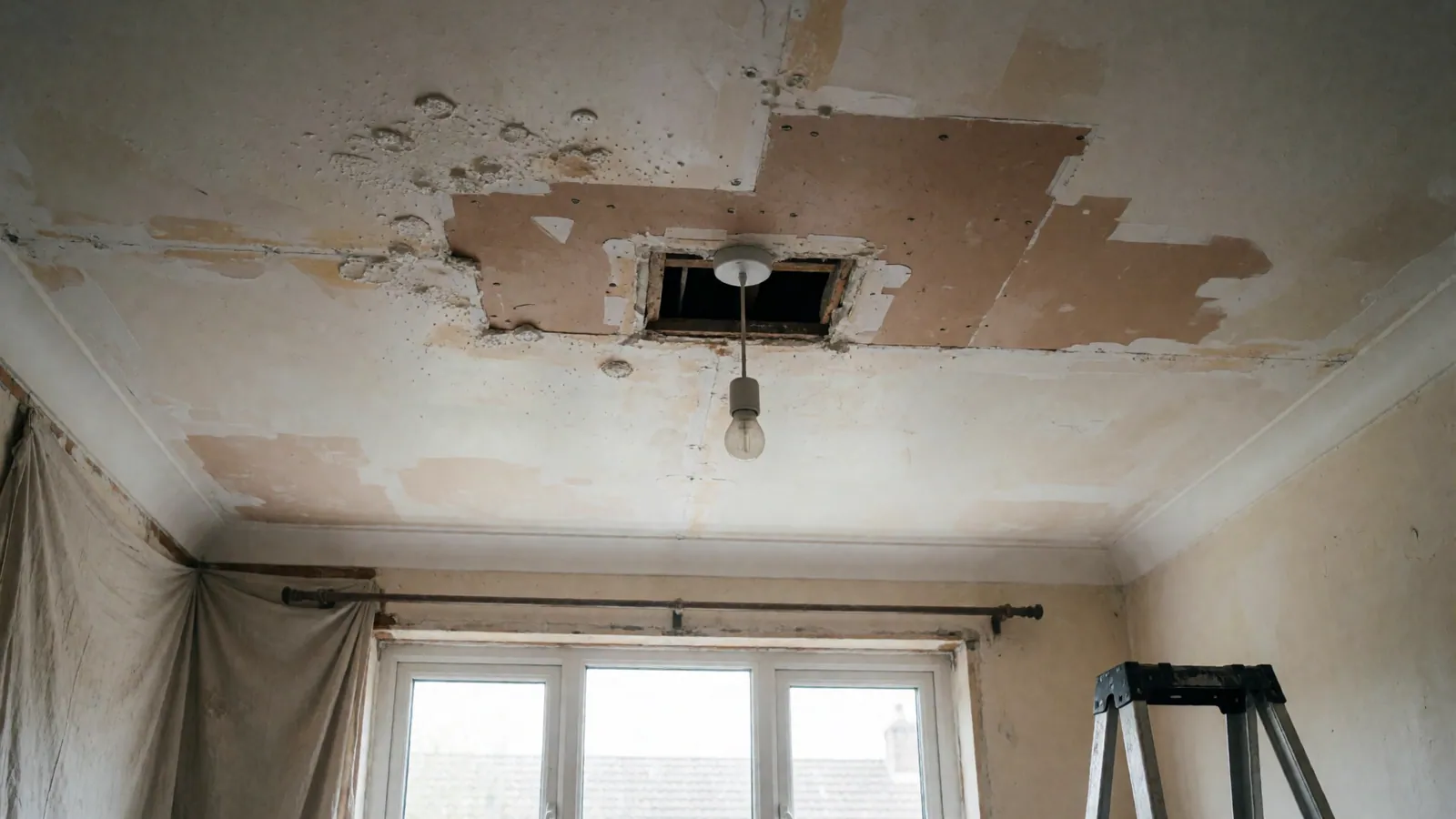
The brown ring spreading from a light fitting, the bulge that was not there yesterday, and the question everybody asks first: does the whole ceiling have to come down? Usually not.
A ceiling stain is the end of a journey rather than the start of one. Water that appears at a light fitting has usually entered the floor void some distance away, run along the top of the ceiling board or down a joist, and emerged at the first opening it found — and a recessed light is the biggest opening in most ceilings. Repairing the ceiling under the stain without establishing what is above it is the commonest wasted repair in this trade.
It is also the one situation where there is a genuine safety question rather than a cosmetic one. A saturated plasterboard ceiling holds a surprising amount of weight, it fails suddenly rather than gradually, and it fails downward onto whatever is underneath it.
When to get out from under it
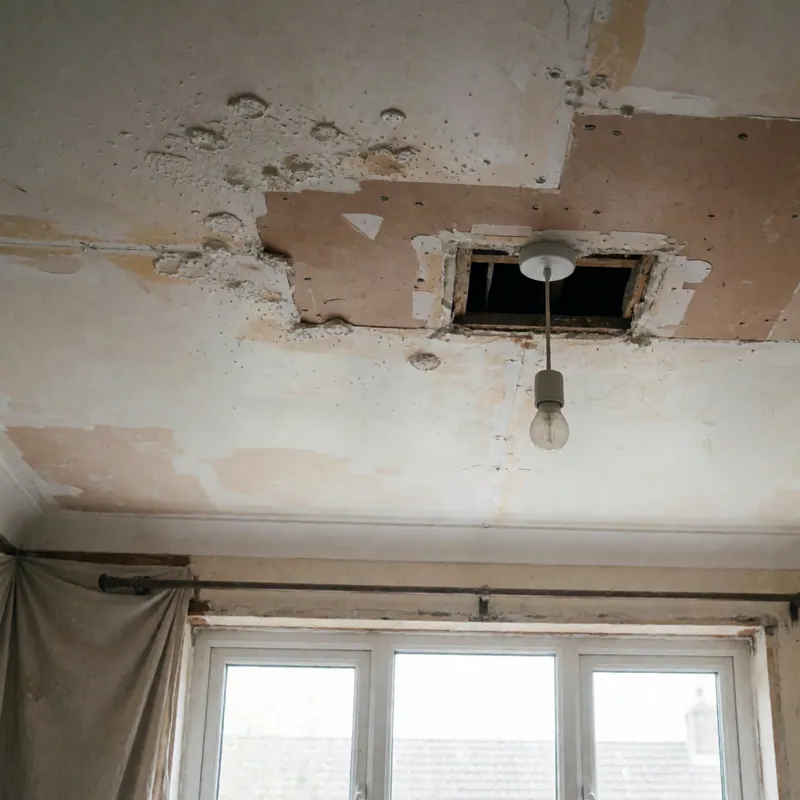
A ceiling that is visibly sagging or bulging, or one where water is pooling behind the paint film into a bubble, is carrying weight it was not built for and can come down without warning. Move what is underneath, keep people out of the room, and do not push it, prod it or try to drain it from directly beneath.
If it is actively dripping and you need to relieve it, do it from the side with something long, with a bucket underneath and nobody under the ceiling — and turn off the lighting circuit for that room first, because water tracking through a ceiling has usually found the fittings before it found you.
Finding what is above before opening what is below
The first job is the void. Where a floor above is accessible we lift a board or drop a camera in; where it is not, the meter survey works outward from the stain across the ceiling and up the walls to find the extent, which is nearly always larger than the visible mark and frequently in a different direction from the obvious suspect.
The commonest causes here, in order: a bathroom above with a failed seal at the bath or shower tray, a supply or waste connection in the void, a radiator valve, and — in the pre-war buildings we work in most — a leak from a flat above that has travelled between two dwellings, which turns a repair into a conversation with a neighbour or a managing agent before it turns into a job.
How much has to come down
Less than people fear, and more than the stain. Plasterboard that has been wet and dried is weakened, and the paper facing delaminates whether or not it looks bad, so the affected area comes out — cut square between joists, sized to the wet area established by meter rather than to the visible mark — and the rest stays.
What decides it is the material. Modern plasterboard is straightforward. Lath and plaster, which is most ceilings in the pre-war stock here, is more forgiving of wetting but far less forgiving of patching, and a plaster ceiling that has been soaked over a large area sometimes genuinely is a whole-ceiling job because the key between plaster and lath has let go across it. We will tell you which of those two conversations we are having.
And in a building put up before 1 April 1987, we establish the asbestos position before we cut into a ceiling at all. That is not us being cautious for the sake of it: textured coatings and some board products of that era are exactly where it turns up, and a ceiling is directly overhead.
In a pre-1987 building we stop before we cut. In a building put up before 1 April 1987 we stop before we cut. New York City requires an asbestos investigation, filed with the Department of Environmental Protection, before the Department of Buildings will issue a permit for work in a building of that age, and much of the housing stock we work in is older than that. Paint in housing built before 1978 is governed by the federal Renovation, Repair and Painting rule. Neither is a formality and neither is our decision to skip: a contractor who tears out wet plaster in a 1928 house without an investigation is not saving you a week, they are spreading a hazard through the rest of your home and leaving you holding it.
Included as standard
What the job actually includes
Making the area safe
Anything at risk of collapse dealt with first, and the lighting circuit isolated before we work into a wet void.
Source tracing above
The void investigated and the actual origin established before anything below is opened.
A cut sized by meter, not by eye
Square between joists, to the wet area rather than to the stain, so as little comes out as possible.
Insulation and void drying
Wet insulation removed and the void dried directly, because a closed ceiling void does not dry through.
Asbestos position established first
In any building of pre-1987 age, before a ceiling is cut into. We stop rather than press on.
Reinstatement and finish
Board, tape, skim and paint, matched into the existing ceiling rather than left as a visible patch.
When to call us
Signs this is the job you need
- A stain that is larger, darker or ringed differently than it was last week
- A ceiling that is sagging, bulging, or has a bubble of water behind the paint
- Water appearing at a light fitting, a downlight or a ceiling rose
- Nail or screw heads showing as small dark spots through the paint
- A cracking or ticking sound from a ceiling after a leak upstairs
- Damp at the top of a wall rather than the bottom of it
Ceiling and drywall water damage — what it costs
- Removal, drying and replacement of the affected ceiling area.$850 – $4,800
This is the range this job actually lands in, not a headline figure. The low end is a straightforward version of the work; the high end is one with a hard access problem, an old service, or something that has to be opened up before anybody can be certain. We tell you which one you have after we have looked, and the written quote says where the price could still move and why.
Questions we are actually asked
Ceiling damage — frequently asked
The ceiling is stained but dry. Can I just paint over it?
You can seal and paint a genuinely dry stain, and a stain-blocking primer is the right product — emulsion alone will let it back through. But do that only once you know what caused it and that it has stopped, otherwise you are painting over a leak. And check the board is sound rather than merely dry: plasterboard that has been thoroughly wet can be weak even when the meter is happy.
Does the whole ceiling have to come down?
Usually no. We cut out the wet area between joists and leave the rest. The exception is old lath and plaster that has been soaked over a wide area, where the key between the plaster and the lath can fail across the whole ceiling — in that case a patch will not hold and we will say so rather than take your money for one.
The leak is coming from my neighbour's flat. What now?
Practically, we can make your side safe, stop the damage getting worse and document what we find, and we do that regularly. Establishing responsibility is between you, them, the managing agent and the two insurers, and it goes considerably better with dated photographs and moisture readings than with a description. What we will not do is tell you whose fault it is — that is not ours to decide.
Related work
Often needed alongside this
Water damage restoration
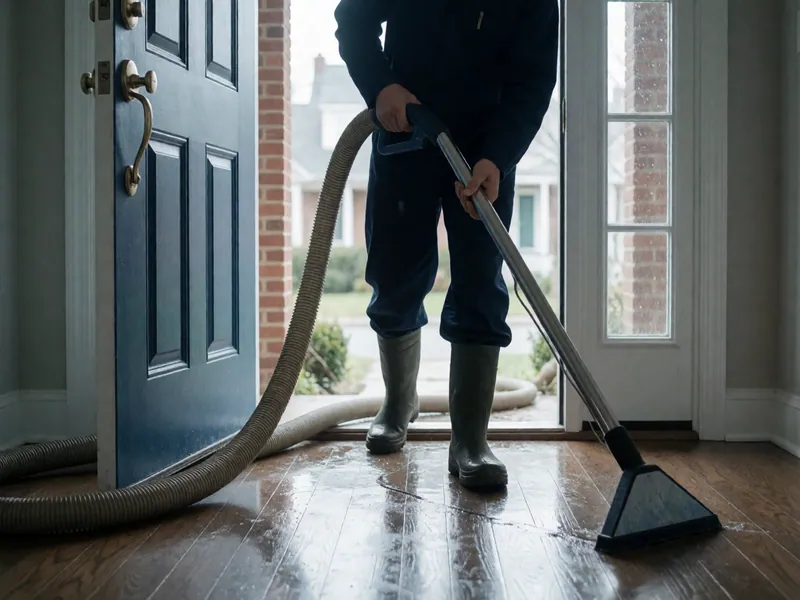
The whole job from the first hour to the last moisture reading — extraction, drying, and the repairs that put the room back.
$1,800 – $9,400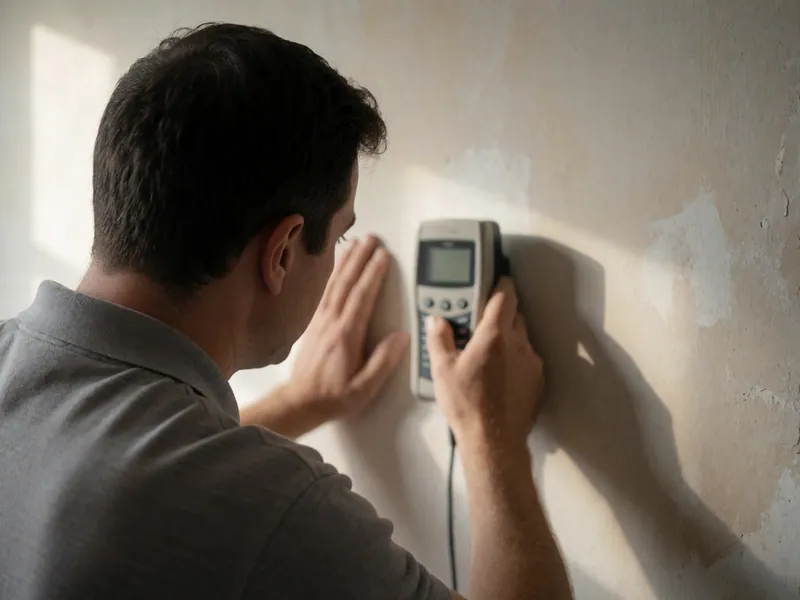
Moisture inspection
Finding where the water actually came from and how far it has travelled, in writing, before anybody quotes a repair.
$385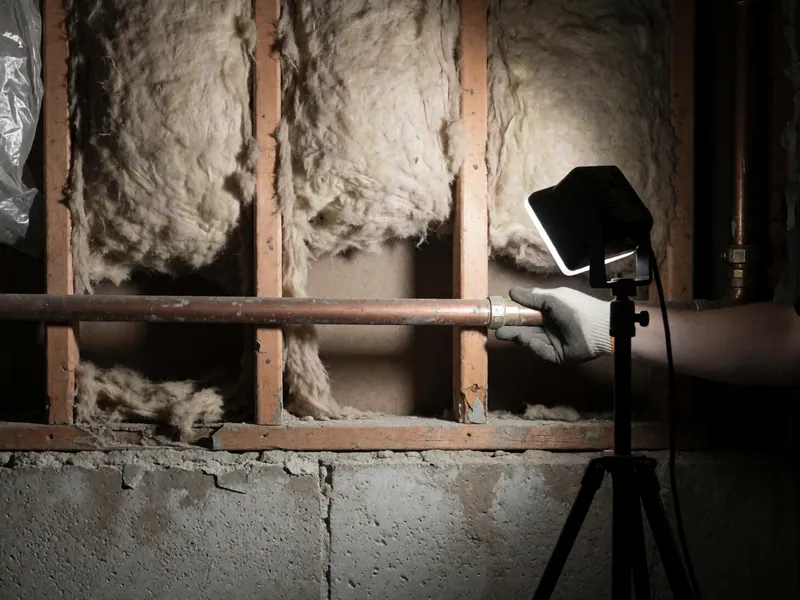
Burst pipes
The Queens winter classic — a supply line that split behind a wall and ran for hours before anybody was home.
$1,600 – $8,200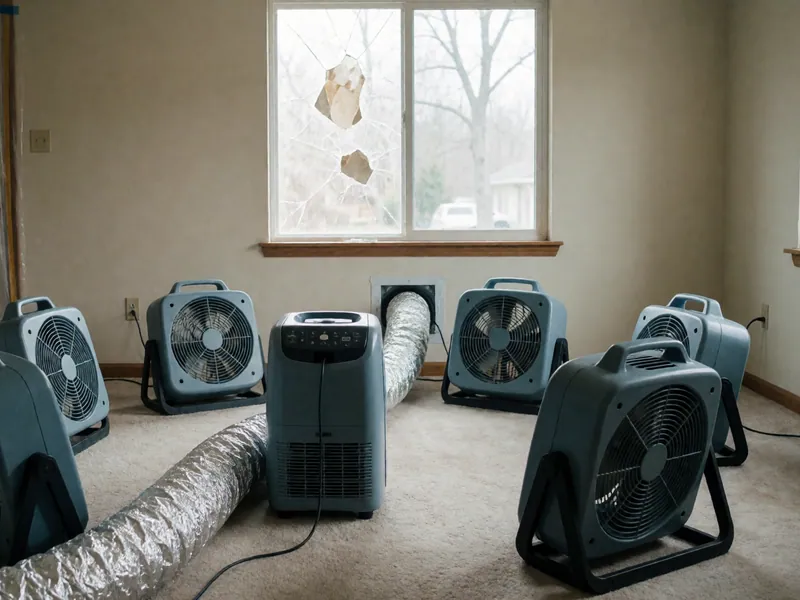
Structural drying
Air movers, dehumidifiers and daily readings until the materials reach dry standard — not until a promised day arrives.
$1,400 – $4,600Somebody who does the work will come and look
Book a visit
Telephone and you will get somebody on this crew rather than a call centre, at any hour. The emergency assessment is free inside our service area and you keep the written findings whether or not you use us. If what you describe will keep until the morning, we will tell you that instead of sending a van.