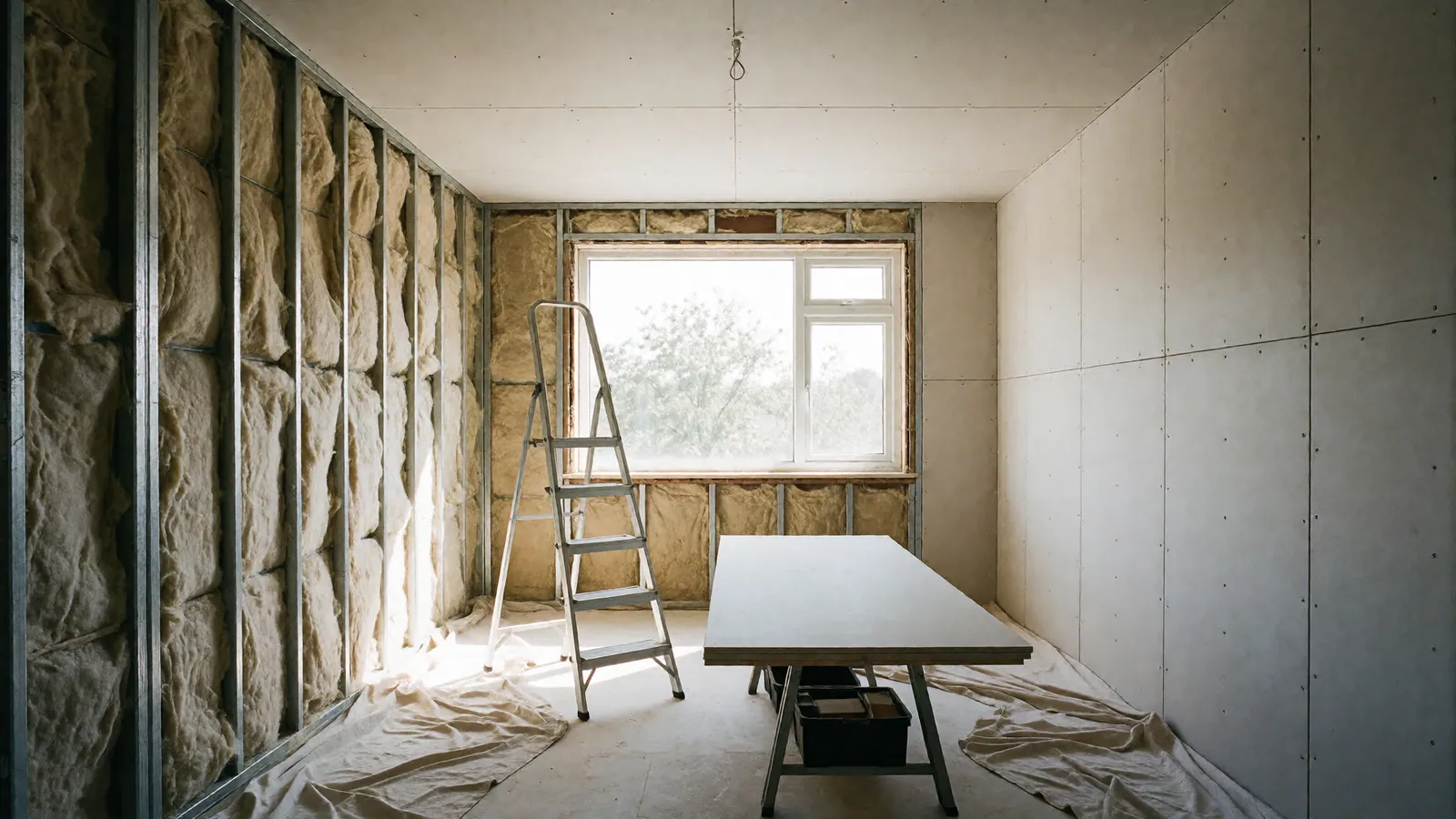
Contents & reconstruction
Reconstruction and rebuild
Putting the building back once the drying or cleaning is done — drywall, trim, paint, kitchens and baths — under one contract with the mitigation if you want it, never before the readings say the structure is dry.
Mitigation gets the water or smoke out and the structure to a measured dry standard. Reconstruction is the separate job of putting back what had to come out to get there. They're different trades, and you're entitled to hire a different contractor for either. We do both under one contract if you want it, but it's never a condition of the mitigation.
The rule we won't bend: nothing gets closed up until the readings say the framing is dry. Closing a wall over damp timber to hit a schedule produces a mould problem in weeks. And in a lot of the housing we work in — Woodside, Sunnyside and Astoria especially — the building predates modern rules about what may be disturbed.
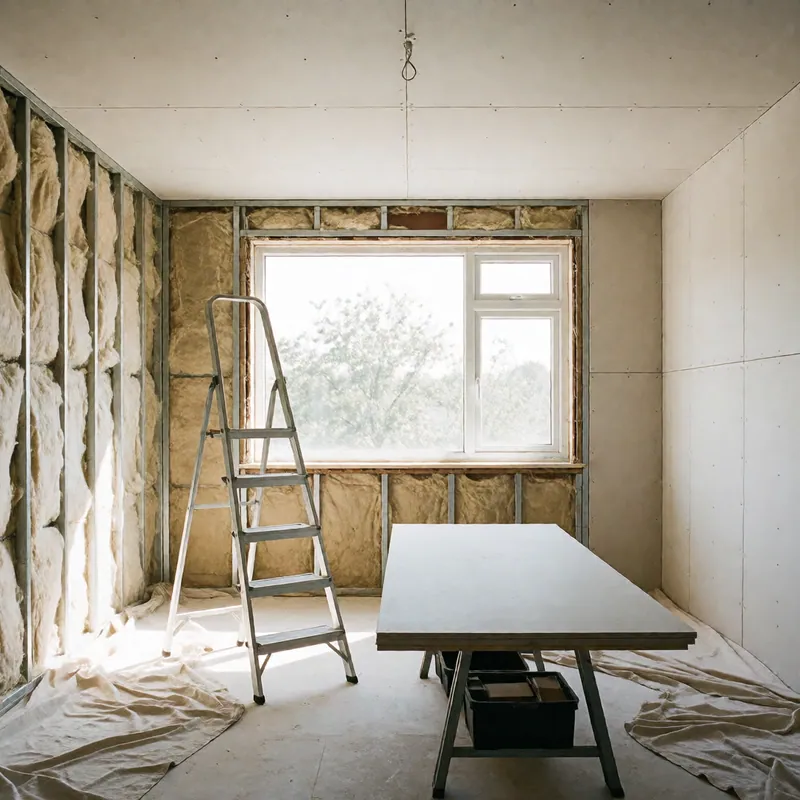
What reconstruction actually covers
Drywall, insulation, trim and doors, flooring, paint — and where the loss reached a kitchen or bathroom, the cabinets and fixtures in it. The scope follows what mitigation actually opened, and it's written down before anything is ordered.
You approve the scope and finishes before work starts. If you'd rather choose your own contractor for the rebuild, we hand over the drying log and moisture readings to whoever does it.
Never before the readings say dry
The pressure to close up early is real — a family wants their kitchen back, a schedule looks better on paper. We resist it anyway, because a wall closed over framing that looks dry but isn't reads fine for a month and then doesn't.
So the same daily readings that ran the drying job decide when reconstruction can start. If the honest answer is another week, that's the answer you get.
Permits, and what the building's age puts in front of us
Structural, electrical and plumbing work is filed with the Department of Buildings before it starts. In a building put up before April 1, 1987, New York City also requires an asbestos investigation — the ACP-5, filed with the DEP — before DOB will issue that permit, and much of the housing near us is older than that.
We don't perform abatement ourselves. If the investigation finds something, we stop and bring in a licensed abatement contractor. Painting in housing built before 1978 follows the lead-safe practices the federal Renovation, Repair and Painting rule requires.
In a pre-1987 building we stop before we cut. In a building put up before 1 April 1987 we stop before we cut. New York City requires an asbestos investigation, filed with the Department of Environmental Protection, before the Department of Buildings will issue a permit for work in a building of that age, and much of the housing stock we work in is older than that. Paint in housing built before 1978 is governed by the federal Renovation, Repair and Painting rule. Neither is a formality and neither is our decision to skip: a contractor who tears out wet plaster in a 1928 house without an investigation is not saving you a week, they are spreading a hazard through the rest of your home and leaving you holding it.
Included as standard
What the job actually includes
A written reconstruction scope
What's being replaced, in what materials, at what price.
Sequenced after the drying readings, not before
Framing closed once it matches a dry reference elsewhere.
Permits filed where the work requires them
Structural, electrical and plumbing work filed with the DOB.
An asbestos investigation in pre-1987 buildings
The ACP-5, filed with the DEP ahead of the permit.
Lead-safe work practices in pre-1978 housing
Followed on any work that disturbs painted surfaces.
Kitchens and baths rebuilt, not just patched
Cabinets and fixtures replaced to a scope you approve first.
One contract with the mitigation, if you want it
Faster, since whoever opened it also closes it.
When to call us
Signs this is the job you need
- Drywall, flooring or cabinetry has already been removed and the room needs putting back together
- Your drying job's readings are close to standard and you're starting to think about finishes
- Your building predates 1987 and the work will involve cutting into a wall or ceiling
- The kitchen or bathroom itself was in the affected area, not just the room next to it
- You want one contractor accountable for both the drying and the rebuild
- A previous contractor closed a wall up quickly and you want the framing checked first
Reconstruction and rebuild — what it costs
- Whole-project reconstruction after a significant loss, permits included where required.$12,000 – $95,000
This is the range this job actually lands in, not a headline figure. The low end is a straightforward version of the work; the high end is one with a hard access problem, an old service, or something that has to be opened up before anybody can be certain. We tell you which one you have after we have looked, and the written quote says where the price could still move and why.
Questions we are actually asked
Reconstruction — frequently asked
Do I have to use you for the rebuild if you did the drying?
No. Mitigation and reconstruction are different jobs, and you can hire a different contractor for either half. We'll hand the drying log and moisture readings to whoever does your rebuild.
Will reconstruction start as soon as the water is gone?
No — it starts once the readings say the structure is dry, not once the water looks gone. Closing a wall over framing that looks dry but isn't is the most common way a reconstruction goes wrong.
My building is old — does that actually change anything?
Often, yes. Built before April 1, 1987, New York City requires an asbestos investigation filed with the DEP before DOB will issue a permit, and much of the housing near us is older than that. We don't abate ourselves.
Related work
Often needed alongside this
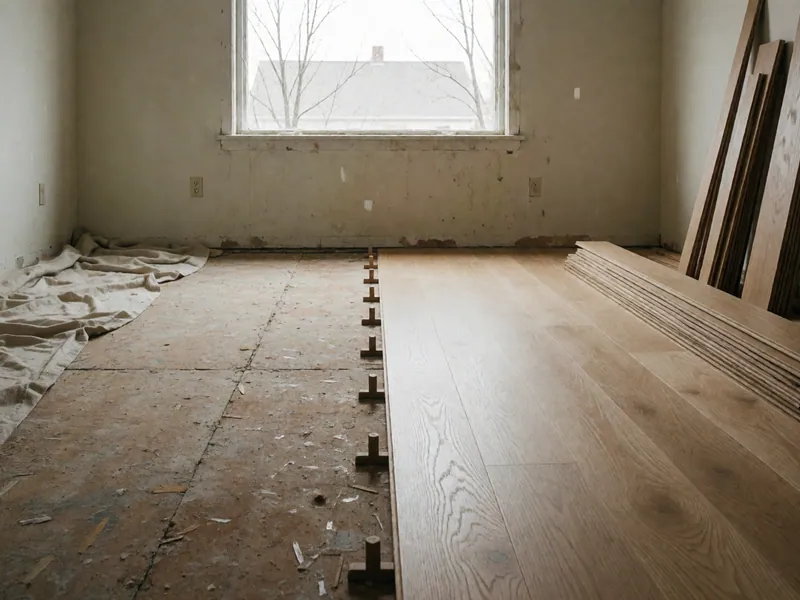
Flooring replacement
Replacing what could not be dried, matched to what is still there wherever that is possible.
$2,400 – $18,000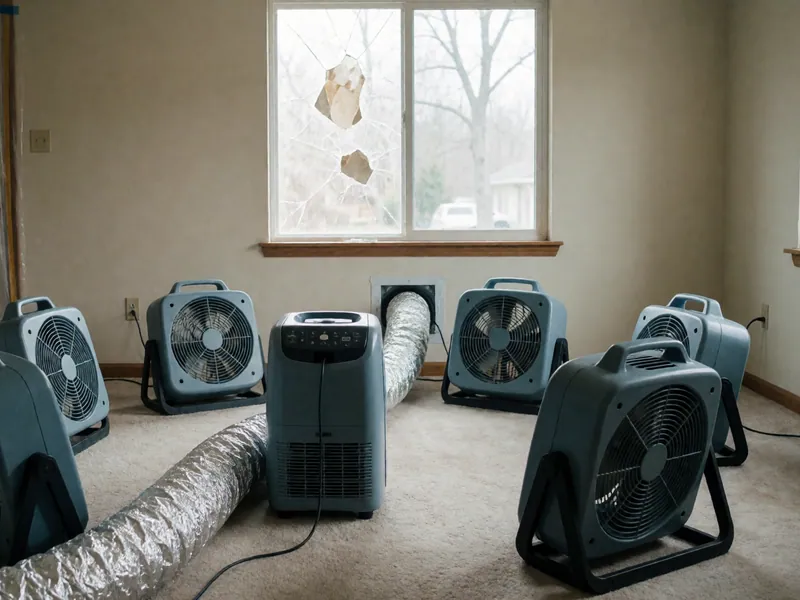
Structural drying
Air movers, dehumidifiers and daily readings until the materials reach dry standard — not until a promised day arrives.
$1,400 – $4,600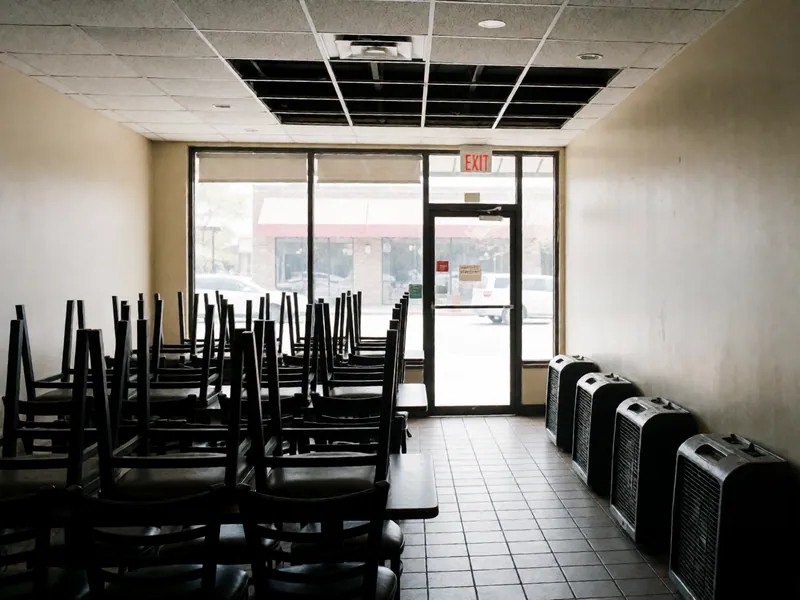
Commercial restoration
Shops, restaurants and small apartment buildings, sequenced so that as little as possible has to close.
By assessment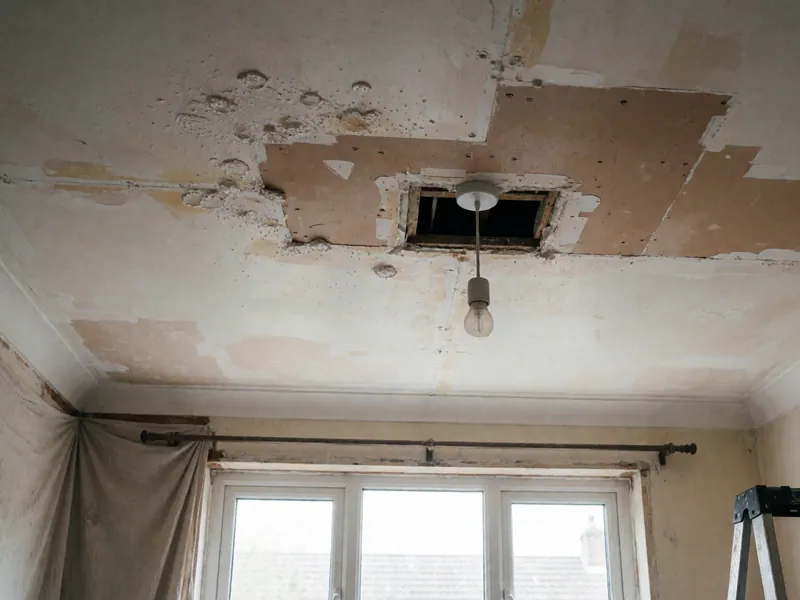
Ceiling damage
The stain spreading from the light fitting, what is above it, and how much of the ceiling actually has to come down.
$850 – $4,800Somebody who does the work will come and look
Book a visit
Telephone and you will get somebody on this crew rather than a call centre, at any hour. The emergency assessment is free inside our service area and you keep the written findings whether or not you use us. If what you describe will keep until the morning, we will tell you that instead of sending a van.