Storm, sewage & biohazard
Storm and wind damage cleanup
Secure the building first, dry it second, rebuild it third — in that order, always. Where the water came from decides how your insurer sees it, which is why we document the direction it moved.
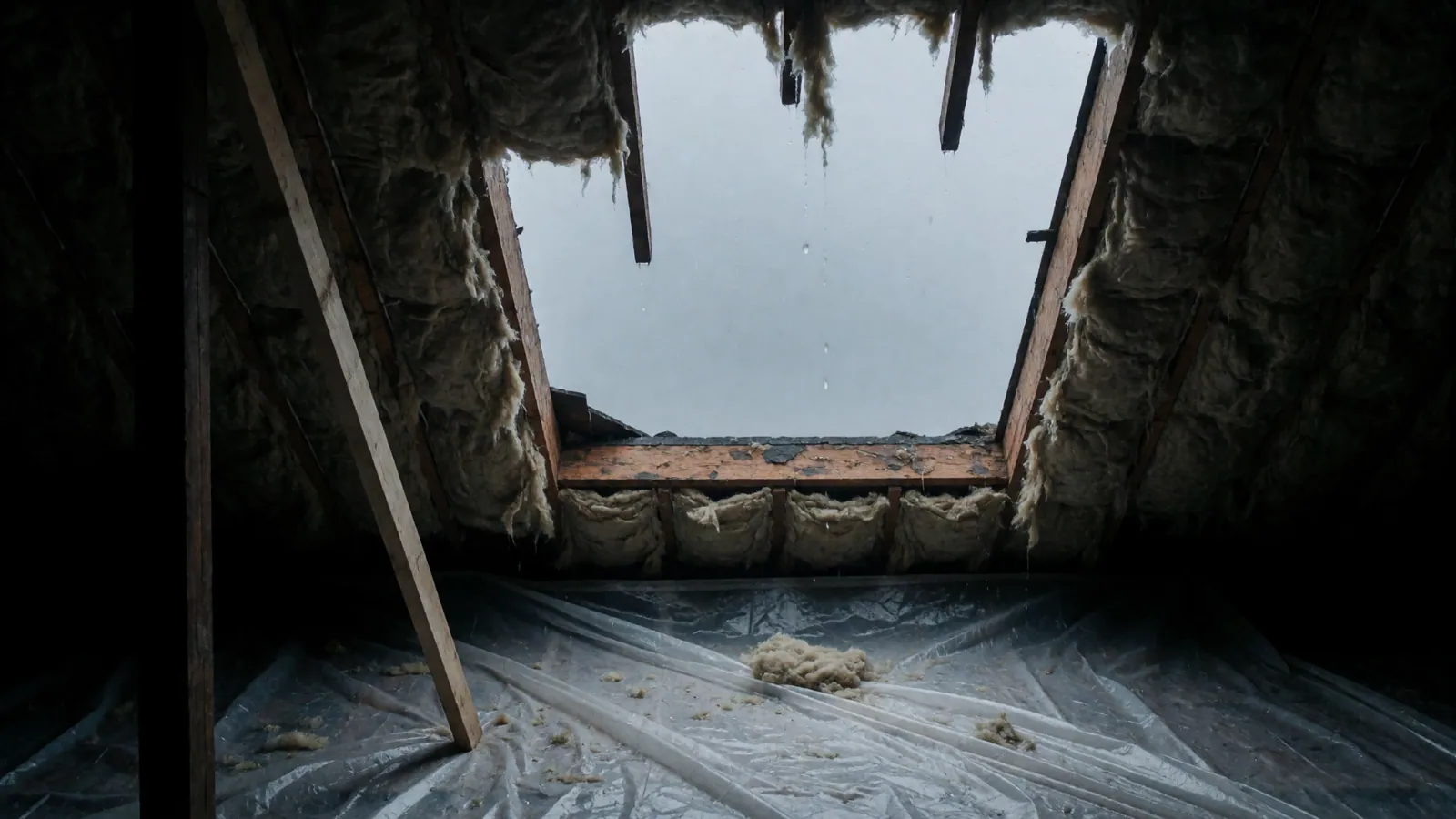
Storms bring two hazards at once: wind that opens the building up, and water that gets in through the opening. Secure it, dry it, then rebuild it — skip that order and a one-day loss becomes a two-week one.
Storms also raise a question only your insurer can answer: did the water come in through the roof, or up from outside? Those are often different kinds of cover, sometimes different policies entirely. We do not decide which one you have — we document it, from the first visit, so the decision is made on a record.
Secure, then dry, then rebuild
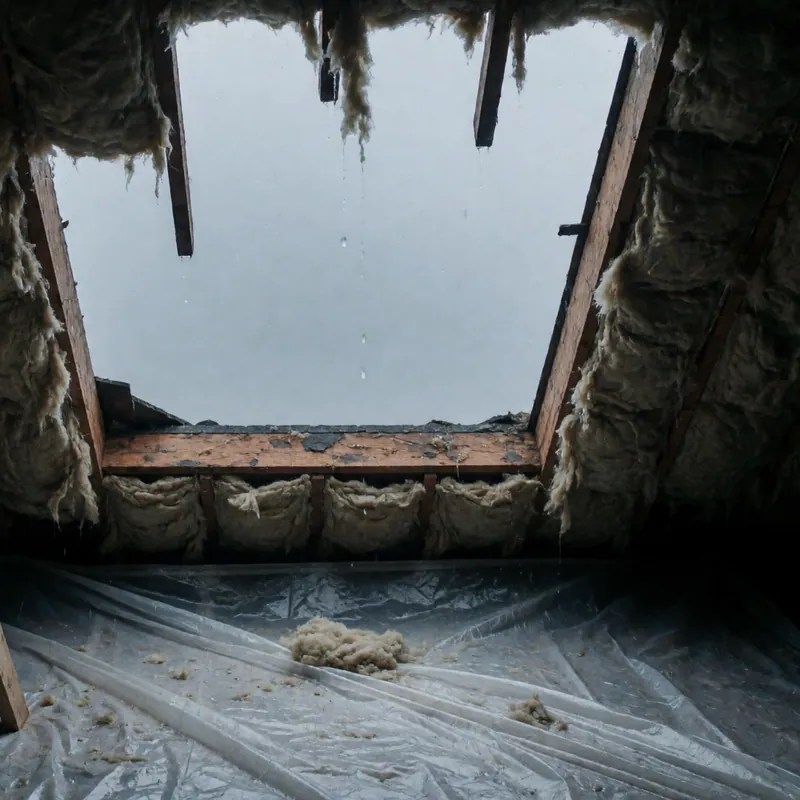
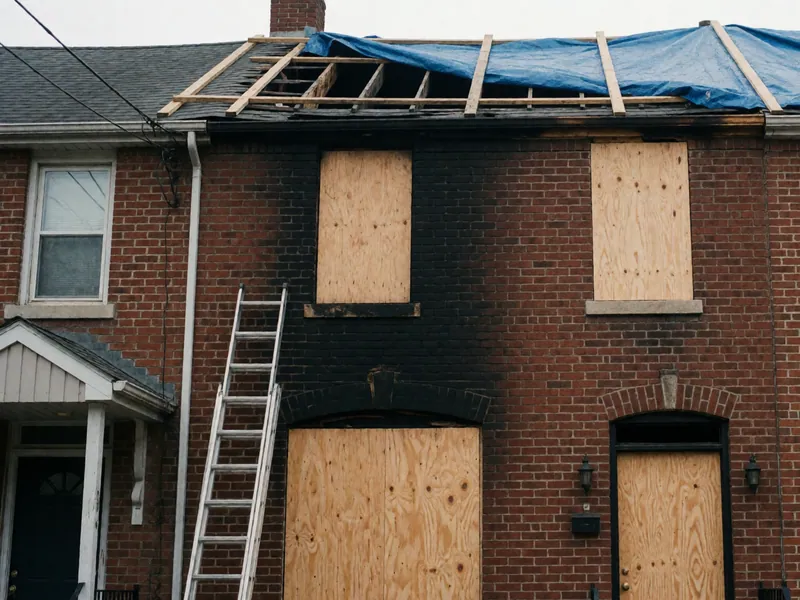
An open roof or broken window loses more to weather and to opportunists in the following two nights than most people expect, so the first call is to close the building, not dry it. Board-up and roof tarping happen the same day, priced by opening.
This matters for a claim as well as for the weather: insurers generally expect reasonable steps to prevent further damage. Once the building is closed, drying follows the same rules as any water loss, and reconstruction is quoted separately, because pricing a rebuild before the damage is known is a guess wearing a number.
Where the water came from is the whole question
Wind that tears off shingles, breaks a window or lifts roofing membrane creates an opening, and rain entering through it arrived because of wind damage. Rising surface water — a flooded street, a yard that cannot drain — is different, and it is commonly excluded from a standard policy; flood cover is often a separate policy in its own right.
Which of the two happened is not our call or any restoration contractor's — it is your insurer's, made against your policy wording. We document it: where the opening was, which direction the water moved, and whether a tide line points to water rising rather than falling. That record is what the decision gets made from.
What it costs
Most storm jobs land between $1,900 and $16,000 for securing and mitigation — a wide range because storms are. A single broken window sits at the bottom; a torn-off roof section over two floors sits nearer the top, before reconstruction is even quoted.
Two things move the number most: how many openings there are, and how long rain had access before anybody closed them. A roof tarped within hours is a smaller job at every later stage than the same roof tarped the next afternoon.
We document your loss. We do not decide your claim. We cannot tell you what your insurer will pay, and neither can anybody else holding a moisture meter. Coverage is decided by your policy and your insurer's adjuster, not by your contractor, and a restoration company that tells you on the doorstep that you are covered is guessing with your money. What we can do is document the loss properly — photographs, moisture readings, a written scope, daily drying logs — so that whoever decides has something real to decide from. We will attend the adjuster's inspection and answer any question put to us. What we will not do is negotiate your settlement for you: in New York, a contractor who negotiates a claim on your behalf is acting as a public adjuster and must be licensed by the Department of Financial Services. We are not, so we do not, and we charge you nothing for dealing with your insurer.
Included as standard
What the job actually includes
Emergency board-up and roof tarping
Openings closed and a roof section tarped the same day.
A safety check before anyone climbs anything
Structure and roof assessed before a tarp goes up.
Cause documented at the opening
Where the wind got in, recorded while still visible.
Extraction and drying
The same monitored process as any water loss, once closed up.
Photographs before anything is disturbed
Roof, openings and interior, before repairs start.
Securing separated from rebuild in writing
Each stage priced and decided on its own.
When to call us
Signs this is the job you need
- A roof section missing shingles or membrane, or visibly lifted after wind
- A window or door frame broken or pushed in during a storm
- Water entering at one point during rain and stopping when it stops
- A ceiling stain that appeared during or right after a storm
- Standing water outside that reached the foundation or came up through the yard
- Debris or a fallen limb resting against the roof or siding
Storm and wind damage cleanup — what it costs
- Emergency securing plus mitigation. Reconstruction is quoted separately.$1,900 – $16,000
This is the range this job actually lands in, not a headline figure. The low end is a straightforward version of the work; the high end is one with a hard access problem, an old service, or something that has to be opened up before anybody can be certain. We tell you which one you have after we have looked, and the written quote says where the price could still move and why.
Questions we are actually asked
Storm damage — frequently asked
Will insurance cover storm damage?
That depends on your policy and on which of two things happened, and we cannot decide it for you. Wind damage that let rain in is commonly covered; rising surface water is commonly excluded and often needs a separate flood policy. We document exactly where the opening was and which direction the water moved.
Do you tarp the roof the same day?
Usually, yes — it is normally the first call rather than the last. An open roof loses more to weather in the following two nights than most people expect, and we tarp and board the same day, priced by opening and by roof area.
Why secure the building before drying it?
Because an open building still taking on rain gets worse by the hour, and insurers expect reasonable steps to prevent further damage. Closing it first is both cheaper and more defensible.
Related work
Often needed alongside this
Board-up & tarping
Closing the building the same night, so that weather and strangers are not the second loss after the first one.
$650 – $2,400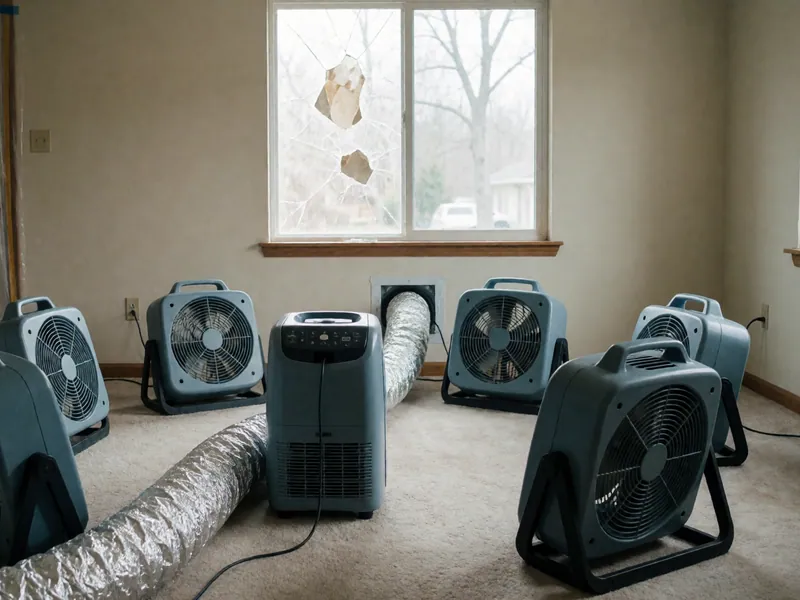
Structural drying
Air movers, dehumidifiers and daily readings until the materials reach dry standard — not until a promised day arrives.
$1,400 – $4,600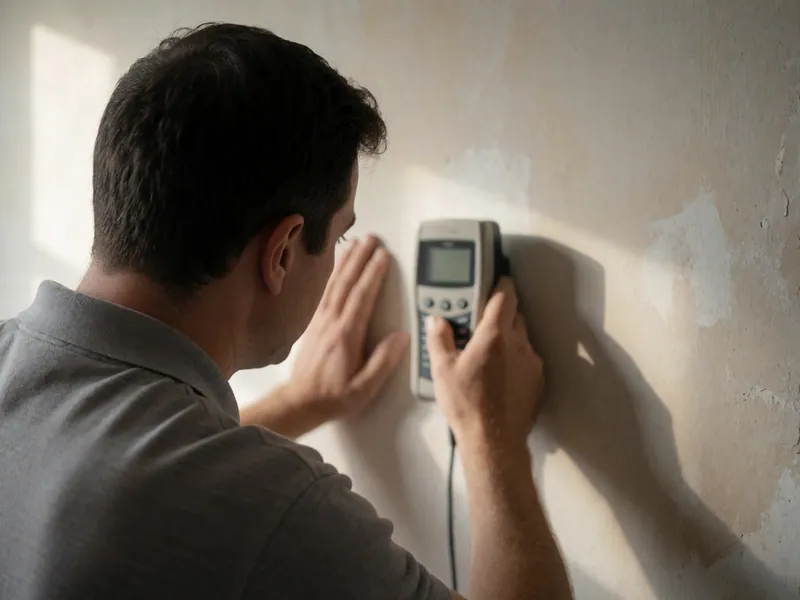
Moisture inspection
Finding where the water actually came from and how far it has travelled, in writing, before anybody quotes a repair.
$385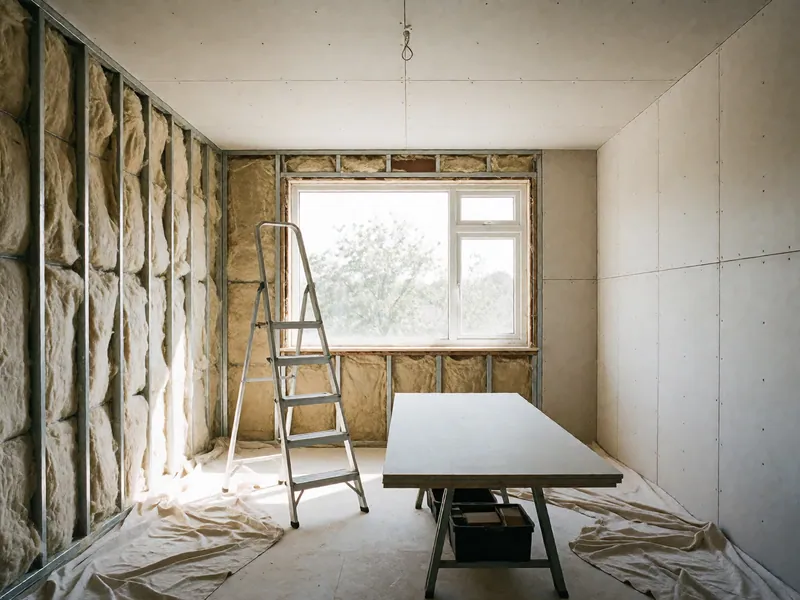
Reconstruction
Putting the building back — drywall, trim, paint, kitchens and baths — under one contract with the drying.
$12,000 – $95,000Somebody who does the work will come and look
Book a visit
Telephone and you will get somebody on this crew rather than a call centre, at any hour. The emergency assessment is free inside our service area and you keep the written findings whether or not you use us. If what you describe will keep until the morning, we will tell you that instead of sending a van.