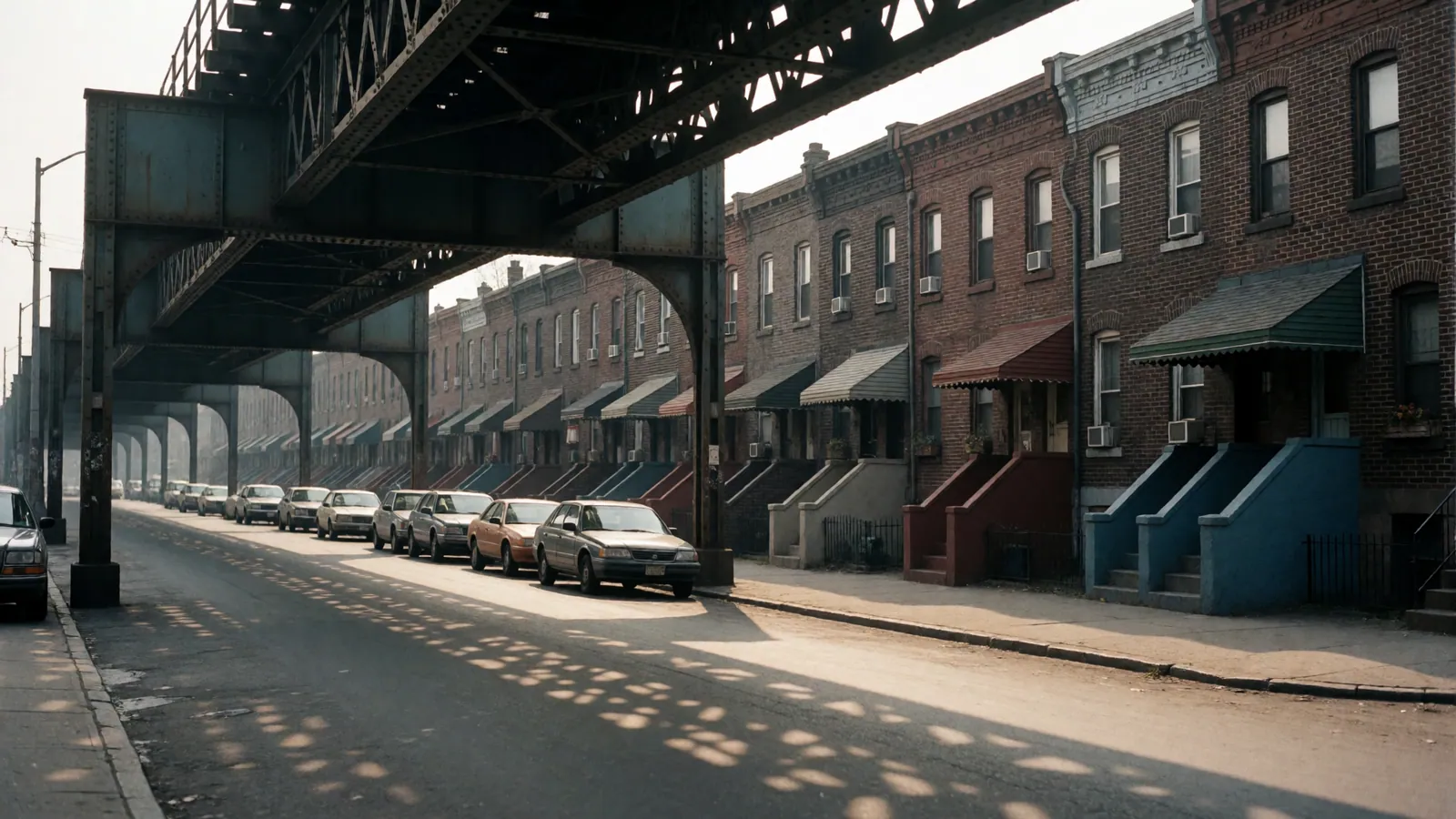
12 neighbourhoods
Where we work
Based on 61st Street and covering western and central Queens. Each of these has a recognisable housing stock, which means each has a recognisable set of ways for water to get in.
Woodside, NY
Our own neighbourhood, and mostly two- and three-family houses built between 1910 and 1950. Old cast iron waste stacks, supply lines run through unheated voids, and finished basements that were never meant to be finished — which is why so much of our winter is burst pipes and cellar water here.
Sunnyside, NY
A great deal of Sunnyside Gardens is protected, which changes what may be done to an elevation and how quickly. The co-op buildings each have their own rules about which trades may work in a unit and who has to be told first, and a leak that crosses between units is a managing agent's problem before it is ours.
Astoria, NY
Denser and more mixed — six-storey walk-ups, converted two-families and a long commercial strip. Most of our work here starts in somebody else's apartment: risers and party walls mean the loss and the source are frequently on different floors and behind different front doors.
Jackson Heights, NY
Largely pre-war co-op blocks, many landmarked, with original plumbing still in service behind plaster that predates it. Ceiling losses from the flat above are the recurring job, and the building's age means an asbestos investigation before any real demolition.
Elmhurst, NY
Small apartment buildings and heavily extended one-family houses. Extensions built over decades are where we most often find a drain or a supply run doing something nobody documented, and where a slow leak has had the longest time to work unseen.
Maspeth, NY
More detached and semi-detached housing, more garages, more basements at or below the water table. Groundwater and drain backups are a bigger share of the work here than burst supply lines, and that distinction matters a great deal to a claim.
Long Island City, NY
New towers with modern risers beside industrial buildings converted to something else. Commercial and multi-unit work rather than house drying, and usually sequenced around a building that cannot close.
Rego Park, NY
Post-war blocks and one-family houses on the side streets. Appliance leaks and bathroom losses, mostly, and a good deal of hardwood worth trying to dry rather than replace.
Corona, NY
Older housing stock with a lot of original waste plumbing still in place, and the two-family conversions that go with it. Sewage backups turn up here more than we would like, and they are a different job with different rules.
Middle Village, NY
Quieter and more owner-occupied, with well-kept houses whose problems are age rather than neglect. Roof and gutter water finding its way into a wall, usually discovered as a stain long after it started.
Ridgewood, NY
Rows of pre-war brick two-families, many of them landmarked. Party-wall damp and shared roof drainage mean the neighbour is often part of the conversation, and almost everything here is old enough to need the asbestos investigation before demolition.
Forest Hills, NY
Large one-family houses and pre-war co-ops. Bigger fire losses, bigger contents pack-outs, and the reconstruction work that follows them.
Finding us
37-32 61st Street, Woodside, NY 11377
Three minutes' walk from 61st Street–Woodside on the 7, and from the Long Island Rail Road platform directly above it. The Q18, Q32, Q53 and Q70 all stop within two blocks. You should not need to come here — we come to you — but the contents store is on this site and people do collect from it.
There is metered street parking on 61st Street and free two-hour parking on the residential blocks east of it. If you are collecting belongings from the contents store, telephone first: somebody will meet you at the bay door and help you load rather than leave you circling with a car full of nothing.
- Emergency line24 hours, every day of the year
- Office — Monday to Friday8:00am – 6:00pm
- Office — Saturday9:00am – 2:00pm
- Office — SundayClosed. The emergency line is not.
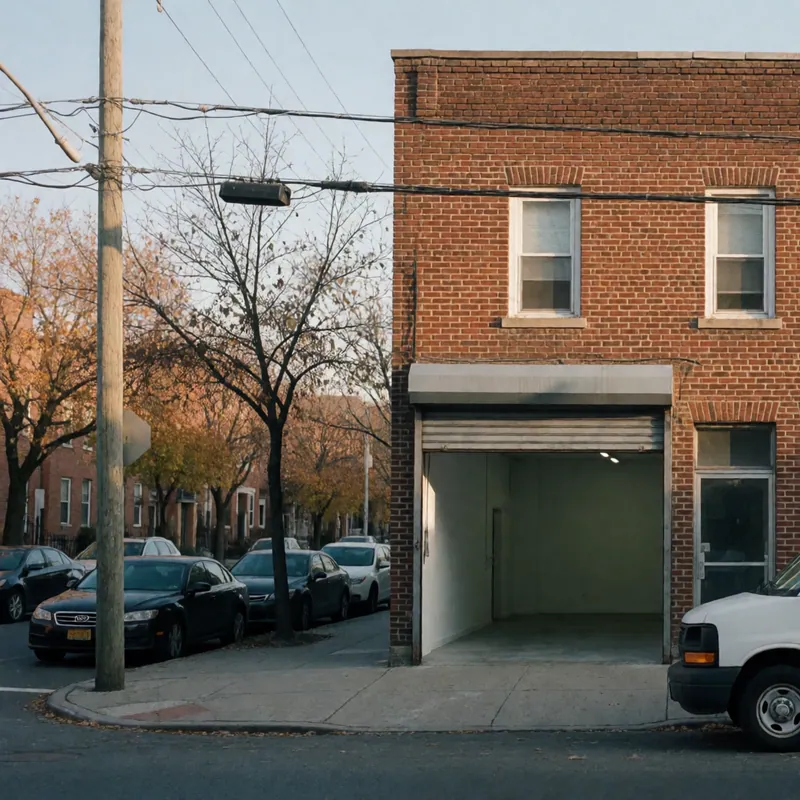
In a pre-1987 building we stop before we cut. In a building put up before 1 April 1987 we stop before we cut. New York City requires an asbestos investigation, filed with the Department of Environmental Protection, before the Department of Buildings will issue a permit for work in a building of that age, and much of the housing stock we work in is older than that. Paint in housing built before 1978 is governed by the federal Renovation, Repair and Painting rule. Neither is a formality and neither is our decision to skip: a contractor who tears out wet plaster in a 1928 house without an investigation is not saving you a week, they are spreading a hazard through the rest of your home and leaving you holding it.
One thing all of these neighbourhoods have in common
Almost every building on this list predates both of the rules that now govern taking one apart. New York City requires an asbestos investigation, filed with the Department of Environmental Protection, before the Department of Buildings will issue a permit for work in a building put up before 1 April 1987. Housing built before 1978 falls under the federal Renovation, Repair and Painting rule.
Look at any street of pre-war brick two-families in Woodside, Sunnyside, Jackson Heights or Ridgewood: effectively all of it is older than both. That is why we ask how old the building is on the first telephone call rather than on day three, and why demolition sometimes waits while extraction and drying carry on.
Western Queens, at any hour
Not sure if you are in range?
Telephone and describe where you are. For an emergency we will tell you honestly if somebody closer can be there sooner; for a defined job, distance rarely matters much.