Water damage
Hardwood floor and subfloor drying
A wet hardwood floor is the one place in this trade where patience is worth real money. Boards that look ruined on day two are frequently flat again by day ten — and boards that genuinely are ruined should be identified before anybody spends a fortnight drying them.
Timber that takes on water swells across the grain rather than along it, and because a board is restrained at its edges by its neighbours it deforms rather than simply growing. Wet at the underside first — which is what happens when water runs across a floor and soaks in from below — the board's lower face expands more than its upper face and the edges rise. That is cupping, and it is what nearly every water-damaged hardwood floor does.
The critical thing about cupping is that it is very often reversible. As the moisture equalises through the thickness of the board, the deformation reduces and in many cases disappears entirely. Floors are torn out every week in this city that would have flattened on their own with the right drying and three weeks of nobody panicking.
Why mats rather than fans
A finished hardwood floor is close to sealed on its upper face. That is the entire point of the finish, and it means that blowing air across the top of a wet floor dries the finish and does almost nothing to the water in the timber and the subfloor beneath.
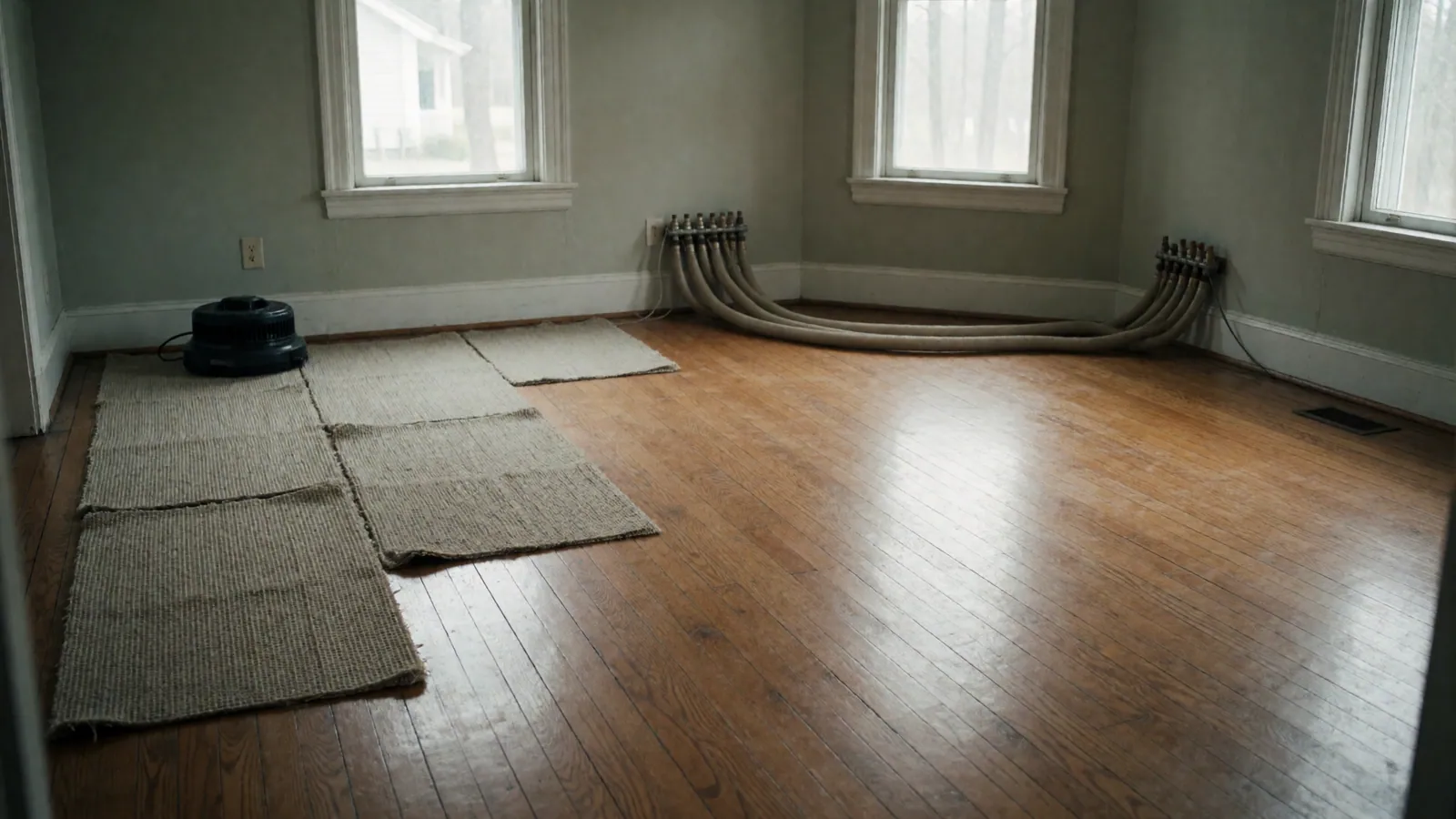
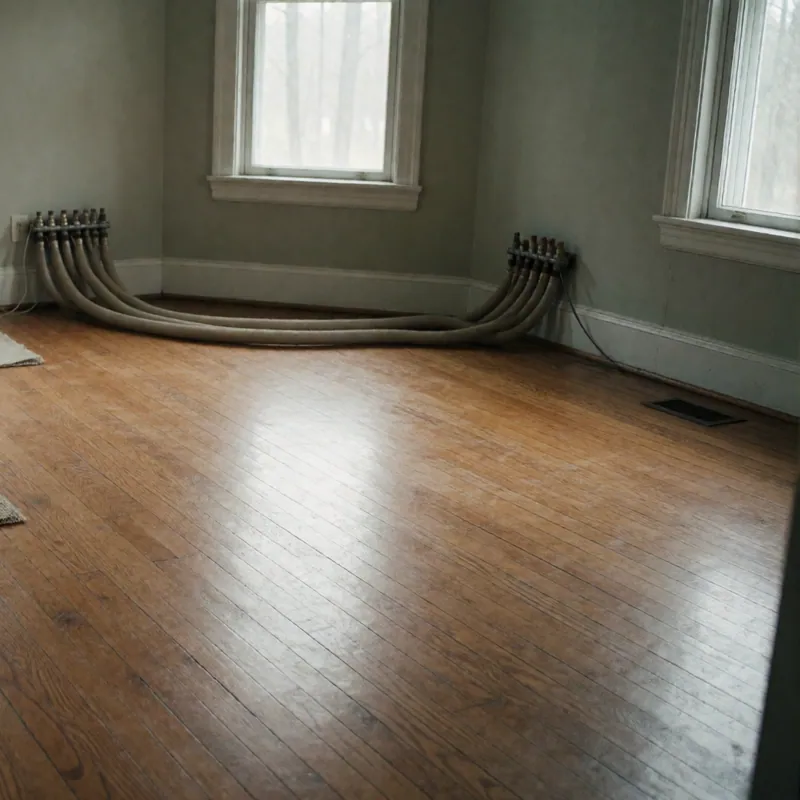
Mat systems solve this by working from the other side of the problem: panels are sealed to the floor surface and a vacuum is drawn through them, pulling air up through the board joints and out of the subfloor cavity. The water comes up through the assembly rather than being blown across it. It is slower, it is quieter, and it is the only method that reaches the layer that actually holds the water.
Where the floor sits over an accessible void or a basement ceiling, we dry from below at the same time, which roughly halves the time. Where it does not, the mats do the work alone and it takes as long as it takes.
What we can usually save, and what we cannot
Solid timber, whether strip or plank, is usually worth trying — it is thick, it moves, and it comes back. Engineered board is a judgement: the wear layer is thin and the core is often plywood, so a mild wetting is recoverable and a soaking that has delaminated the layers is not, and delamination is visible at the board edges.
Laminate is not timber at all. It is a printed layer over a fibreboard core, and once that core has taken water it has swollen irreversibly — the joints will have lipped and there is nothing to be dried back. The same is true of most MDF-cored products and of chipboard subfloor decking that has swollen at the edges. We will say so on day one rather than run equipment on it for a week and then say so.
The subfloor matters as much as the floor. Plank subfloor over joists dries well. Plywood dries acceptably. Chipboard that has swollen has lost its strength and has to be replaced whatever happens to the boards on top of it.
Crowning, and why you wait before sanding
There is one specific mistake that costs people an entire floor, and it is sanding too early. A cupped floor sanded flat while it is still wet will, as it finishes drying and the edges come back down, end up with the middle of every board standing proud. That is crowning, it is permanent, and the only remedy is another sanding that takes yet more thickness off boards that have a finite amount to give.
So the sequence is: dry to a stable measured moisture content, then wait — usually several weeks — while the floor acclimatises and any residual cupping relaxes, then assess, then sand only what still needs it. A contractor offering to dry and refinish your floor in the same fortnight is offering you a crowned floor.
Some of it will not be saved. Some of it will not be saved, and you deserve to hear that on day one rather than after the cleaning bill. Water and smoke both sort belongings into three piles: things that clean up completely, things that can be restored for less than replacing them, and things where the cleaning costs more than the object is worth or where nothing will make them safe again — porous items soaked in category-three water, most soaked mattresses and upholstered foam, some heat-warped electronics. Anyone who tells you everything is recoverable is describing their invoice, not your possessions. We will tell you which pile a thing is in before we spend your money on it, and we will tell you when the honest answer is to replace it.
Included as standard
What the job actually includes
An assessment before any equipment goes in
What the floor and the subfloor actually are, and an honest view on whether drying is worth attempting.
Mat drying to the board and subfloor
Sealed panels drawing air through the assembly, rather than fans blowing across a sealed finish.
Drying from below where there is access
From a basement or void at the same time, which roughly halves the timeline where it is possible.
Daily readings taken through the deck
In the timber and the subfloor, against a reference from an unaffected area of the same floor.
A stop point, agreed in advance
The reading at which we conclude it is not coming back, so nobody spends three weeks finding out.
Advice on the refinishing interval
When it is safe to sand, which is weeks after it is dry, and why sanding early crowns a floor permanently.
When to call us
Signs this is the job you need
- Board edges standing proud of their centres — cupping, and the usual first sign
- Boards lifting at the ends or pulling away from the skirting
- Gaps closing up so the floor feels tight, or the whole field bowing upward
- A hollow or soft sound underfoot that was not there before
- Dark staining at the board joints, or a dark line running along a joist below
- A laminate or engineered floor with lipped, swollen edges at the joints
Hardwood floor and subfloor drying — what it costs
- Mat systems on an affected floor area, monitored daily.$1,900 – $6,800
This is the range this job actually lands in, not a headline figure. The low end is a straightforward version of the work; the high end is one with a hard access problem, an old service, or something that has to be opened up before anybody can be certain. We tell you which one you have after we have looked, and the written quote says where the price could still move and why.
Questions we are actually asked
Floor drying — frequently asked
My floor is cupped. Is it ruined?
Probably not, and please do not let anybody tear it out in week one. Cupping is the timber's normal response to being wetter underneath than on top, and as the moisture equalises through the board it very often relaxes completely. Floors get replaced in this city every week that would have flattened on their own.
How long does floor drying take?
Longer than a room — commonly a week to two weeks with mats, and longer again where there is no access from below. It is a forecast rather than a promise and the readings decide. If it is not going to work, we will tell you at the point that becomes clear rather than at the end of the hire period.
Can you dry it and refinish it at the same time?
No, and anybody who offers to is going to crown your floor. After the readings say it is dry, the boards need weeks to acclimatise and relax before anybody sands them. Sanding a floor that is still equalising guarantees a permanent ridge down the middle of every board, and the only fix is more sanding on boards that only have so much thickness to give.
Related work
Often needed alongside this
Structural drying
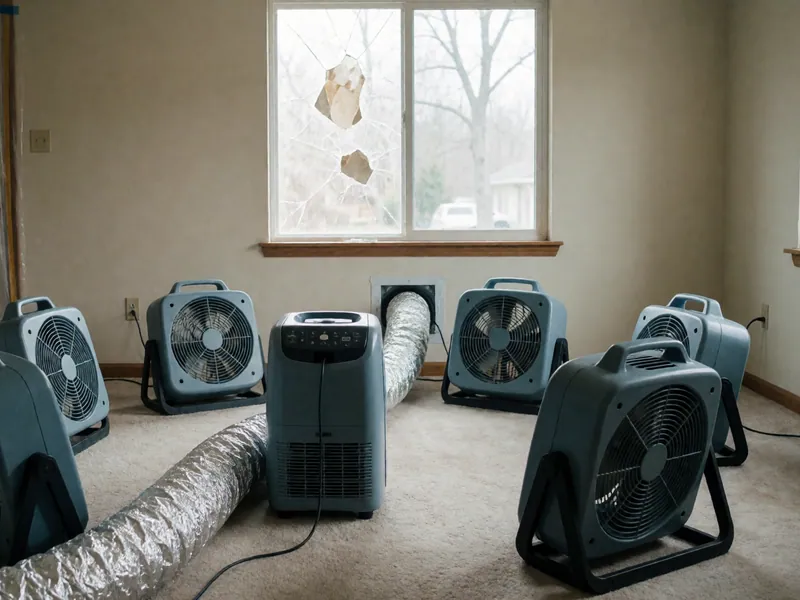
Air movers, dehumidifiers and daily readings until the materials reach dry standard — not until a promised day arrives.
$1,400 – $4,600
Water damage restoration
The whole job from the first hour to the last moisture reading — extraction, drying, and the repairs that put the room back.
$1,800 – $9,400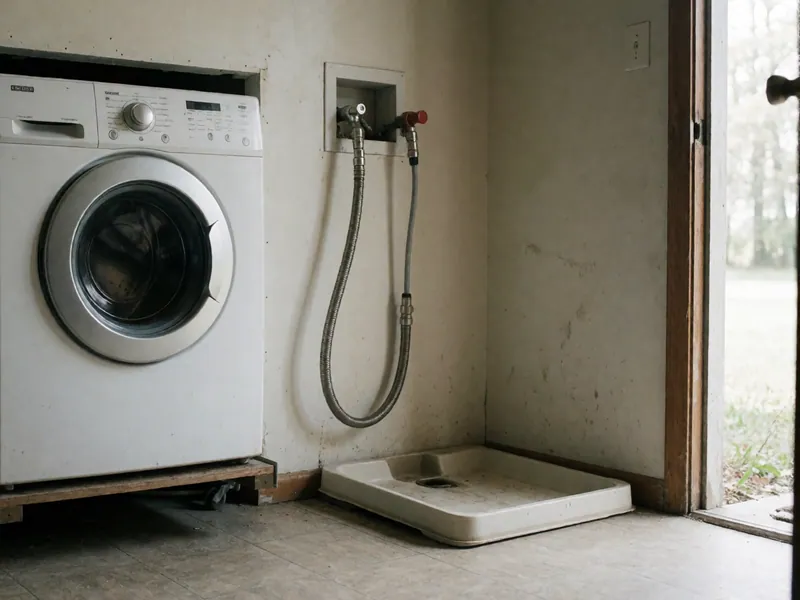
Appliance leaks
Slow supply-line and drain failures, which do more damage than dramatic ones because nobody sees them for weeks.
$900 – $5,400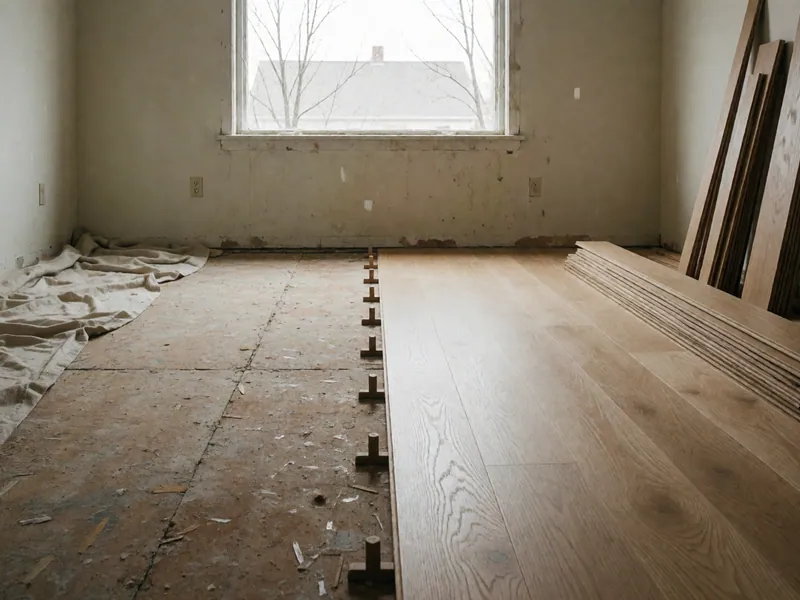
Flooring replacement
Replacing what could not be dried, matched to what is still there wherever that is possible.
$2,400 – $18,000Somebody who does the work will come and look
Book a visit
Telephone and you will get somebody on this crew rather than a call centre, at any hour. The emergency assessment is free inside our service area and you keep the written findings whether or not you use us. If what you describe will keep until the morning, we will tell you that instead of sending a van.